A Japandi kitchen combines the clean, functional layout of Scandinavian design with the Japanese care for natural materials and empty space. In practice, that means flat or simply framed cabinets in wood or a soft neutral, durable natural worktops, very little on display, and a few well-made textiles and wooden tools that are used every day. This guide works through the whole room: cabinets, counters, the open shelf rule, linens and boards.
The principles behind a Japandi kitchen
Everything in a Japandi kitchen follows three ideas. First, honest materials: wood that looks like wood, stone that looks like stone, ceramics with visible glaze. Second, calm surfaces: long, uninterrupted lines of cabinet and worktop, with storage doing the hiding. Third, use before display: the objects you can see are the ones you reach for daily, chosen well enough that they deserve to be seen.
The result is a kitchen that feels quiet even when you are cooking for six. Our journal piece on honest materials explains the first idea in more depth, and it is a good place to start before choosing finishes.
Cabinets: flat fronts and warm wood
Cabinets are the largest surface in the room, so they set the tone.
Door style
Choose flat slab doors or a very slim shaker frame. Avoid heavy mouldings, glass-fronted wall cabinets full of crockery, and anything ornate. Handleless doors with a finger pull, or slim wooden or matte metal pulls, keep the lines clean.
Material and colour
- Oak or ash veneer gives warmth and visible grain. Pale oak suits small, darker kitchens; a smoked or stained oak feels richer in bright rooms.
- Painted fronts in warm white, putty, soft grey or muted sage are calmer and easier to maintain. Keep the finish matte.
- Two-tone schemes work well: wooden base cabinets with painted wall cabinets, or the reverse. Limit yourself to two finishes, following the two woods rule.
For help choosing the exact shades, our sibling guide to Japandi kitchen colours lists combinations that work together.
Counters and splashbacks
Worktops should be durable, natural or natural-looking, and matte or honed rather than polished.
- Solid wood is warm and repairable, but needs oiling and care around the sink.
- Honed stone or quartz in a soft white, grey or warm beige is low-maintenance and reads as calm. Choose subtle veining over dramatic patterns.
- Microcement or concrete gives a seamless, handmade look, which suits the wabi-sabi end of the style.
For the splashback, keep it simple: the same material as the worktop carried up the wall, handmade-look tiles in a single colour, or a plain painted wall protected with a clear matte finish. Avoid busy patterned tiles; your textiles and ceramics will provide the pattern.
The open shelf rule
Open shelving is common in Japandi kitchens, and it is where most of them go wrong. A shelf filled with everything you own looks cluttered within a week. The rule we use is simple: only put things on an open shelf that you use at least weekly, and leave a third of the shelf empty.
That usually means a short row of everyday bowls, a few mugs, a jar of wooden spoons, perhaps one plant and one small piece of art. Group items by material and colour, and repeat rather than vary: four matching bowls look calmer than four different ones. The empty third is what makes the rest look chosen.
Everything else, such as appliances, packets, plastic tubs and spare glasses, belongs behind doors. Our guide to storage that doesn't look like storage has ideas for hiding the practical things.
Trays keep the counter calm
The worktop follows the same logic. Group the oil, salt and pepper on a small wooden tray or board beside the hob, so they read as one object rather than five. Our journal piece on why your kitchen needs a tray shows this in detail.
Linens: the soft layer
A kitchen of wood and stone needs something soft to stop it feeling cold. In a Japandi kitchen, that comes from a small, coordinated set of textiles.
- Tea towels: one or two absorbent cotton towels in a quiet print, hung on the oven rail or a wooden peg. Our sibling guide to Japandi tea towels covers choosing, hanging and rotating them.
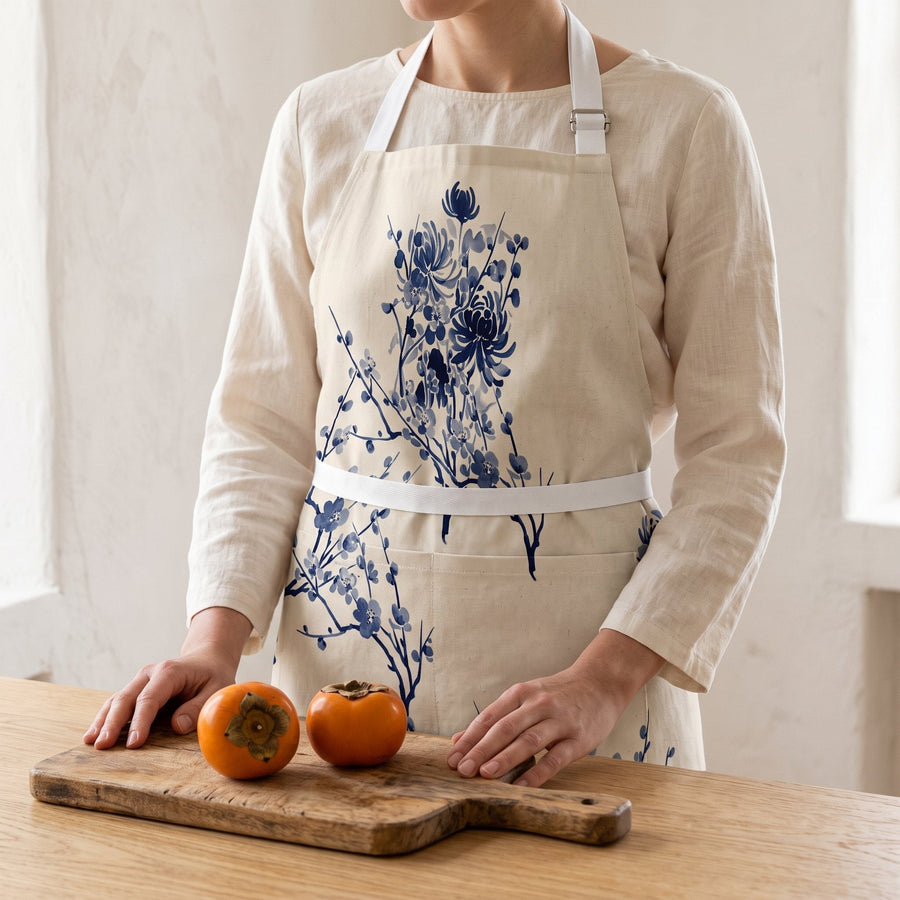
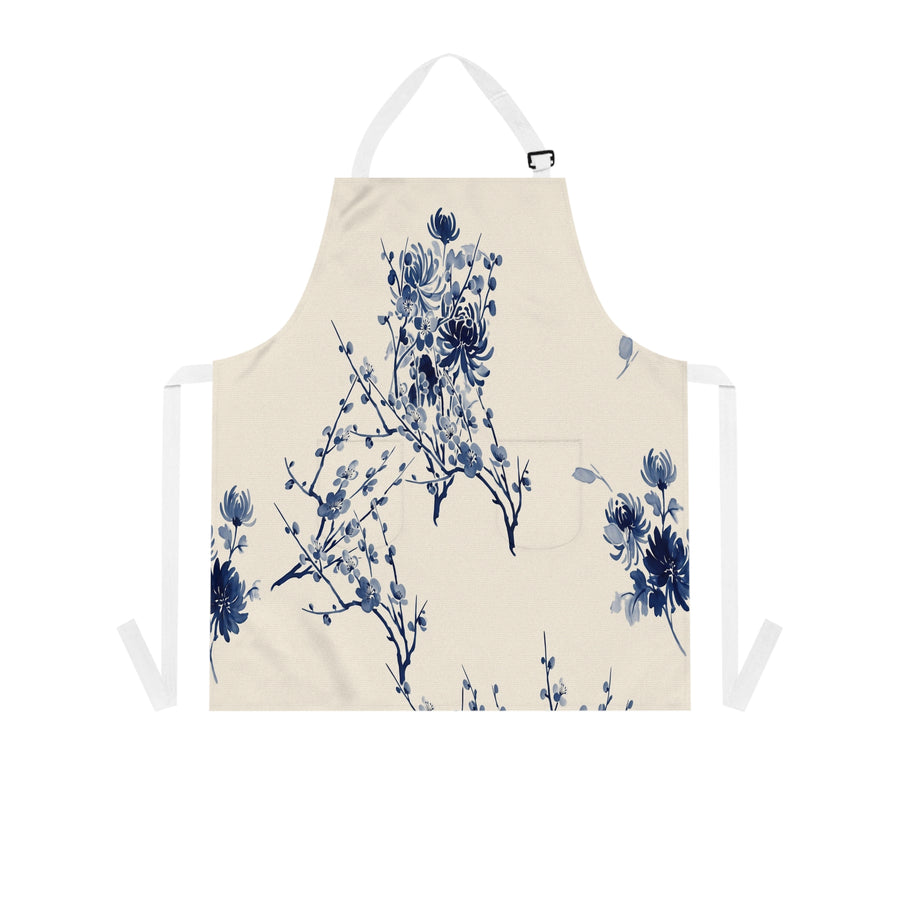
- An apron: full-length and hung on a hook, it becomes part of the room rather than something stuffed in a drawer.
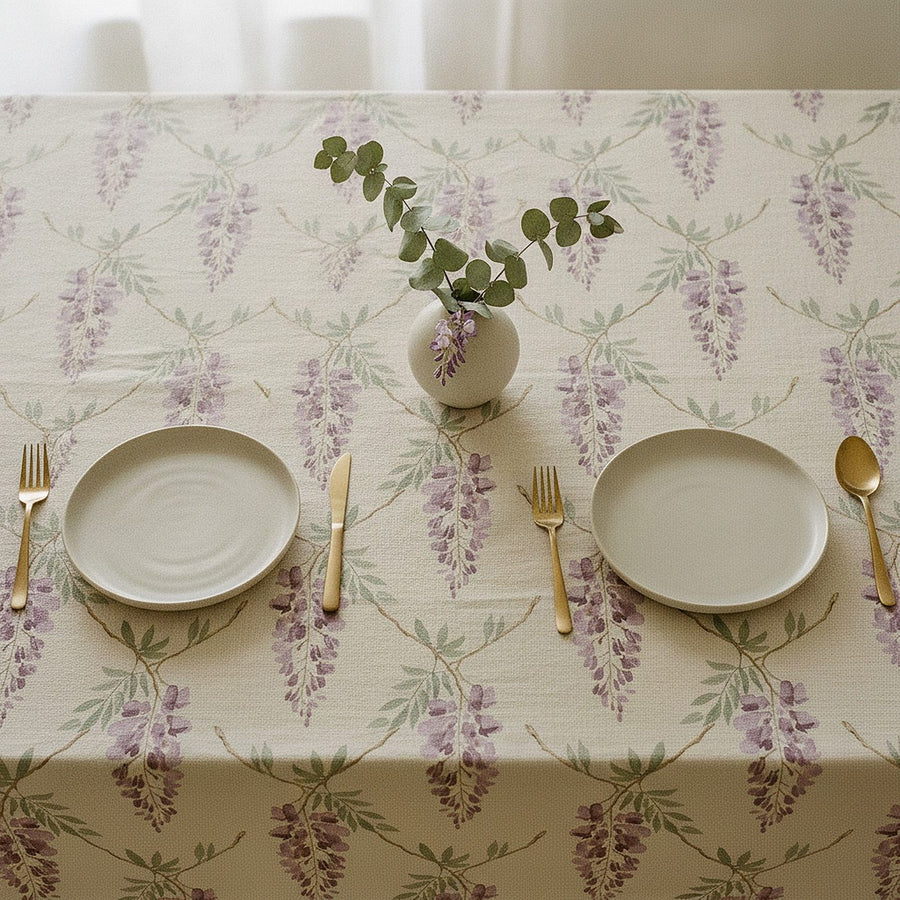
- Table linens: cloth napkins, a runner or placemats for the kitchen table, in the same palette as the towels.
Keep all of them within one colour family, with one accent repeated. That repetition is what makes the room feel designed rather than accumulated.
Boards, wood and everyday tools
Wooden tools are the Japandi kitchen's jewellery. A good serving board left leaning against the splashback, a jar of olive wood spoons, a stack of ceramic bowls: these are practical, and they bring texture and warmth to plain surfaces.
- Choose one or two boards and display them. A larger chopping board and a smaller serving board, leaning upright, look intentional. Store the rest away.
- Match the wood tones. Keep boards, spoons and utensil handles close to the cabinet or worktop wood, or deliberately darker.
- Oil them regularly. A monthly coat of food-safe oil keeps wood from drying and cracking. Our sibling guide to wooden board care covers the routine.
- Add stoneware. Speckled mugs and handmade bowls bring the Japanese side of the style. See our notes on wabi-sabi ceramics.
Bringing your Japandi kitchen together
A Japandi kitchen is not a single look you buy; it is a series of restrained decisions. Choose flat, warm cabinets and a calm, natural worktop. Hide most things and display only what you use. Then soften the room with a small set of coordinated linens and a few good wooden tools.
The reward is a kitchen that feels peaceful at seven in the morning and still works at eight at night. For the small rituals that make it feel lived in, read our journal piece on the Sunday morning kitchen.
Worth considering
A few well-made pieces we would happily put next to our own. These are Amazon links; as an Amazon Associate we earn from qualifying purchases, at no cost to you.
- Acacia-wood tray with cut-out handles, 17″ — Gathers oil, salt and pepper beside the hob so they read as one object rather than five.
- Stoneware salt cellar with wood lid — Stoneware and wood for the counter tray, used daily and worth leaving out.
- Stoneware utensil crock with beech utensils — The jar of wooden spoons this guide calls the kitchen’s jewellery.
- AmorArc reactive-glaze stoneware dinnerware, 18-piece set — Matching speckled bowls for the open shelf, where four the same look calmer than four different.
Frequently asked questions
What colours work best in a Japandi kitchen?
Warm whites, putty, soft greys, muted greens and natural wood tones form the base. Add depth with charcoal or black in small doses, such as handles, a tap or a pendant light. Keep any accent colour to textiles and ceramics.
Can a small kitchen be Japandi?
Yes, and small kitchens often suit the style best. Use flat-fronted, floor-to-ceiling storage to hide clutter, keep counters almost bare, and limit open shelving to one short shelf. Light wood and pale walls will make the room feel larger.
Are open shelves practical in a Japandi kitchen?
They are if you keep them for everyday items. Dishes used daily do not gather dust, while rarely used pieces do. Limit open shelves to one or two, use them for matching items, and leave a third of the space empty.