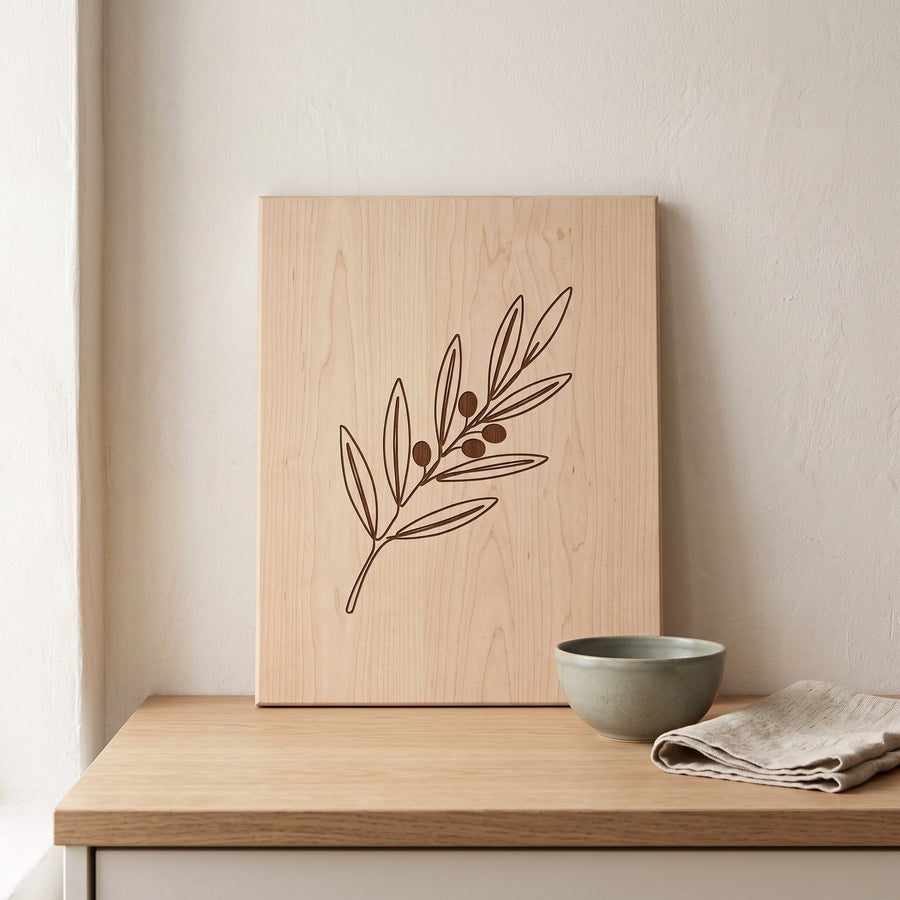
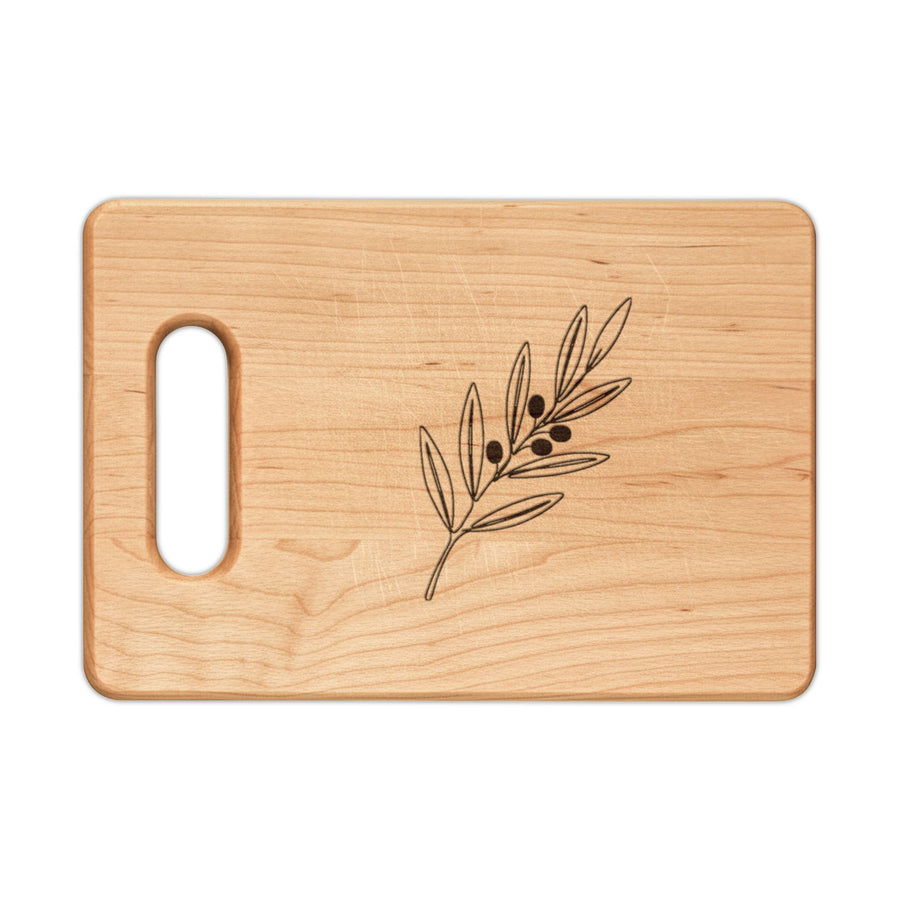
Cutting board care comes down to three habits: wash by hand with warm water and a little soap, dry it standing on edge straight away, and oil it once a month with a food-safe mineral oil or a board wax. Do those three things and a solid hardwood board, engraved or plain, will outlast most of the furniture in your kitchen.
What follows is the fuller version, including what to do when a board goes grey, why maple and walnut need slightly different treatment, and how to keep an engraving crisp.
What a wooden board actually needs
Wood is a living material even after it has been cut and dried. It takes on moisture from the air and gives it back, and every time it does the fibres swell and shrink a little. A board that is left wet on one side and dry on the other will cup; a board that is left soaking will split along the grain when it dries. Almost every problem people have with wooden boards comes back to uneven moisture.
Oil works by filling the pores near the surface so that water cannot get in as quickly. It does not seal the wood the way varnish does, which is why it wears off and needs renewing, and also why it is the right choice for a board that meets food. This is the same reason we prefer oiled wood everywhere in the home; our note on honest materials says more about why a finish you can repair beats one you cannot.
Washing: warm water, soap, no soaking
After use, rinse the board under warm water and rub it with a soft cloth or a brush and a drop of washing-up liquid. Rinse again and wipe it dry with a tea towel. The dishwasher is the one place a wooden board must never go: the heat and the long soak lift the grain, wash out the oil and, sooner or later, crack the board.
Scrub both faces, even if you only used one. Wetting one side and leaving the other dry is exactly how a board learns to cup. If there is a smell of onion or garlic, rub the surface with the cut side of half a lemon and a spoon of coarse salt, leave it for five minutes, then rinse.
Drying: on its edge, in the air
Stand the board on its long edge somewhere air can reach both faces. Leaning it against the splashback works; a rack or a hook works better. Never lay it flat on the worktop while damp, and never dry it on a radiator or in sunlight, which dries one face faster than the other.
A board that has a handle or a hole can go straight onto a hook, which keeps it off the surface and on show. That is how ours live between meals; a board on a hook is one of the small things that make a slow Sunday morning kitchen look ready before anyone is up.
Oiling: the monthly ten minutes
Oil is what keeps a board from drying out and going grey. Use a food-safe mineral oil, a purpose-made board oil, or a board wax that blends mineral oil with beeswax. Avoid olive, sunflower or other kitchen oils, which go rancid in the wood and never fully dry.
- Start with a clean, completely dry board. Oil on a damp board just sits on the surface. If in doubt, leave it overnight.
- Pour on a generous amount and spread it with a cloth, working along the grain, on both faces and all four edges. Be generous with the end grain, which drinks more.
- Let it soak for a few hours, or overnight. A new or very dry board may take everything you give it and ask for more. Add a second coat if the first has vanished.
- Wipe off the excess with a clean cloth until the surface feels dry to the touch. Leftover oil goes tacky and attracts dust.
- Finish with wax if you have it. A thin layer of board wax buffed in gives the surface a soft sheen and slows water further.
Monthly is a good default for a board in daily use. If the wood looks pale and feels rough and dry, it is asking for oil sooner. A board that is only used at weekends may go two or three months.
Maple, walnut and the difference it makes
Most good boards are maple, walnut or oak, and they behave a little differently.
Maple
Maple is pale, hard and tight-grained, which makes it the classic choice for a board that gets cut on. It shows knife marks less and takes an engraving very cleanly, with sharp edges and good contrast. Its pale colour also shows neglect first: a maple board that has gone thirsty looks grey and chalky. Oil it a little more often than you think you need to.
Walnut
Walnut is darker, slightly softer and more forgiving on knives. It hides stains and wear beautifully, and it darkens with oil in a way that most people love. Engravings on walnut read as tone rather than line, so choose a motif with some weight to it. Walnut can be prone to drying at the edges, so give the end grain extra attention.
Oak sits between the two: open-grained and hard. If you are choosing among several woods for the kitchen, our two-woods rule is worth a read; a walnut board on an oak table is about as many woods as a small room wants.
Keeping an engraving crisp
An engraved motif is cut below the surface, so it is protected from most wear. The two things that dull it are food debris settling in the grooves and heavy oil pooling there. After washing, run a soft brush along the engraved lines; when oiling, wipe the engraved area a little more thoroughly so nothing sits in the recesses.
For a board with a large engraving, keep the drawing for serving rather than chopping. Slice on the plain face and present on the engraved one. That is what we do, and it means the drawing stays as sharp as the day it was cut.
Rescuing a neglected board
A board that has gone grey, rough or slightly cupped can nearly always be brought back. Sand the surface lightly with a fine paper, working with the grain, until the colour returns and the surface feels smooth. Wipe off the dust with a damp cloth, let it dry completely, and then oil it as described above, giving it two or three coats over two days.
A small crack at the edge can be filled with wax and watched. A crack that runs right through is usually the end. Most boards never get there if they are dried on edge.
A board that ages instead of wearing out
Good cutting board care is mostly a matter of not doing things: not soaking, not leaving it flat, not putting it in the dishwasher. The one thing it asks you to do, oiling once a month, takes ten minutes and is oddly pleasant.
Treated this way, a board does not wear out. It darkens, softens at the edges and picks up a few marks that tell you what you cooked. That is the difference between an object that lasts and one that merely survives. Our guide to coasters and serving boards picks up where this one leaves off.
Worth considering
A few well-made pieces we would happily put next to our own. These are Amazon links; as an Amazon Associate we earn from qualifying purchases, at no cost to you.
- Stoneware utensil crock with beech utensils — Beech spoons take the same wash, dry-upright and monthly-oil routine as your board.
- Acacia-wood tray with cut-out handles, 17″ — An oiled acacia tray that ages alongside the board and needs nothing more than the same ten minutes a month.
- Wooden wall hooks, set of three — For a board with a handle or a hole: off the worktop, air on both faces, and on show between meals.
Frequently asked questions
How often should you oil a wooden cutting board?
About once a month for a board in daily use, and whenever the wood looks pale or feels rough. A new board benefits from two or three coats in its first week. Boards used only occasionally can go two to three months between oilings.
What oil is safe for an engraved wooden board?
Food-safe mineral oil, a purpose-made board oil or a mineral oil and beeswax board wax. Avoid cooking oils such as olive or sunflower, which turn rancid in the wood. Wipe the engraved lines a little more carefully so oil does not pool in the recesses.
Can I fix a wooden board that has warped?
Often, yes. Wet the concave side, lay the board with the convex side up on a flat surface with a weight on it, and leave it for a day or two so the moisture evens out. Then dry it on edge and oil it well. Prevent it recurring by washing and drying both faces every time.