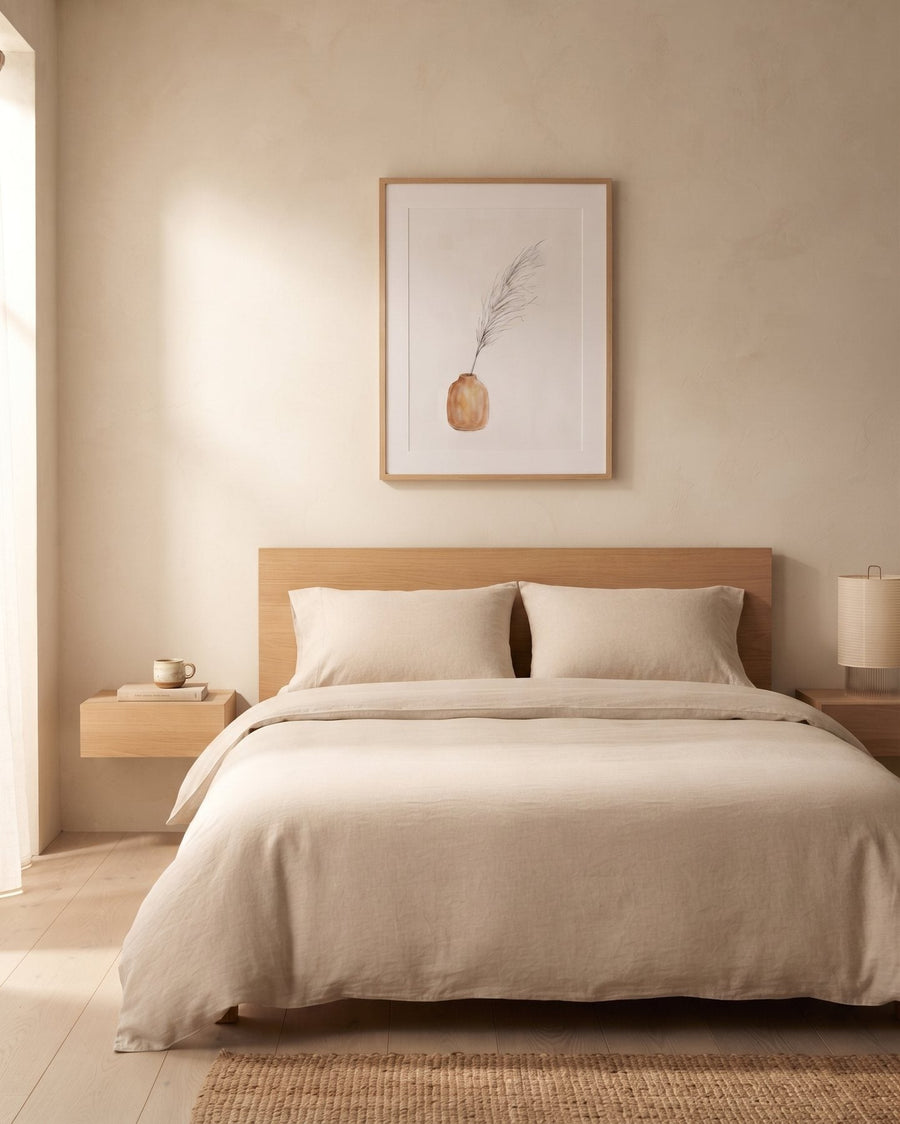
You can build a Japandi rental apartment without painting a wall or drilling a hole. The style depends on textiles, light, a few pieces of low furniture and empty space, and none of those needs a landlord's permission. Rugs, leaning art, lamps, curtains and cushions do almost all of the work, and every one of them moves out with you.
Renting is often treated as a reason to wait. The walls are magnolia, the carpet is beige, the light fitting is a bare pendant, and the temptation is to live with it until you own somewhere. But Japandi was never about the walls. It is about what you put in front of them, and that part is entirely yours.
What you cannot change, and why it matters less than you think
Most rentals come with three fixed problems: a wall colour you did not choose, a floor you did not choose, and a ceiling light you would not have chosen. All three are surfaces, and Japandi is a style that covers surfaces with texture.
A neutral rental wall is closer to a Japandi wall than most people admit. Magnolia, off-white, pale grey: these are all within the range. What makes them feel like a rental is that they are empty and lit from above. Fix the light and lean something against them and they become a backdrop.
The floor is harder, but only until a rug goes down. And the ceiling light is solved by never turning it on.
Rugs: the biggest reversible move
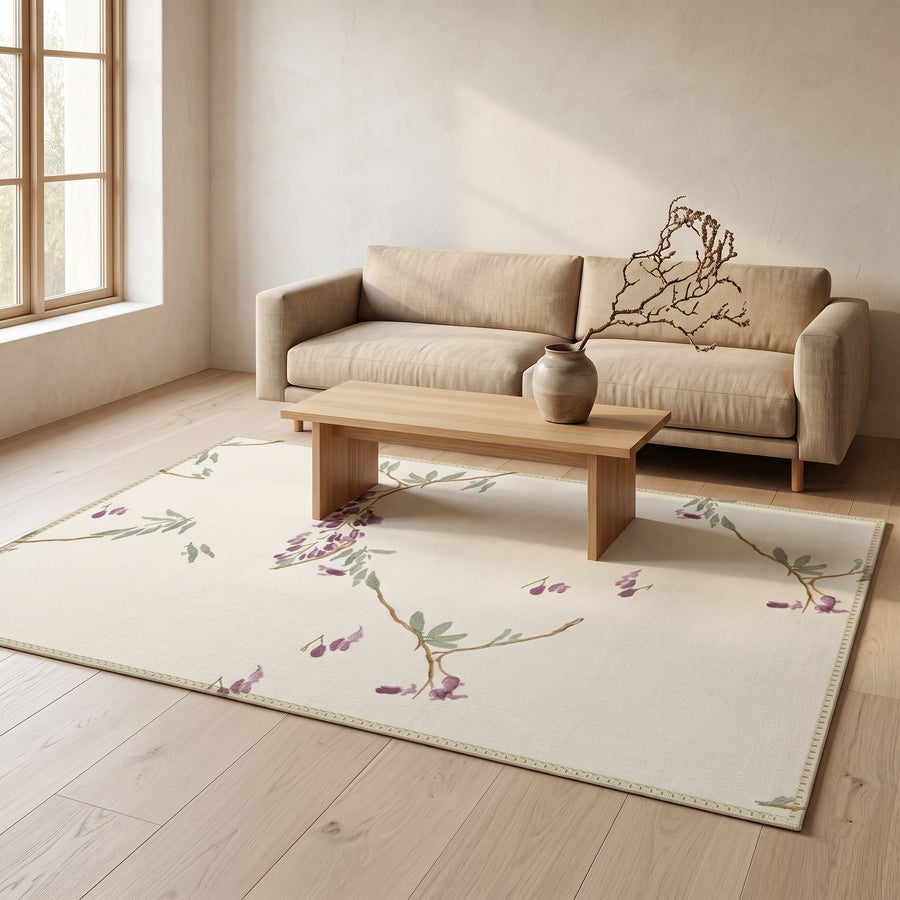
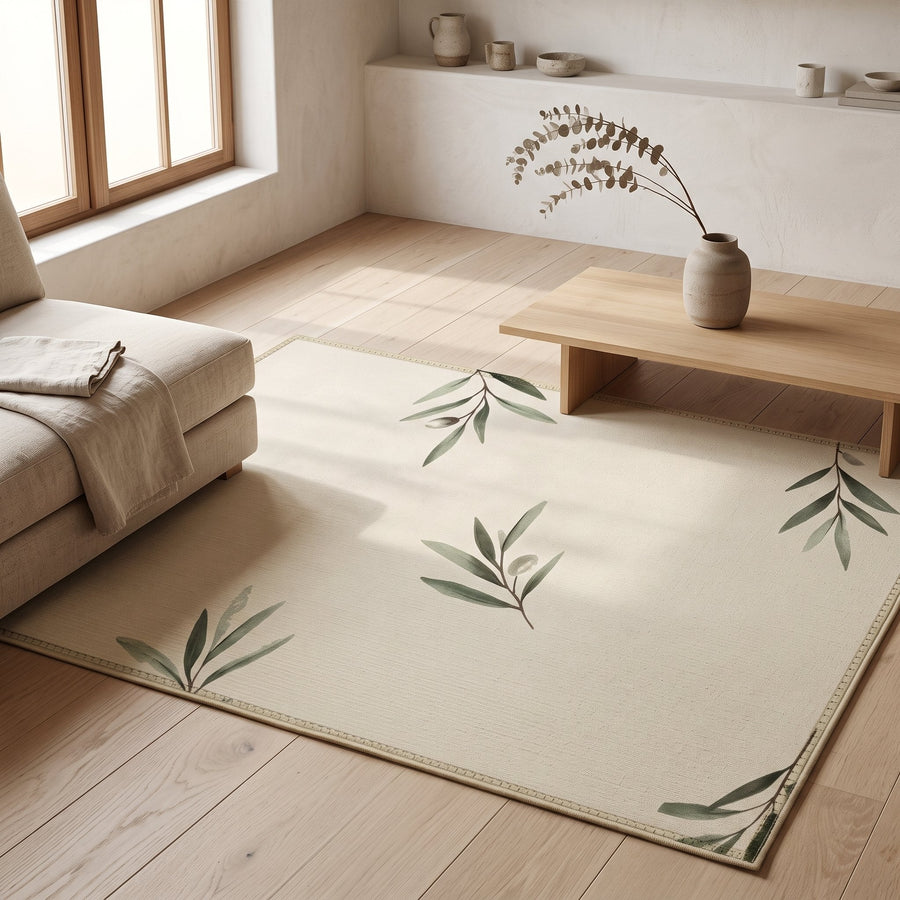
A rug changes a rental more than any other single object, because it covers the floor you did not choose and defines the room you are making. Choose one large enough that the front legs of the sofa sit on it; a rug that floats in the middle of the room makes the room look smaller. Our guide to rug sizing covers the measurements.
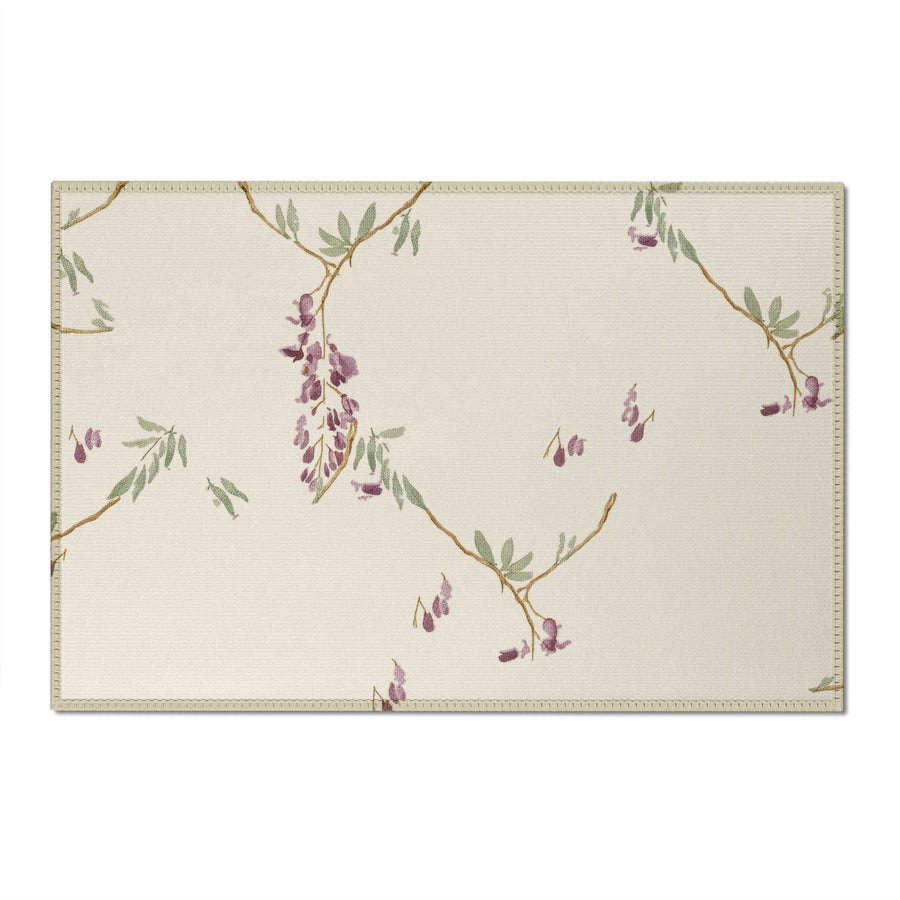
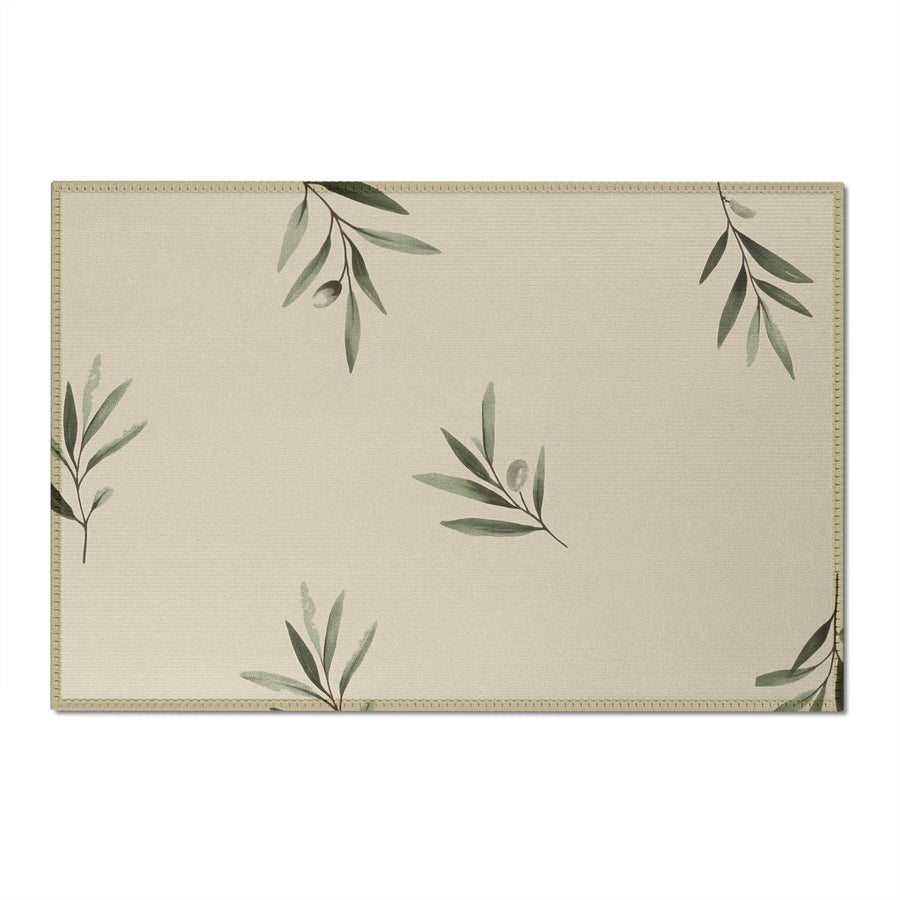
In a rental, washable matters. Carpets get spilled on, rented floors get dusty, and a rug that goes in the washing machine is a rug you keep clean without a professional. Chenille in a soft pattern hides a great deal and dries fast. If you are unsure whether a washable rug belongs in a calm home, we answered that in washable rugs in a Japandi home.
Two rugs in a small flat is usually the right number: one in the living area, one beside the bed. Both in the same tonal family, neither fighting the other.
Art without holes
You do not need to hang art to have art. Leaning is a Japandi habit in its own right, and it suits a rental perfectly. A large framed print on the floor against a wall, behind a low sofa or beside a chest of drawers, reads as more relaxed than the same print hung at eye level.
Smaller pieces lean on shelves, on a mantelpiece, on top of a cabinet. Group two at different heights and leave the third space empty. Frames should be plain wood or black; for what to ask a framer for, see how to frame art prints.
If you want something on the wall itself, a fabric wall hanging or tapestry can go up on a single small pin or a removable hook, and it covers more wall than a print for less weight. Our guide to hanging a wall tapestry without holes goes through the options that will not cost you a deposit.
And one print is enough per wall. A rental is not the place for a gallery wall of twelve frames, whether they are hung or not.
Lamps, and the pendant you will never use
Turn off the ceiling light and leave it off. Everything a rental gets wrong about light is solved by two or three lamps at seat height: a table lamp beside the sofa, a floor lamp in the corner, a small lamp on the bedside table. Warm bulbs in all of them.
Paper and linen shades diffuse light in a way that flatters a plain wall. A single paper lantern on a plug-in cord, hung from a small adhesive hook, replaces a pendant without touching the fitting. Our guide to lighting the five o'clock room is written for owners and renters alike, and nothing in it needs a screwdriver.
Curtains without a drill
Most rentals come with a curtain pole or a track already in place, and the problem is what hangs from it. Replace the landlord's panels with your own. Heavy blackout panels in a muted print make a bedroom sleep better and a living room feel finished, and they go back in the wardrobe when you move.
If there is no pole, a tension rod inside the window recess holds a lightweight panel without a single hole. It will not take a heavy blackout curtain, but a linen or cotton panel is enough to soften a window and hide a view of the car park.
Keep the landlord's curtains folded in a cupboard. You will need them on the last day.
Cushions, throws and the rest of the textiles
Textiles are where a rental becomes yours fastest. A rented sofa in a colour you would never have chosen is transformed by one wool throw folded over the arm and two cushions in linen or a soft print. The sofa is still there, but it is no longer the first thing you see.
The bed is the same. Your own linen, one throw at the foot, and a rented bedroom is a bedroom. Our guide to layering textiles explains the order, and it is a short read.
Everything in this section packs into two boxes. That is the test for a rental purchase: does it fit in a box, and will it work in the next flat too.
Furniture: low, few and movable
Buy little and buy light. A low sofa, a wooden coffee table, a bed frame that comes apart, and one shelf. Everything else is a decision for a later home. If you start with almost nothing, our guide to starting Japandi on a budget puts the purchases in order.
Avoid anything that needs fixing to a wall. Tall bookcases, floating shelves and wall-mounted desks are all for owners. A low shelf that stands on its own does the job and leaves with you.
And leave space. A rented room with too little furniture looks calm. A rented room with too much looks like a rented room.
Moving out, and moving on
A Japandi rental apartment is one that could be emptied in an afternoon and leave no mark. Rugs rolled, curtains folded, art leaned into a box, lamps unplugged. The walls are the colour they were, the floor is as it was, and the deposit comes back.
That is not a limitation of the style. It is close to the heart of it: a home made from a few good, movable things and the space between them. When you do own a place, you will find you want to live in it the same way.
Worth considering
A few well-made pieces we would happily put next to our own. These are Amazon links; as an Amazon Associate we earn from qualifying purchases, at no cost to you.
- Collapsible rice-paper lantern pendant, cream — Hung from a plug-in cord and an adhesive hook, it replaces the landlord’s pendant without touching the fitting.
- Wooden tripod floor lamp — The floor lamp in the corner that lets the ceiling light stay off, and unplugs on moving day.
- Ceramic bedside lamps, pair — Warm light at seat or pillow height, the change that makes a rental bedroom feel like yours.
Frequently asked questions
How do you make a rental feel Japandi without painting?
Treat the wall as a backdrop and change what is in front of it. Put down a large rug, lean a framed print against the wall, add two or three lamps at seat height and never use the ceiling light. Textiles in linen, wool and cotton do the rest. A neutral rental wall is closer to a Japandi wall than most people expect.
Can you hang art in a rental without holes?
Yes. Lean large frames on the floor or on furniture, stand smaller ones on shelves, and use a fabric hanging on a single removable hook if you want something on the wall itself. One piece per wall is enough. Adhesive strips work for light frames but check the wall finish first.
What is the best rug for a rental apartment?
A washable one. Rented floors and carpets take more wear than you expect, and a chenille rug that goes in the washing machine stays clean without a professional. Choose one large enough for the front legs of the sofa to sit on, in a soft pattern that hides the odd mark.