A washable rug belongs in a Japandi home if it is quiet in colour, honest about what it is, and used where a rug actually gets dirty: hallways, kitchens, under dining tables, in children's rooms and in any living room with a dog. It does not belong as a substitute for a wool rug in a room where nothing ever spills, because a good wool rug will feel and age better there.
That is the short answer. The longer one is about what washable rugs are made of, where chenille beats low-pile and where it does not, and how to choose one that looks like it was chosen rather than tolerated.
What a washable rug actually is
Most machine-washable rugs are two parts: a soft top layer, usually polyester or a polyester-cotton blend, and a separate or bonded non-slip base. The top peels off or the whole rug folds up small enough for a domestic drum. A wash on a cool cycle and a line dry, and the rug is clean.
The fibre is synthetic because it has to be. Wool felts, shrinks and takes days to dry; cotton holds water and creases; jute cannot be wet at all. Polyester is light, dries fast, takes dye well and does not shrink, which is why nearly every rug sold as washable uses it.
Two constructions dominate. Chenille has a soft, dense, slightly velvety surface made from a fuzzy yarn, with a low but noticeable pile. Flatweave or low-pile washable rugs have a printed or woven face fabric with almost no pile, closer to a thick mat. The choice between them is most of the decision.
Chenille vs low-pile washable rugs
Chenille is the one to choose when the rug is meant to be touched: bedrooms, living rooms, playrooms, anywhere feet are bare. It has real warmth and softness underfoot, and the yarn's texture catches light so that even a plain colour has some depth. The trade-off is that it shows footprints and flattens in traffic lanes until it is vacuumed, and it takes longer to dry after washing.
Low-pile is the one for kitchens, hallways, entryways and under dining chairs. Chairs slide over it, crumbs sit on the surface rather than in it, and it dries in a few hours. It is less pleasant to stand on barefoot and it looks flatter, which in a kitchen is fine and in a bedroom is a little sad.
Where each one works
- Living room: chenille, in a large size, in a colour close to the floor or the sofa. This is the room where a washable rug has to look like a real rug, so go big and go quiet.
- Bedroom: chenille, sized to run under the bed and out either side. Softness matters most here, and spills are rare, so the wash is a bonus rather than the point.
- Kitchen and hallway: low-pile runner. These get washed monthly and need to dry by evening.
- Dining: low-pile, large enough for the chairs to pull out. We cover the sizing in rug under a dining table.
- Children's rooms: either, but chenille is kinder to knees.
The honest case against
Japandi is a design language built on natural materials that age well, and a polyester rug does not age; it just stays the same until it wears out. It will never develop the patina of wool, the slight sheen of a well-walked jute, or the softness of an old cotton dhurrie. If your living room is a place where nothing spills and no one walks in shoes, a wool rug is the better object, and it will last decades.
Washable rugs are also lighter, which means they can shift and ripple. A good non-slip base fixes most of this, and a heavy piece of furniture on one edge fixes the rest, but it is worth knowing before you buy. And the cheapest ones look cheap, with flat, over-bright printing on a thin face fabric that goes pilly after a few washes. Our note on honest materials is about choosing things for what they are rather than what they imitate, and that applies here.
The honest case for
A rug that cannot be cleaned is a rug you worry about, and worry is not calm. The whole point of a Japandi room is ease, and a rug you can put in the machine on a Saturday morning after a dog, a toddler or a glass of red wine has been at it is a rug that lets you stop thinking about the rug.
They are also light enough to move, roll and store, which matters in rentals and small flats. They are dramatically cheaper than wool at the same size, so you can afford the large one the room needs rather than the small one that floats in the middle of it. And the good ones, in the right colours, are genuinely hard to tell from a low-pile wool rug from standing height.
Our guide to Japandi in a rental apartment leans on washable rugs for exactly these reasons.
How to choose one that looks right
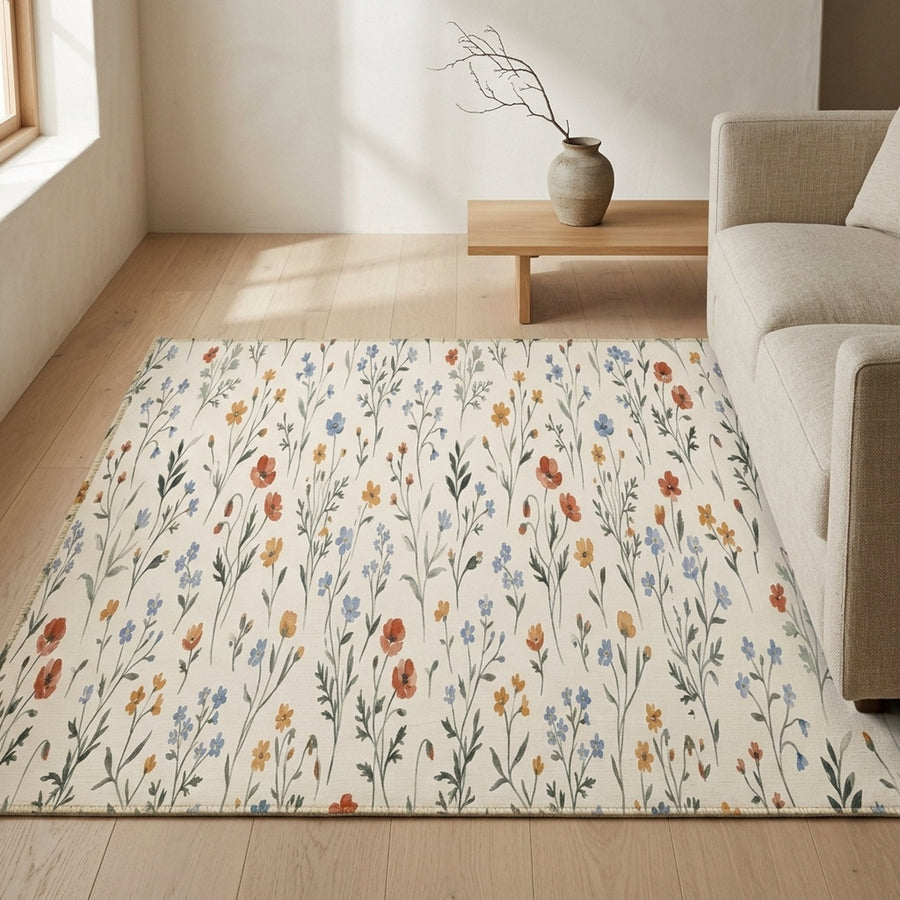
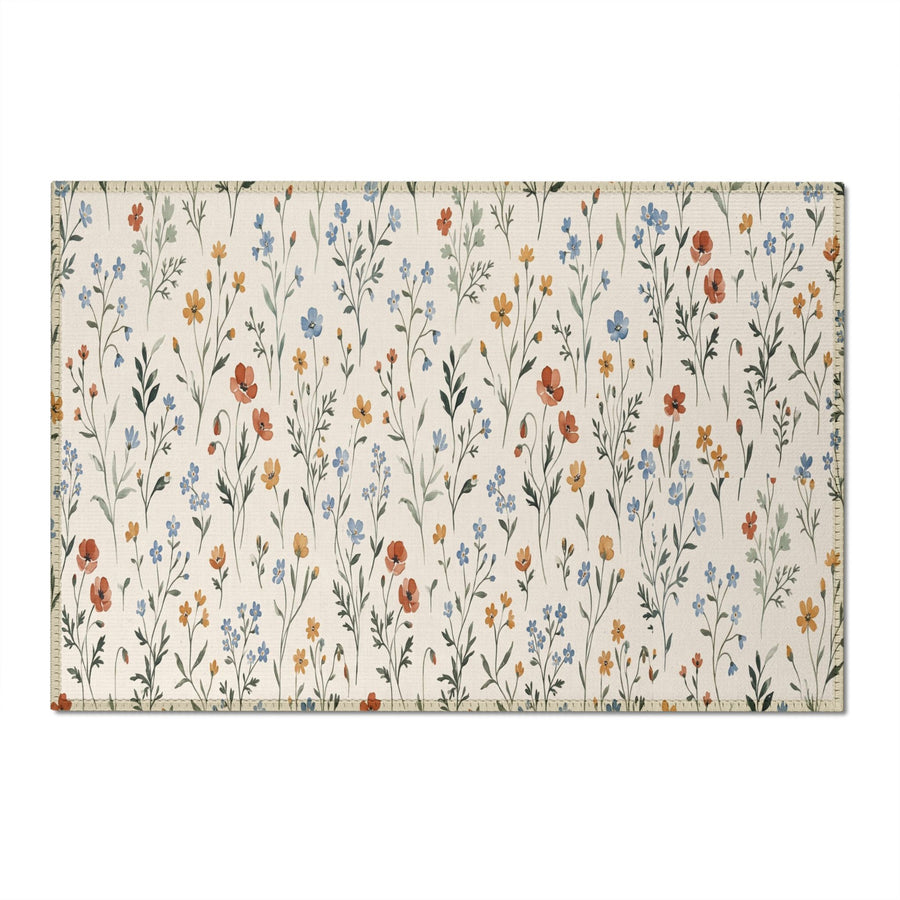
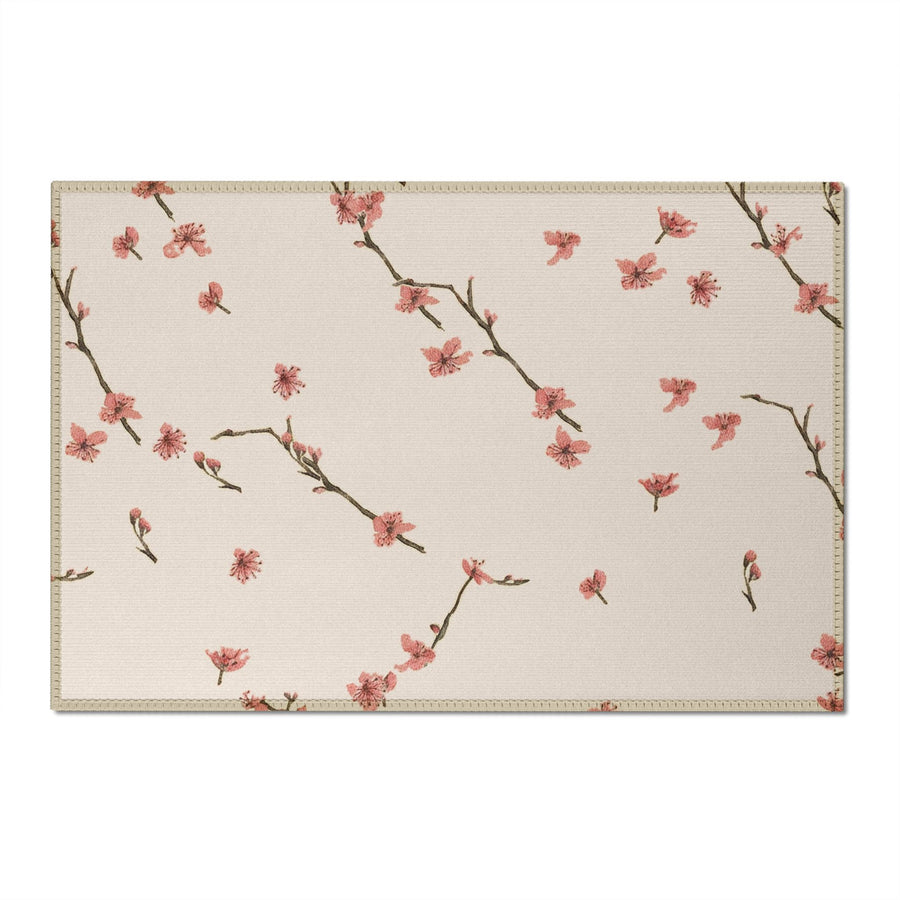
Colour first. Choose a rug within a shade or two of the floor, the sofa or the wall, and let the pattern be low contrast. A chenille rug in warm oatmeal with a faint botanical is a Japandi rug; the same rug in bright white with a black geometric is not, however washable it is. The warmth without clutter guide explains why muted, close tones do so much work in these rooms.
Size second, and bigger than you think. A washable rug that is too small looks like a bath mat that has wandered. Front legs of the sofa on the rug, all four legs of the bed on it, all four chair legs on it when pulled out. Our rug sizing guide has the numbers for each room, and there is a bedroom-specific version in bedroom rug size.
Pile third. Chenille where feet are bare, low-pile where chairs slide and boots walk. And a proper non-slip base underneath, always, because a rug that ripples is a rug that annoys.
Washing without ruining it
Cool cycle, gentle spin, no fabric softener, and dry flat or over a rail out of direct sun. Vacuum chenille against the pile occasionally to lift the traffic lanes. Do not tumble dry unless the label explicitly allows it; the heat shrinks the backing and the rug never lies flat again.
A rug for how you actually live
A washable rug belongs in a Japandi home wherever the room is busy, the floor is walked on and the alternative is worrying about the wool. In the rooms that stay clean, choose wool and let it age. In every other room, choose a washable chenille in a quiet colour, size it generously, and enjoy a floor that can be forgiven.
The test is whether the rug helps the room feel calm. A rug you can wash, in a colour you barely notice, usually does. For the room around it, the Japandi living room guide is the place to start.
Frequently asked questions
Are washable rugs worth it?
In a busy room, yes. They are cheaper than wool, light enough to move, and can be machine washed after spills. In a room that stays clean, a wool rug will feel better and age better, so the choice depends on where the rug will live.
Do washable rugs look cheap?
The bright, thin, over-printed ones do. A washable chenille rug in a muted colour with low-contrast pattern, sized generously and laid on a proper non-slip base, is hard to distinguish from a low-pile wool rug from standing height.
Can you put a washable rug in a regular washing machine?
Most sizes up to around 160 by 230 cm fit a standard domestic drum; larger rugs may need a bigger machine or a launderette. Wash cool on a gentle cycle, skip fabric softener, and dry flat or over a rail away from direct heat.