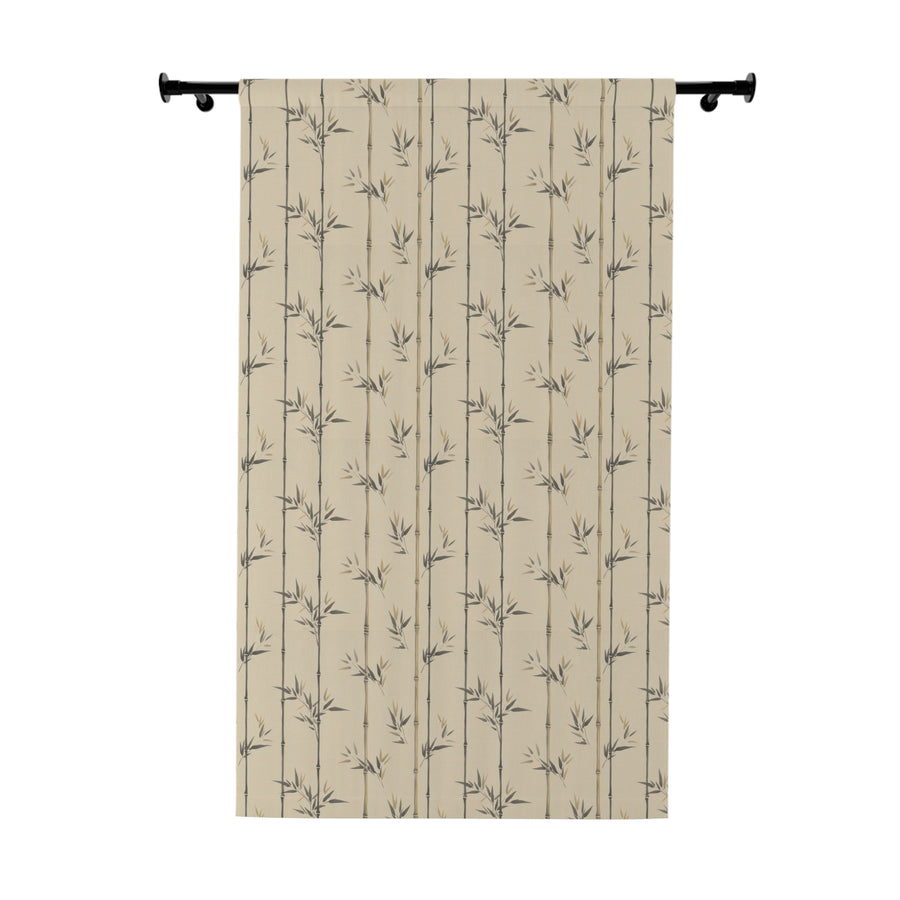
The simplest way to hang a wall tapestry is on a wooden rod threaded through a sewn sleeve or a row of loops, held on two hooks so the fabric hangs straight and can be taken down in a moment. If the tapestry has no sleeve, curtain clips on a slim rod do the same job without a needle. If you cannot make holes in the wall at all, adhesive hooks rated for the weight, or a tension rod across an alcove, will hold most textiles up to a couple of kilograms.
That is the short version of how to hang a wall tapestry. The longer version below covers each method, the right height above a bed or a sofa, and how to keep the fabric flat.
Start by weighing what you have
Before choosing a method, know two things: how heavy the textile is and how it was finished. A lightweight printed cotton panel weighs a few hundred grams and will hang from almost anything. A wool or heavy linen weave can weigh two or three kilograms and needs proper fixings. Put it on the kitchen scales if you are unsure.
Then look at the top edge. A sewn sleeve or a row of loops means a rod. A plain hem means clips, a batten or a header tape. A raw edge means you will want to hem it first, or fold it over the rod and pin it, before it starts to fray.
Method one: a rod through a sleeve
This is the method we use for anything we want to look intentional. A wooden dowel or a slim curtain pole runs through the sleeve, the rod rests on two hooks or brackets fixed to the wall, and the fabric hangs under its own weight with a small, even drape.
- Choose a rod about five to ten centimetres longer than the tapestry is wide, so a little wood shows at each end. Oak or ash, oiled, reads calmer than a metal pole.
- Mark the hook positions a few centimetres in from each end of where the rod will sit, at the same height. A spirit level or a phone level app is worth the thirty seconds.
- Fix the hooks. Into plaster or drywall, use a plug and screw or a purpose-made picture hook rated for the weight. Into brick, a plug and screw. A single small hook each side is enough for anything under three kilograms.
- Thread the rod through the sleeve on the floor, then lift it onto the hooks together with a second pair of hands if the piece is wide.
If the tapestry has loops rather than a sleeve, the same rod works; the loops will show, so check they are evenly spaced.
Method two: clips on a rod, no sewing
Curtain clip rings, the small metal clips that slide on a pole, are the answer for a textile with a plain top edge. Space them every 15 to 20 centimetres, clip the fabric with a centimetre or so of hem inside each jaw, and hang the rod as above. The clips become part of the look, so choose a finish that matches the room: black or brass on a pale wall, brushed steel in a cooler scheme.
The one drawback is that heavy fabric can sag between clips over time. Add more clips rather than fewer.
Method three: hanging without holes
Renters and anyone with a wall they do not want to mark have three good options.
- Adhesive hooks rated well above the tapestry's weight, applied to a clean, painted wall and left for the full curing time before loading. Two hooks and a light rod will hold a cotton panel for years. They struggle on textured or freshly painted surfaces.
- A tension rod wedged between the walls of an alcove, or inside a window reveal, with the tapestry on clips or a sleeve. This is the neatest no-drill solution above a bed set into a recess.
- A timber batten with strong hook-and-loop tape, where the batten leans on a picture rail or sits on adhesive strips and the tapestry is pressed onto the tape. This suits a heavy weave that would pull clips out of shape.
Whatever you choose, avoid nailing or stapling directly through the fabric. It damages the weave, and the holes tear wider with time.
Where to hang it: height above a bed or a sofa
A textile follows the same rules as a framed print, with one difference: it has a soft edge, so it can afford to sit a little lower. Above a sofa, leave a gap of roughly 15 to 25 centimetres between the top of the backrest and the bottom of the tapestry. Above a bed, the bottom edge can sit 15 to 30 centimetres above the mattress if there is no headboard, or just above the headboard if there is one.
Width matters as much as height. Aim for a piece about two-thirds the width of the sofa or the bed, centred on it, so the textile reads as belonging to the furniture rather than floating on the wall. A tapestry used this way is one of the calmest Japandi headboard alternatives there is: soft, quiet, and easy to change with the season. The proportions are the same ones we use for prints, and our guide to art above the bed walks through them in detail.
On an empty wall with no furniture beneath, hang the centre of the piece at about eye level, 145 to 155 centimetres from the floor, and give it room. A textile with space around it reads as art; one crammed between a door and a cupboard does not. Our note on the art of negative space explains why that margin is doing so much work.
Keeping it flat and looking after it
A tapestry that has been folded will show creases for weeks. Hang it in a steamy bathroom for an hour, or hold a garment steamer a hand's width from the back of the fabric, and the creases will fall out. Never iron a wool weave directly; use a damp cloth between iron and fabric, or steam only.
A slim rod or a few coins sewn into the bottom hem stops a lightweight panel from lifting in a draught. Dust the surface every few months with the upholstery brush on a vacuum, on low suction, and take the piece down once a year to shake it outdoors. Keep it out of direct sun if you can; printed cotton fades slowly, natural dyes faster. Our guide to layering textiles covers how a wall hanging sits with rugs, throws and cushions in the same room.
A soft wall, done properly
Knowing how to hang a wall tapestry is mostly knowing how heavy it is and whether you can make holes. A rod through a sleeve on two hooks is the answer for most people; clips for a plain edge; adhesive hooks or a tension rod for a wall you must leave untouched.
Hang it at the right height, give it space, and steam the creases out. A wall with a single large textile on it is one of the quickest ways to make a room feel warmer without adding an object to a surface.
Frequently asked questions
How high should a tapestry hang above a bed?
Leave 15 to 30 centimetres between the mattress or headboard and the bottom edge of the tapestry, and centre it on the bed at roughly two-thirds the bed's width. If the piece is very tall, it can start higher and end nearer the mattress; the aim is for it to read as part of the bed rather than as a separate object.
Can you hang a tapestry without nails?
Yes. Adhesive hooks rated above the tapestry's weight will hold a light rod on a smooth painted wall; a tension rod works across an alcove or a window reveal; and a batten with hook-and-loop tape suits heavier weaves. Avoid pushing pins or staples through the fabric itself.
What size rod do I need for a wall hanging?
Choose a rod five to ten centimetres wider than the tapestry so a little of the wood shows at each end, and a diameter that fits the sleeve comfortably, usually 20 to 28 millimetres. For anything over two kilograms, use a solid hardwood dowel or a metal pole rather than a hollow one, and fix the hooks into plugs.