A Japandi nursery is built on three decisions: safe, natural materials in everything the baby touches, a soft palette that stays calm at three in the morning, and art hung low enough for a child to see. Everything else follows from those. The result is a room that works for a newborn, still works for a five-year-old, and never needed a theme.
Most nurseries are decorated for the parents in the last month of pregnancy and then outgrown in a year. The Japandi approach is slower and lasts longer: a room with few things, each one chosen, and space left for the child to grow into.
Safe materials first
Before colour, before art, before anything: what is the cot made of, what is the mattress made of, what is on the floor. A Japandi nursery starts from the same place as any Japandi room, which is honest materials, and here that instinct happens to line up with safety.
Solid wood for the cot and any shelving, finished with a low-odour, water-based finish. Cotton or linen for bedding, washed before use. Wool or cotton for anything the baby lies on, and a rug that can be washed rather than just vacuumed. Avoid foam, plastics and anything with a strong smell out of the packet; if it smells, it is still off-gassing, and a small room with a closed door holds that.
Two practical points that are easy to forget in a calm room. Cords, on blinds or lamps, must be well out of reach or absent altogether. And anything tall, including a chest of drawers, needs to be anchored to the wall once the child can pull up. Follow your local safe-sleep guidance for the cot itself; that is not a design question.
A palette that works in the dark
Nurseries are used more at night than any other room in the house. The palette should be chosen for that. Warm white or soft oatmeal on the walls, one muted colour repeated in the textiles, and wood everywhere else. Under a dim lamp at three in the morning, this reads as calm. Under the same lamp, a bright accent wall reads as noise.
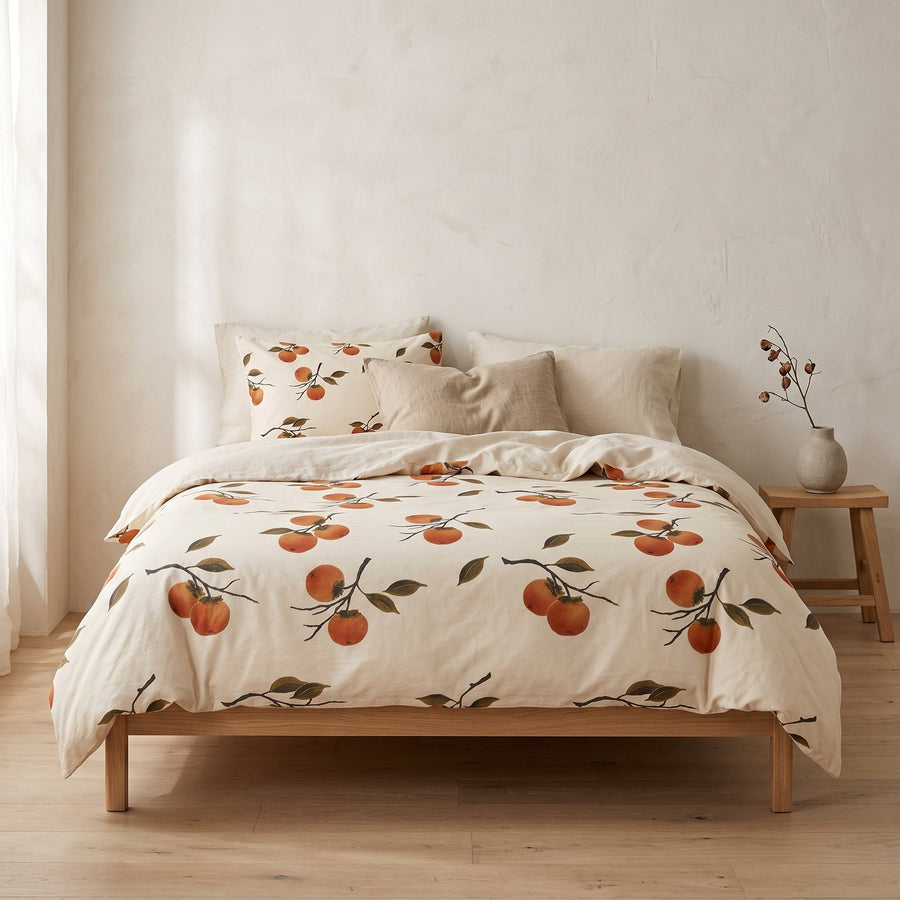
The colours that work are the ones that work in a Japandi bedroom generally: sage, dusty pink, clay, a soft grey-blue. One of them, in the curtains and a cushion and perhaps a throw, and nothing else. Our Japandi colour palette guide has the full range, and every tone in it is nursery-safe in the visual sense.
Skip the pastel-everything approach. Pale pink walls, pale pink curtains and a pale pink rug is not a soft room; it is a monochrome one. Wood and white do most of the work and the colour does the rest.
Curtains: blackout, but soft
If there is one purchase that matters more than the rest, it is the curtains. A baby who sleeps in the day needs a dark room, and a baby who wakes at dawn needs a room that stays dark for an hour longer. Blackout panels do this. The Japandi question is how to have them without the room looking like a hotel.
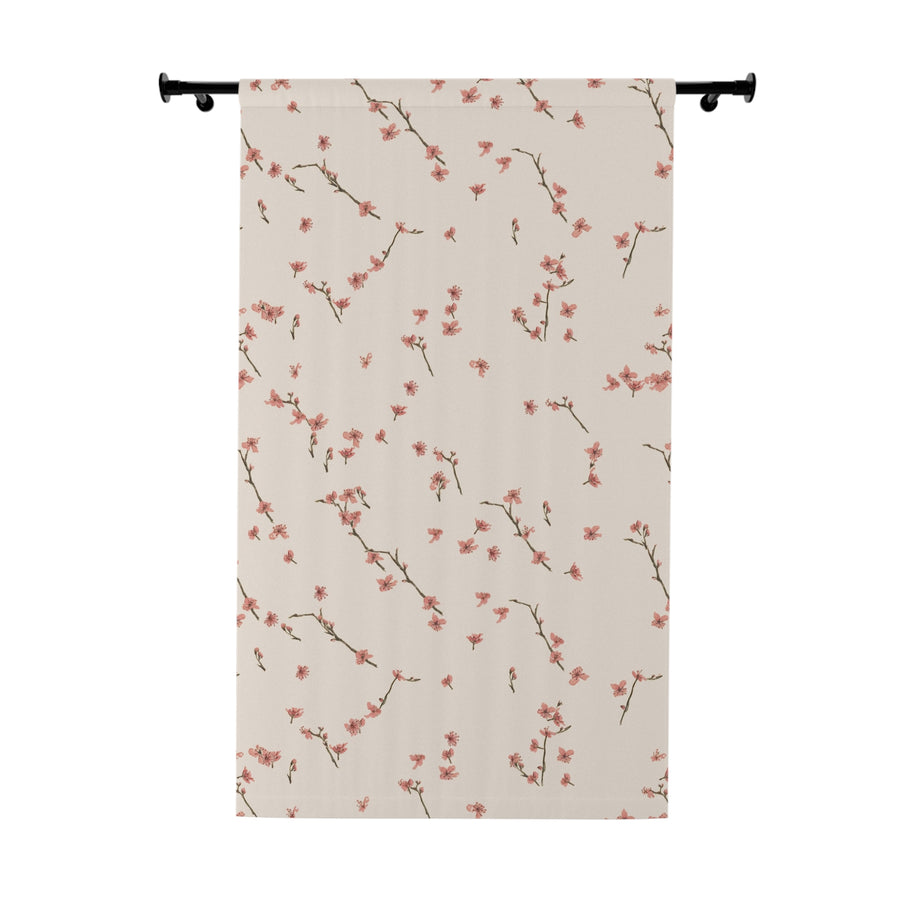
The answer is a blackout panel with a soft print on the room-facing side. A cherry branch or a scattering of blossom in muted ink reads as art when the curtains are drawn, which in a nursery is most of the time. Hang them from a simple pole, floor length, and keep any cord well out of reach or use a cordless pole. Our guide to Japandi bedroom curtains covers the choices in more detail.
Art at child height
Art in a nursery is usually hung where adults look, which is a metre or more above where the child will ever be. Hang it lower. A print at the height of a cot mattress, or at the eye level of a child standing, is a print the child will actually see and, later, point at.
Choose motifs that are simple enough to read from a cot and interesting enough to last. A single ink circle. A crane. A koi. A branch with three blossoms. These are the subjects of Japanese ink painting for a reason: they are clear at a glance and they reward looking. A wall of cartoon animals is fine for a year; a crane is fine for twenty.
Frame with glass or acrylic and fix it securely, with two hooks rather than one, because a low frame will be touched. Nothing hangs directly over the cot; the wall beside it is the place. For heights and what to avoid above a bed, our guide to art above the bed applies to a cot as well.
Fewer things, and where they go
A nursery accumulates faster than any room in the house. Gifts arrive, kit multiplies, and a room that was calm in month one is full by month six. The Japandi answer is the same as everywhere else: a fixed number of surfaces, each holding a fixed number of things, and a place for everything that is not on show.
- The cot. Against a wall, not under a window, with nothing hanging above it. A mobile, if you want one, is the one exception, fixed to the wall rather than the cot.
- A chair. One comfortable chair for feeding, with a small table or a shelf beside it for a glass of water and a lamp. This is where the adult lives in this room.
- A chest of drawers. This is the changing surface as well, with a mat on top and everything else in the drawers. No open shelving of nappies.
- One low shelf. For a few books and a basket of the toys currently in use. The rest of the toys live somewhere else and rotate in.
- A rug. Washable, soft, large enough for a child to roll on. This is the floor the child will spend the first year looking at.
Everything else, and there will be a lot of everything else, goes in the drawers or in a cupboard elsewhere. Our guide to the Japandi bedroom is the parent of this one, and its rule about a bedroom being for sleep applies twice over here.
Light for the night
The overhead light in a nursery is for changing sheets in daylight. At night, use a small lamp with a warm bulb, or a dimmable one set low, and place it where it lights the chair rather than the cot. A paper or linen shade softens it further. Nothing bright, nothing blue, nothing that hums.
A room that is lit this way at night is easier to leave. That matters more than any other design decision in this room, and our guide to lighting the five o'clock room is about exactly this quality of light.
A room that grows
A Japandi nursery is not a theme. It is a calm room that happens to have a cot in it, made from wood and cotton and wool, with a soft colour repeated and a single print hung low. When the cot becomes a bed, the room does not need redecorating. The curtains stay, the art stays, the rug stays, and a small person begins to fill the space that was left for them.
That is the whole idea, and it is a kind one. Give a child a quiet room to begin in, and give yourself one to sit in at three in the morning.
Worth considering
A few well-made pieces we would happily put next to our own. These are Amazon links; as an Amazon Associate we earn from qualifying purchases, at no cost to you.
- Linen accent chair with oak legs — One comfortable chair for night feeds, in linen and wood, which is where the adult lives in this room.
- Fluted oak pedestal side table — A small table beside the chair for a glass of water and a low lamp.
- Round water-hyacinth basket — A basket for the toys currently in use on the low shelf, with the rest rotating in from elsewhere.
Frequently asked questions
What colours are best for a Japandi nursery?
Warm white or oatmeal walls, wood furniture, and one muted colour repeated in the textiles: sage, dusty pink, clay or a soft grey-blue. Choose the palette for how the room looks under a dim lamp at night rather than in daylight. Avoid an accent wall and avoid pastel on every surface.
How high should you hang art in a nursery?
Lower than you would for adults. Hang a print at roughly the height of a child standing, or level with the cot mattress, on the wall beside the cot rather than above it. Fix it with two hooks and glaze it with acrylic if it is within reach. Simple ink motifs such as a crane, a koi or a branch read well from a cot and last for years.
Are blackout curtains a good idea in a nursery?
Yes, for daytime naps and early mornings. Choose a panel with a soft printed face so the room does not look like a hotel with the curtains closed, hang it floor length from a simple pole, and make sure any cord is out of reach or absent. A cordless pole is the safest option.