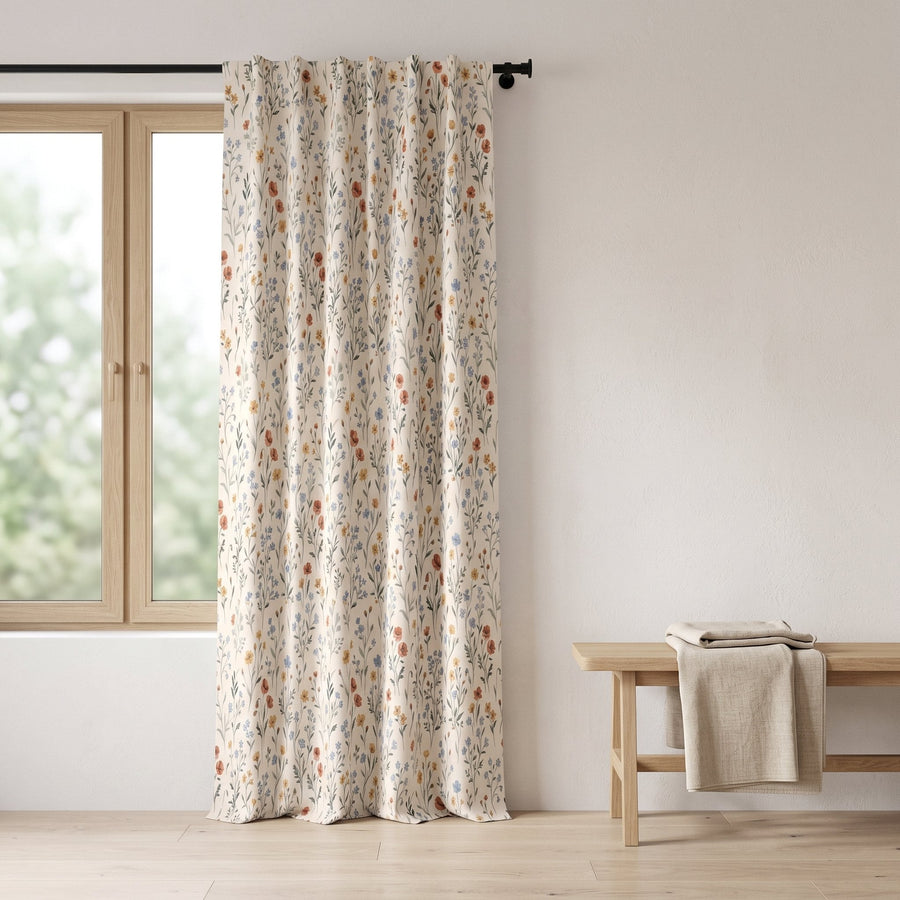
The best Japandi bedroom curtains are simple, full-length panels in a muted, natural tone, hung high and wide on a slim rod, with a blackout layer so the room is properly dark at night. Choose plain fabric or a quiet, hand-drawn print, let the panels just kiss the floor and avoid heavy pelmets, tie-backs and swags. Done well, curtains disappear into the calm of the room by day and turn it into a cocoon by night.
What Japandi bedroom curtains should do
In a Japandi bedroom, every object has to justify its place, and curtains have two jobs. In the day they soften the window and filter light. At night they block light and noise so you sleep well. The challenge is to do both without the bulk and fuss of traditional drapery.
That means clean lines, natural textures and a palette that sits quietly beside wood, linen and plaster. Curtains should frame the window, not decorate it. If you are still shaping the rest of the room, our Japandi bedroom guide covers the bed, storage and lighting that the curtains will sit alongside.
Blackout without the bulk
Many people assume blackout means heavy, stiff, hotel-style curtains. It does not have to. A modern blackout panel can be relatively light, with a soft face fabric that drapes well, while still blocking most outside light.
There are three common approaches, each with its own trade-offs:
- Blackout panels. The simplest option: one curtain that blocks light by itself. Look for a face that looks like woven fabric rather than a shiny coating, so it suits the natural palette of the room.
- Layered sheer and blackout. A sheer linen or cotton panel on the front for daytime softness, with a blackout panel or blind behind it for night. This gives the most flexibility but needs a double rod or track.
- Blackout blind plus curtain. A plain roller blind fitted inside the window recess does the darkening, and a lighter curtain in front provides the softness. Good where you already like your curtains but need more darkness.
Whichever you choose, remember that most light leaks around the edges rather than through the fabric. Extending the rod well past the window frame and hanging the curtain close to the wall makes a bigger difference than the fabric alone.
Length, width and rod placement
Proportion is what makes curtains look calm and considered rather than an afterthought. A few measurements matter more than anything else.
Hang the rod high
Mount the rod or track at least 10 to 15 cm above the window frame, and higher still if your ceiling allows. Hanging close to the ceiling makes the room feel taller and gives the panels a long, clean line. In a low-ceilinged bedroom this simple move can change the whole proportion of the wall.
Extend it wide
Let the rod extend 15 to 25 cm beyond each side of the frame. When the curtains are open, they stack against the wall rather than covering the glass, so you get the full daylight. When they are closed, the extra width reduces light leaking around the edges.
Let the panels kiss the floor
For a Japandi look, curtains should either just touch the floor or stop a centimetre or so above it. Puddling fabric on the floor is too romantic for the style, and curtains that stop at the sill look short and dated. Measure from the rod to the floor, then subtract for the hook or ring drop.
Allow enough fullness
Plan for a total curtain width of around one and a half to two times the width of the window. Too little and the panels look stretched when closed; too much and they become bulky. Simple wave or pinch-pleat headings, or plain rings on a slim rod, keep the folds even and soft.
Printed or plain curtains?
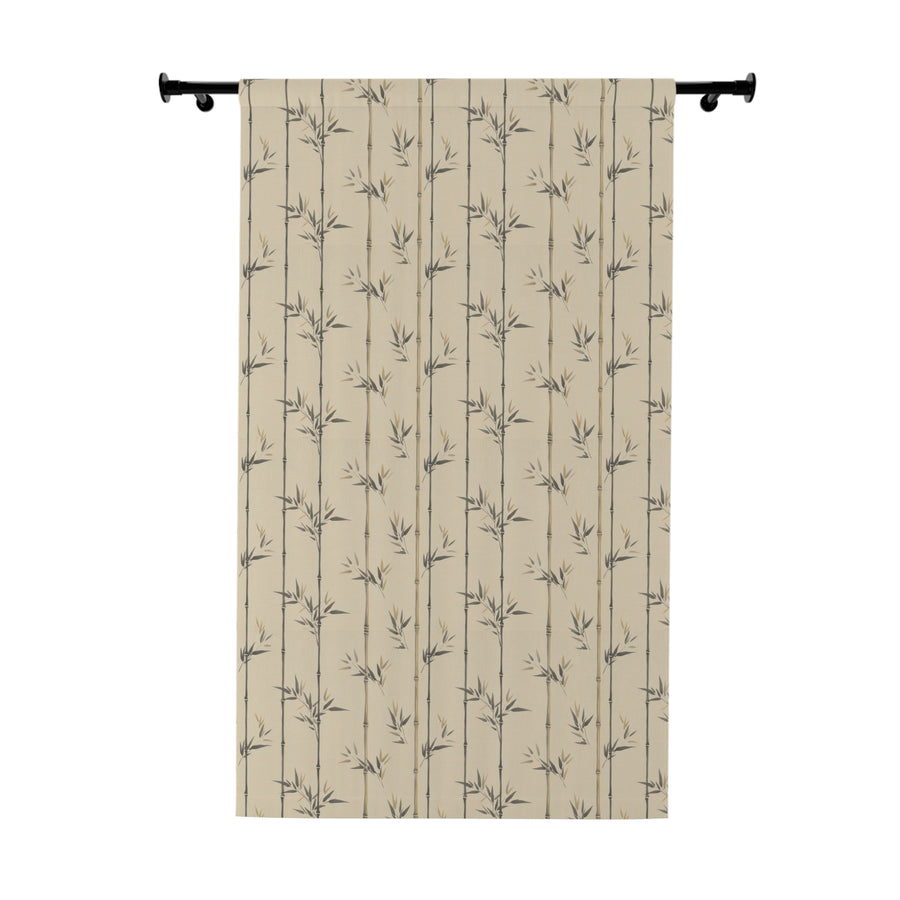
Most Japandi bedroom curtains are plain, and for good reason. A solid panel in oat, stone, warm grey or charcoal gives a calm backdrop and lets the bed, the art and the wood take the lead.
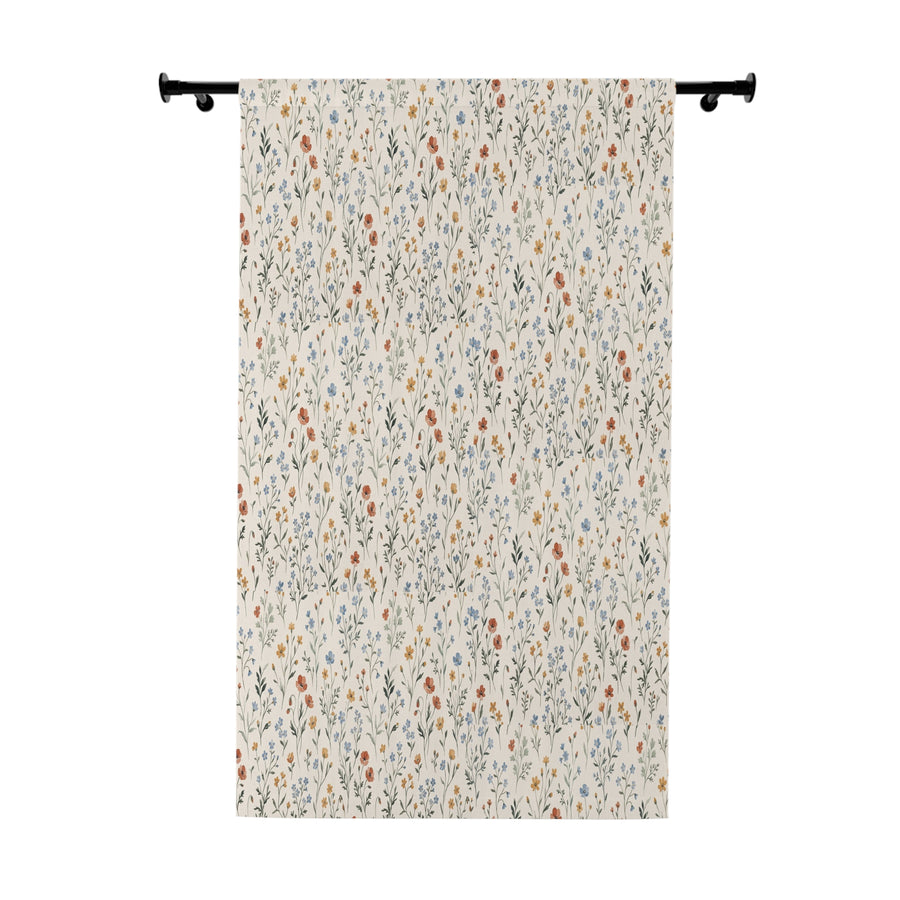
That said, a quiet print can work well, especially if the rest of the room is very pared back. The key is scale and restraint. Look for a hand-drawn botanical or a soft, loose pattern in two or three muted tones rather than a busy, high-contrast repeat. A printed curtain can then act as the room's one pattern, much as a single artwork would.
If you go printed, keep the bedding and rug plain, or echo just one colour from the curtain in a cushion or throw. Our guide to Japandi bedroom colours suggests palettes that pair well with both plain and patterned windows.
Colour and fabric choices
For a Japandi bedroom, curtain colours usually come from the same family as the walls and bedding, just a shade or two deeper. That keeps the window from becoming a hard block of contrast.
- Warm neutrals. Oat, sand and mushroom suit bedrooms with pale wood and white or cream walls.
- Soft greys and stone. Work well in cooler, north-facing rooms and with grey or black accents.
- Deeper earth tones. Clay, olive or charcoal create a more enveloping, cocoon-like room, especially in darker Japandi schemes.
Choose a fabric with a slight texture, such as a linen-look weave, so the curtains read as soft and natural even when plain. Avoid sheen and synthetic gloss, which catch light in a way that fights the matte calm of the room. Our Japandi colour palette guide helps you choose tones that sit together.
Hardware and finishing touches
Keep curtain hardware simple. A slim rod in black, brushed brass or natural wood, with plain finials or none at all, suits the style. A ceiling-mounted track is even quieter: the curtains appear to fall straight from the ceiling with no visible hardware.
Skip tie-backs, tassels and pelmets. If you want the curtains held open, simply draw them to the side and let them hang. In the evening, closing the curtains becomes a small ritual that signals the end of the day, and pairing them with low, warm lamplight makes the room feel instantly restful. Our piece on lighting the five pm room explores that transition.
Choosing your Japandi bedroom curtains
Good Japandi bedroom curtains are quiet in the day and dark at night. Hang them high and wide on simple hardware, let them just meet the floor and choose a soft, natural fabric with a blackout layer. Plain or gently patterned, they should feel like part of the architecture.
Measure carefully before you buy, and the curtains will do their work without asking for attention. For the rest of the room, our guide to the wabi-sabi bedroom shows how softer light and fewer things complete the picture.
Frequently asked questions
What colour curtains go with a Japandi bedroom?
Warm neutrals such as oat, sand and stone are the safest choice, with charcoal, olive or clay for a deeper look. Pick a shade one or two tones deeper than your walls so the curtains frame the window without becoming a stark contrast.
Should bedroom curtains touch the floor?
For a Japandi look, yes, or stop just a centimetre above it. Floor-length curtains make the ceiling feel higher and look calmer than short panels. Avoid letting the fabric pool on the floor.
How do I stop light leaking around blackout curtains?
Extend the rod 15 to 25 cm beyond the window on each side and mount it high above the frame. Use a rod or track that holds the curtains close to the wall, and choose enough width that the panels overlap when closed.