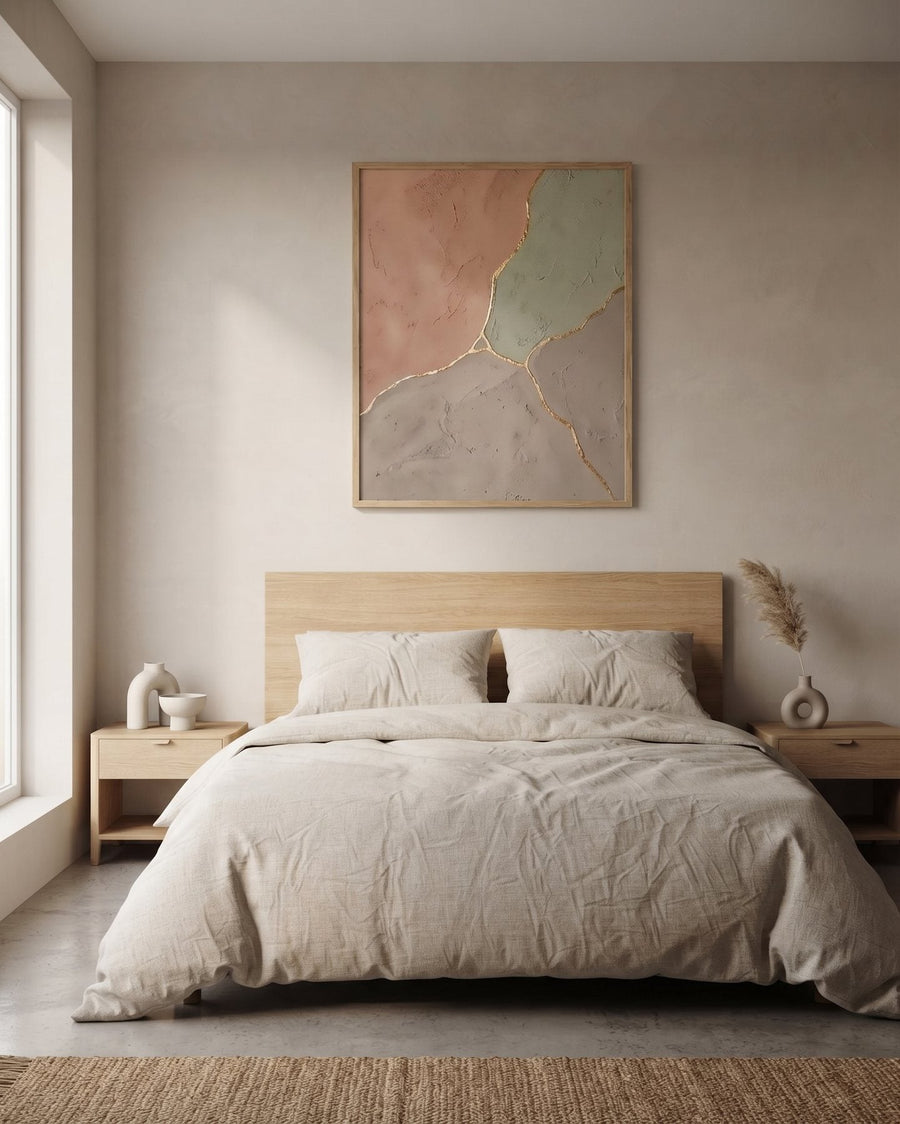
A wabi-sabi bedroom is a room of fewer things and softer light: relaxed linen bedding, one handmade vessel, one quiet artwork and a soft rug underfoot, with nothing that matches too perfectly. It values texture over pattern, natural materials over polish and space over storage on display. The aim is a room that feels lived in and restful at the same time.
The wabi-sabi bedroom in a sentence
If you remember one thing, make it this: keep only what you use or love, and let it show its age. Wabi-sabi, the Japanese appreciation of imperfect and impermanent things, is less a style than a way of editing. In a bedroom that translates to a low, simple bed, a palette borrowed from stone and clay, and a few objects with character.
It overlaps a great deal with Japandi, and if you have read our Japandi bedroom guide you will recognise much of what follows. The difference is one of degree. Japandi tidies; wabi-sabi relaxes. Creases are welcome, a chipped cup on the nightstand is fine, and nothing needs to come as a set.
Bedding: rumpled, natural and unmatched
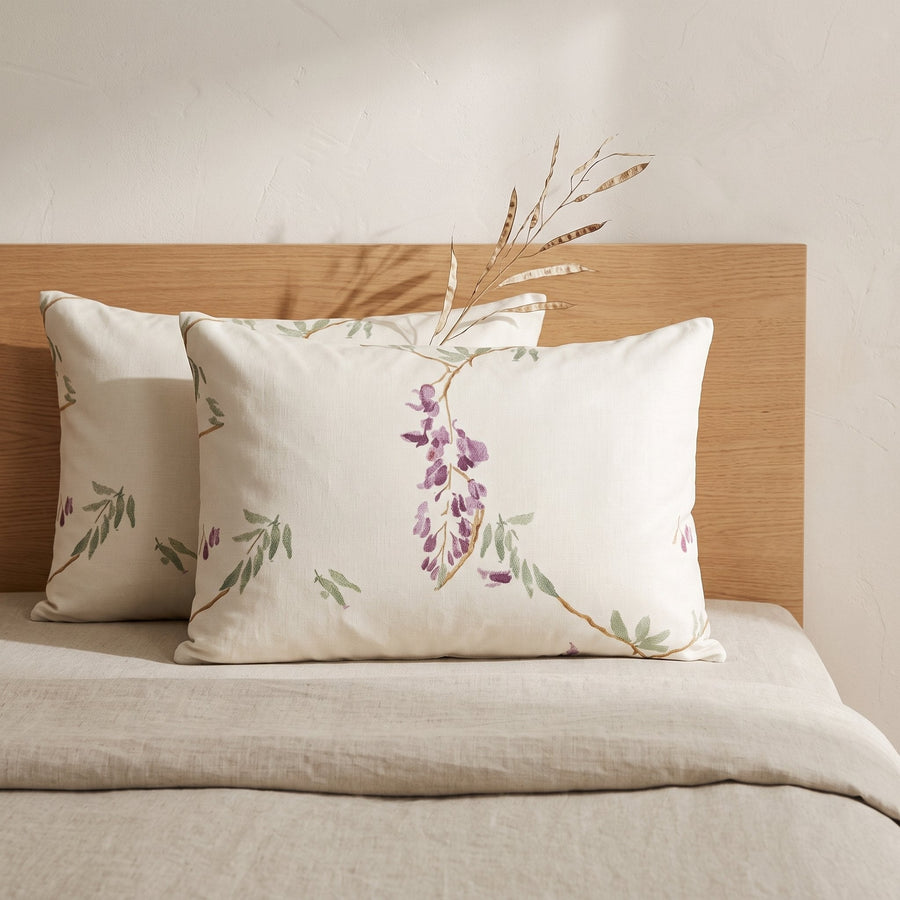
The bed is the largest surface in the room, so it sets the tone. Choose bedding in linen, washed cotton or a linen-look weave, in tones such as oat, stone, clay, charcoal or soft sage. Skip the bright white and anything with a sheen.
Resist the coordinated bed-in-a-bag. A wabi-sabi bed looks better when the duvet cover, sheet and pillowcases are related but not identical: a charcoal sheet under an oat duvet, one pillowcase in a slightly deeper shade. It looks collected over time rather than bought in one go.
- Keep the pillows to two per person. A heap of decorative cushions works against the calm. One extra lumbar cushion is plenty if you want it.
- Add one textured layer. A waffle blanket, a wool throw or a quilted cover folded at the foot of the bed gives depth without clutter.
- Do not iron. Pull the duvet straight, plump the pillows and leave the creases. They are part of the look.
For more on fibres and finishes, our guide to wabi-sabi textiles explains why wrinkled linen is the point, and our round-up of the best linen bedding helps if you are buying new.
Softer light, morning and night
Light changes a wabi-sabi bedroom more than any object. In the day, let it in softly. Unlined linen or cotton curtains diffuse sunlight into a gentle glow; if you need darkness for sleep, hang a blackout panel behind them or choose a printed blackout curtain in a muted tone.
At night, think low and warm. A paper lantern or a ceramic lamp on the nightstand, with a warm bulb of around 2,700 kelvin, makes the room feel enclosed and calm. Avoid a single bright ceiling light; if you have one, put it on a dimmer and use it only when you need to find something.
Candles add the flicker that wabi-sabi loves, but keep them in stable holders and away from fabric. A single taper or a small stoneware candle on a tray is enough.
One vessel, one artwork
A wabi-sabi bedroom needs very little decoration. Two pieces, chosen well, can do the work of twenty.
The vessel
Put one handmade object where you will see it last thing at night and first thing in the morning. A hand-thrown cup on the nightstand, a small vase with a single stem on a dresser, or a wooden bowl for rings and earrings. Choose the piece with the most character: an uneven rim, a speckled glaze, a visible fingerprint in the clay.
The artwork
Hang one piece above the bed or on the wall you face when lying down. An ink landscape, a still pond, a single branch or an ensō circle works well. Give it space, frame it in plain wood or pin it bare, and resist adding companions. Our guide to nightstand styling covers how to keep the surfaces around it just as calm.
Floors, furniture and the space in between
Keep the furniture low and few. A simple wooden bed frame, or even a mattress on a low platform, makes the ceiling feel higher and the room calmer. One nightstand or stool on each side, a chest or a few hooks for clothes, and that is often enough.
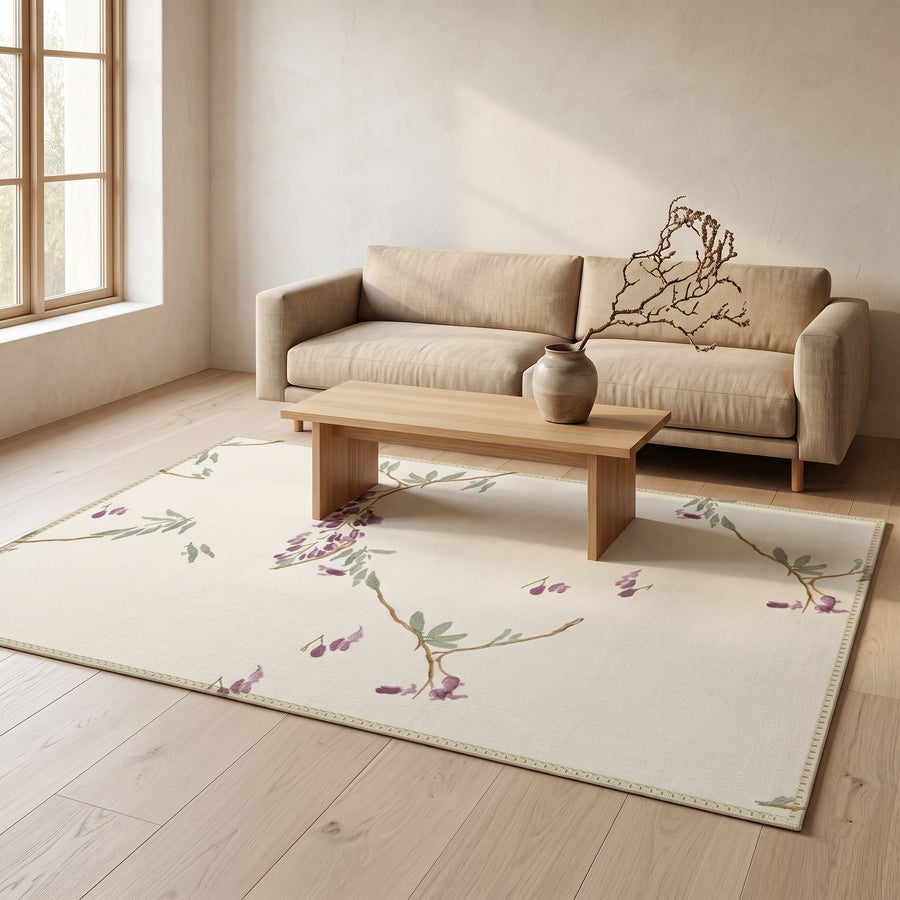
Underfoot, a soft rug in a muted tone makes the room warmer and quieter. Place it so that you step onto it when you get out of bed; for a double or queen bed, that usually means a rug that extends at least 45 to 60 cm beyond each side. Our rug sizing guide has the exact measurements, and our piece on bedroom rug size goes room by room.
Most importantly, protect the empty space. Leave the top of the chest bare except for one object. Keep the floor clear under the bed. Store what you do not need daily out of sight, ideally in closed cupboards or lidded baskets. The empty space is what makes the room feel restful.
What to leave out
Editing is easier when you know what to remove. These are the most common things that work against a wabi-sabi bedroom:
- Matching furniture sets. A bed, nightstands and dresser in the same finish look showroom-perfect. Mix woods and let pieces differ.
- Screens and chargers on display. Move the television out if you can, and keep cables in a drawer or a small box.
- Glossy and synthetic finishes. High-gloss lacquer, mirrored furniture and shiny polyester all fight the softness of the room.
- Too many words. Typography prints, slogans and labels add noise. Let images and materials speak.
A room that grows quieter with time
A wabi-sabi bedroom is never quite finished, and that is part of its appeal. Linen softens, wood darkens, a cup gains a hairline crack. Each of these small changes makes the room more personal and more restful.
Begin with one change this week: strip the bed of everything that matches too well and remake it in relaxed linen, or clear every surface and put back only one object. Fewer things and softer light will do the rest.
Worth considering
A few well-made pieces we would happily put next to our own. These are Amazon links; as an Amazon Associate we earn from qualifying purchases, at no cost to you.
- French-linen sheet set — Linen that creases and softens with every wash, which suits a bed that is not meant to look pressed.
- Ceramic bedside lamps, pair — Ceramic bases and fabric shades for the low, warm evening light this room runs on.
- Hug-donut bud vase — The one vessel on the nightstand, sized for a single stem.
Frequently asked questions
What colours suit a wabi-sabi bedroom?
Earthy, muted neutrals work best: oat, sand, warm grey, clay, charcoal and soft sage. Keep to a narrow palette and let texture provide the interest. A single deeper accent, such as rust or indigo, adds warmth without disrupting the calm.
Can a wabi-sabi bedroom be cosy rather than bare?
Yes. Wabi-sabi is minimal in number of things, not in comfort. Layer a soft rug, a heavy throw and relaxed linen bedding, use warm low lighting and the room will feel enclosing and warm while still uncluttered.
How is a wabi-sabi bedroom different from a Japandi bedroom?
They share a natural palette and a love of simplicity. A Japandi bedroom tends to be crisper and more ordered, with clean lines and careful symmetry, while a wabi-sabi bedroom is looser and lets imperfection, creases and the marks of age show.