A good Japandi housewarming gift is useful from the first evening, made from wood, stoneware, linen or cotton, and does not assume anything about a colour scheme the new owners have not chosen yet. Four gifts meet that test better than any others: a wooden board, a stoneware mug, a small towel set and an art print. This guide covers each one, how to pair them, and how to keep the whole thing under a hundred.
The first weeks in a new home are chaotic. Boxes everywhere, nothing in its place, a kitchen that works but does not yet feel like theirs. The right gift is something that can be unpacked and used the same day, and that will still look right once the room settles.
What makes a housewarming gift Japandi
Three things. It is made from an honest material, which means the material is visible and is what it appears to be. It has a job, so it is not an ornament. And it is calm enough to sit on a bare counter without needing company.
The colour question is the one most people get wrong. You do not know what the walls will be, or what the sofa will be, and neither do the new owners in most cases. So stay with natural tones: the colour of oak, undyed linen, speckled stoneware, black ink on white paper. These belong in any room the house will eventually become. Our Japandi colour palette guide explains why those tones are so forgiving.
Avoid anything that competes for a surface. A new home has very few settled surfaces, and the gift that needs one will spend the first month in a box.
The wooden board
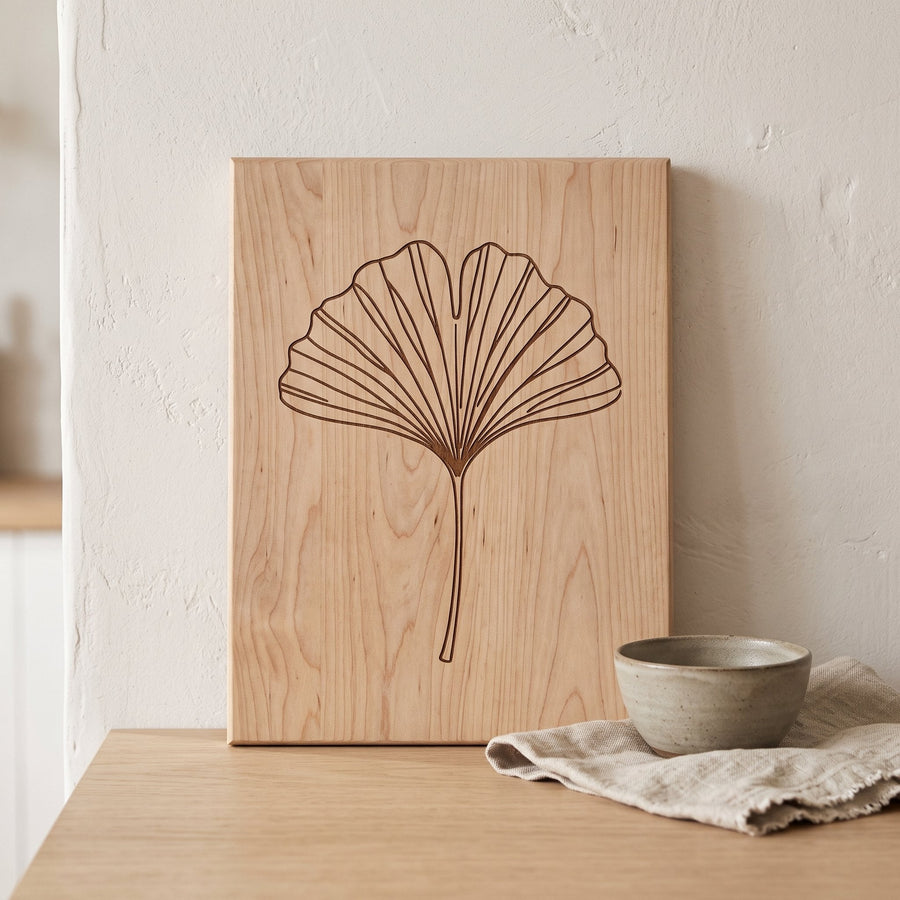
If you are giving one thing, give a board. It works on the first night, when the meal is bread and cheese eaten standing up, and it works a year later as the serving piece for a proper dinner. It also lives on the counter, which means it is seen every day.
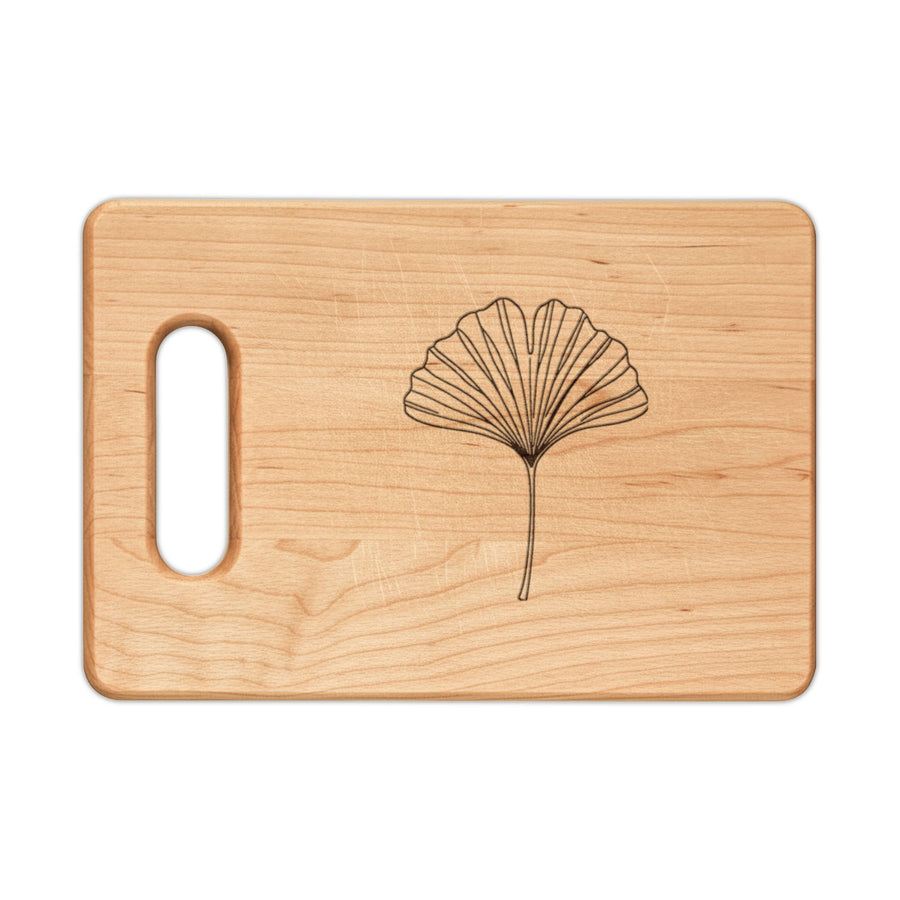
Choose solid wood over anything laminated. A single engraved motif is enough decoration; more than that and it stops being a board. Size matters less than you would think, because a small board has a permanent place while a large one may not. Something around the size of a sheet of paper suits most kitchens.
A board needs a little care to stay good, and it is worth sending a note with it. We keep a short guide on how to care for an engraved wooden board: a wipe, a dry, and a wipe of oil every so often. That is all.
The stoneware mug
The mug is the smallest gift that changes a morning. Stoneware holds heat better than thin ceramic, it has a weight that feels deliberate, and a speckled glaze looks better after a hundred washes than it did new. One motif on the side, in ink black, and nothing else.
Give one, or give two if it is a couple. Do not give four. A matched set of mugs is the kind of gift that ends up half in the cupboard and half at the back of the cupboard. Two mugs that match each other but nothing else are easier to love.
If you want to understand why no two speckled mugs are the same, our piece on speckled glaze stoneware explains the firing. It is a nice thing to know when you hand it over.
The towel set
Bathrooms are the last rooms to feel finished in a new home, and they are the rooms where a small gift shows most. A pair of waffle hand towels, in a soft botanical print or a plain oatmeal, is enough to make a bare bathroom feel considered.
Waffle weave is the right choice because it dries fast, folds flat and does not need to match anything. Terry towels come in colours that need deciding about; waffle in a muted print simply sits there. If you want a fuller comparison, our guide to Japandi bath mats and towels goes through the options.
Two hand towels, not a bath sheet. A bath sheet is a size decision, a colour decision and a storage decision all at once. Two hand towels are a gift.
The art print
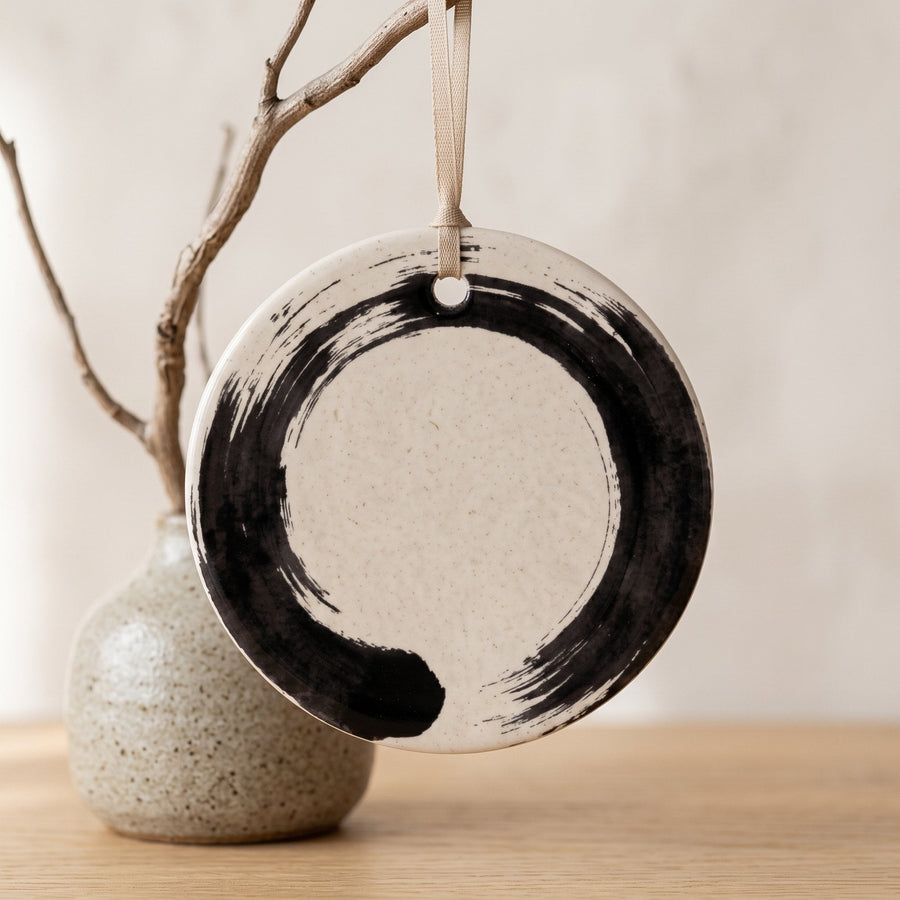
An art print is the one gift on this list that is not used in the practical sense, and it earns its place because a new home has bare walls and the owners have not had time to think about them. A single ink drawing on good paper, unframed, is an invitation rather than a demand.
Unframed matters. A frame is a decision about the room, and the room is not ready for decisions. Rolled in tissue in a tube, a print can wait in a drawer for a month and then go up when the wall is chosen. Send it with a link to our guide on how to frame art prints so they know what to ask for.
Choose a motif that means something in a new house. A ginkgo leaf, a crane, a branch coming into flower. Our short piece on ginkgo leaf symbolism is worth reading if you want the gift to carry a quiet message about endurance and beginnings.
Pairing rules: how to combine two or three
If the budget stretches to more than one piece, pairing is where a housewarming gift becomes a set without becoming a hamper. A few rules keep it calm.
- One motif across everything. If the board has a ginkgo, the mug should too, or it should have nothing. Two different motifs in one gift is two gifts that argue.
- One material family per room. Board and mug belong in the kitchen; towels belong in the bathroom. Pair within a room rather than across the house.
- Two pieces, not three. A board and a mug. Two towels. A mug and a card. Three pieces starts to look like a bundle, and a bundle needs a basket, and now you are buying baskets.
- Add paper, not objects. A card with a real note is the third piece that costs almost nothing and takes no room. Write what you mean about the house.
The pairing that works most often is a board with a single mug, both carrying the same motif, wrapped together in a linen tea towel. The tea towel is the wrapping and the third gift, and the whole thing sits on the counter from the first night.
Keeping it under a hundred
Staying under a hundred, in whichever currency you are working in, is mostly a matter of choosing one or two good things rather than four adequate ones. A single board on its own is a complete gift. A mug and a card is a complete gift. Two hand towels is a complete gift.
Spend the money on the material rather than the size. A small solid board outlasts a large veneered one. A heavy stoneware mug outlasts a thin set of six. The person receiving it will not count the pieces; they will notice which one they reach for.
The gift that settles in
A Japandi housewarming gift is not there to decorate the house. It is there to be the first thing in the new kitchen or bathroom that already feels like it belongs. Board, mug, towels, print: each one works from the first evening and each one is still in use when the boxes are long gone.
Choose one, or pair two with the same motif, and wrap it in something the house can use. That is the whole of it.
Worth considering
A few well-made pieces we would happily put next to our own. These are Amazon links; as an Amazon Associate we earn from qualifying purchases, at no cost to you.
- Stoneware salt cellar with wood lid — Stoneware and wood, useful from the first evening, and calm on a bare counter.
- Stoneware utensil crock with beech utensils — A new kitchen’s first jar of wooden spoons, in neutral tones that suit whatever the walls become.
- Glass water carafe with tumbler — Clear glass makes no colour decisions for the new owners, and it is used every night.
Frequently asked questions
What is a good housewarming gift for a minimalist couple?
A solid wooden serving board with a single engraved motif, or two matching stoneware mugs. Both are used daily, need no colour decision, and sit on a bare counter without looking like clutter. Add a handwritten card rather than a third object.
Should a housewarming gift match the new home's colours?
No, because the colours are usually not decided yet. Choose natural tones such as oak, undyed linen, speckled stoneware and black ink on white paper. These fit almost any room the house will become, which is why wood, stoneware and waffle-weave towels are safer than anything coloured.
Is an art print a good housewarming gift?
Yes, if it is unframed. A rolled print on good paper lets the new owners choose the frame and the wall in their own time. Pick a motif with a quiet meaning, such as a ginkgo leaf or a flowering branch, and send it with a note about how to frame it.