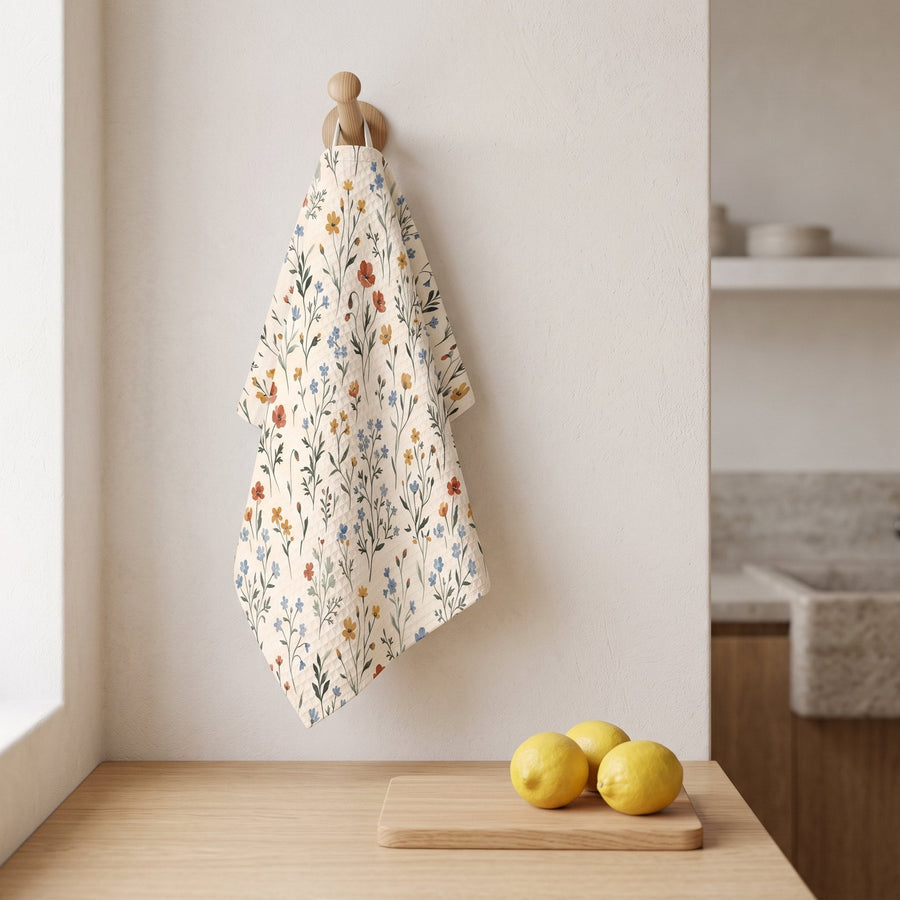
A woven throw blanket ages better than a printed one, and the reason is structural. In a woven throw the pattern is made by the coloured threads themselves, so it cannot fade unevenly, crack or wash out; in a printed throw the pattern sits on the surface of a plain cloth and is only as durable as the ink. If you want a throw that looks the same in ten years, weave wins.
That is not the whole story. Printed throws are lighter, cheaper and can carry detail a loom cannot, and there are rooms where that is exactly what you want. This guide explains what jacquard weaving actually is, how the two types differ in weight, care and look, and which to choose for which job.
What a jacquard weave is
Most patterned woven throws are jacquard. A jacquard loom controls each warp thread individually, so it can lift and lower threads in any combination and build a picture, a motif or a complex geometric directly into the cloth. The design is not applied afterwards; it is the cloth.
Because the pattern is made from two or more coloured yarns crossing each other, a jacquard throw is usually reversible, with the colours swapped on the back. It is also thicker and heavier than a plain weave of the same yarn, because the extra floats of thread that create the pattern add density.
The trade-off is resolution. A loom works in threads, so fine detail, soft gradients and a brush stroke's feathered edge are hard to reproduce. Jacquard suits bold shapes, clear lines and a limited number of colours, typically two to four. It suits a ginkgo silhouette or a moon cycle far better than a watercolour wash.
What a printed throw is
A printed throw starts as a plain woven or knitted cloth, usually cotton, polyester fleece or a blend, and the design is applied to the surface by screen, digital or heat-transfer printing. Digital printing can reproduce almost any image at almost any resolution, including the soft grain of ink on paper.
The print is generally on one side only, with the back plain or ghosted. The cloth itself is lighter, because there is no extra structure holding the pattern, and often softer from the first day. Prices are lower because the loom setup is simpler and the fabric is faster to produce.
The weakness is the same as the strength: the pattern is a layer, not the fabric. It can fade with sun and hot washes, pill on fleece, and on a cheaper piece it can crack or look worn along the folds long before the cloth itself gives up.
Woven throw blanket vs printed: the comparison
Here is how they compare on the things you will notice at home. We have been direct, because we make both and have no reason to flatter either.
Weight and drape
Woven throws are heavier and hold a fold. Laid over a sofa arm they hang straight; folded at the foot of a bed they stay put. Printed throws, especially fleece, are lighter and slide, and they tend to look like a blanket someone left rather than a textile chosen for the room. If you want a throw to sit well, weight matters more than anything, and our guide to styling a throw explains why.
Warmth
Weight and warmth go together. A dense cotton or wool jacquard is a real blanket that keeps a person warm on a cold evening. A light printed throw is a decorative layer that helps a little. For a bed or a sofa you actually sit under, woven is the practical choice.
Care
Both types are usually machine washable on a cool cycle. Woven cotton throws can be washed hot occasionally and may shrink a little the first time; woven wool needs a wool cycle or a hand wash. Printed throws should stay cool and be dried out of direct sun to protect the print. Neither should be tumbled hot. The difference is that a woven throw comes out of its fiftieth wash looking much as it did after its first, while a printed one gradually softens and lightens.
Look
Jacquard has a depth to it: the pattern catches light differently from the ground, and the reverse side gives you a second version of the same design. It reads as a made object. Print is flat, even and capable of far more subtlety and detail. For a sumi-e ink drawing with real brush texture, print is the only way to get it onto a throw. For a bold two-colour crane or a folk geometric, jacquard looks better and lasts longer.
Which to choose
A short list, because the answer depends on the job.
- A sofa throw for daily use: woven. It will be sat on, pulled over, folded and washed constantly, and a jacquard cotton or wool blend will survive that for years.
- The foot of a bed: woven, for weight and warmth. A reversible jacquard also lets you flip it seasonally.
- A guest room or a rental: either, but printed is fine here. It is used lightly and washed rarely, and the lower price is sensible.
- A detailed artwork you want on textile: printed. A brush stroke or a photographic botanical simply cannot be woven.
- Children's rooms and pets: woven cotton. It takes a hot wash and does not pill.
How to judge a woven throw in the hand
Turn it over. A true jacquard shows the design in reverse on the back, with the colours swapped; a print shows a faded ghost or nothing. Look at the edge: a woven throw has a selvedge or a fringe formed from the warp threads themselves, while a printed one is usually hemmed or overlocked.
Hold it up to the light. Jacquard is dense and opaque where the pattern floats and slightly more open on the plain ground, which is what gives it depth. Feel the weight: a good cotton jacquard sofa throw at 130 by 170 cm is noticeably heavy, closer to a light blanket than a scarf.
Check the fibre. Cotton jacquards are the easiest to live with. Wool and wool blends are warmer and hang beautifully but need gentler washing. Acrylic is cheap and pills. Our linen vs cotton vs wool guide compares the natural fibres if you want to go deeper, and wabi-sabi textiles looks at why a throw that shows its age can be a good thing.
The one that gets better
A woven throw blanket is the one you buy once. It costs more, weighs more and does less detail, and in exchange it looks the same or better after a decade of evenings. A printed throw is the one you buy for a lighter job, a guest room, or an artwork that only print can carry.
In a Japandi home, where fewer things are asked to last longer, the weave is usually the right answer for the throw you use every day. Choose the print deliberately, for the reasons print is good at, and it will not disappoint either. How the throw then works with cushions and a rug is covered in layering textiles.
Frequently asked questions
What is a jacquard throw?
A jacquard throw is woven on a loom that controls each warp thread individually, so the pattern is built into the cloth from coloured yarns rather than printed on top. It is usually reversible, heavier than a plain weave and very durable.
Are woven throws warmer than printed ones?
Generally yes. The extra thread structure that creates a woven pattern makes the cloth denser and heavier, so a cotton or wool jacquard is a genuine blanket. Most printed throws are lighter decorative layers.
Do printed throw blankets fade?
Over time, yes, particularly with hot washes and direct sunlight. Washing cool and drying in shade slows it considerably. A woven throw's pattern is made from dyed yarn all the way through, so it fades far more slowly and evenly.