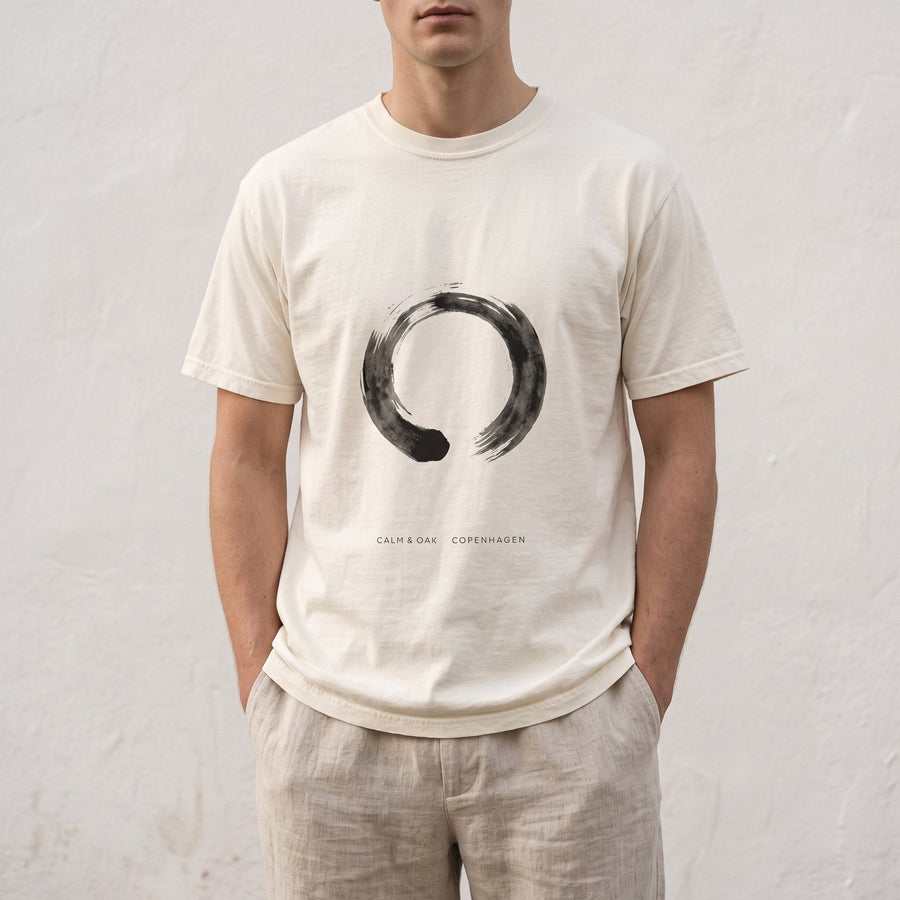
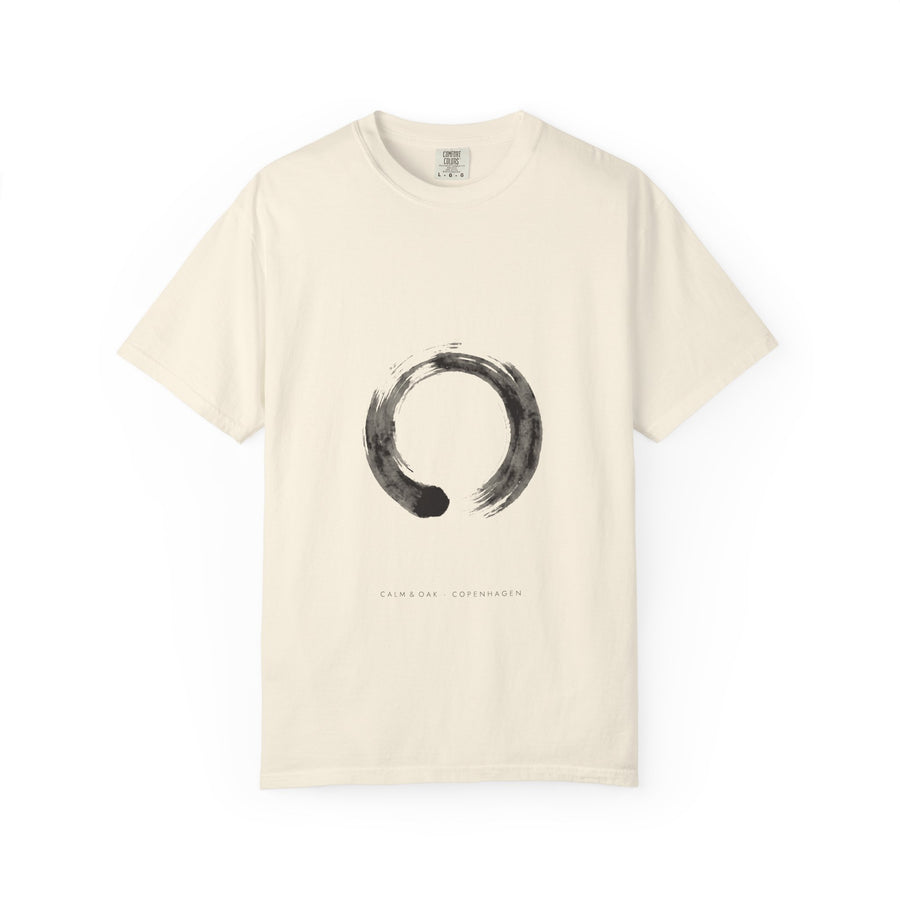
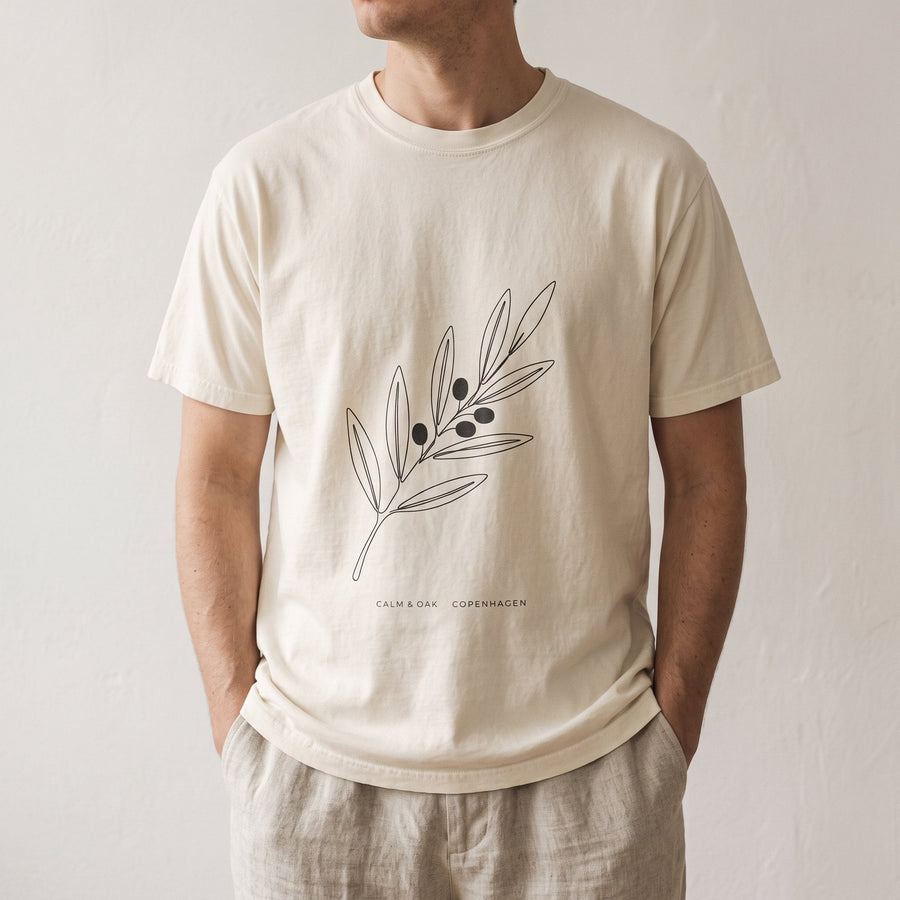
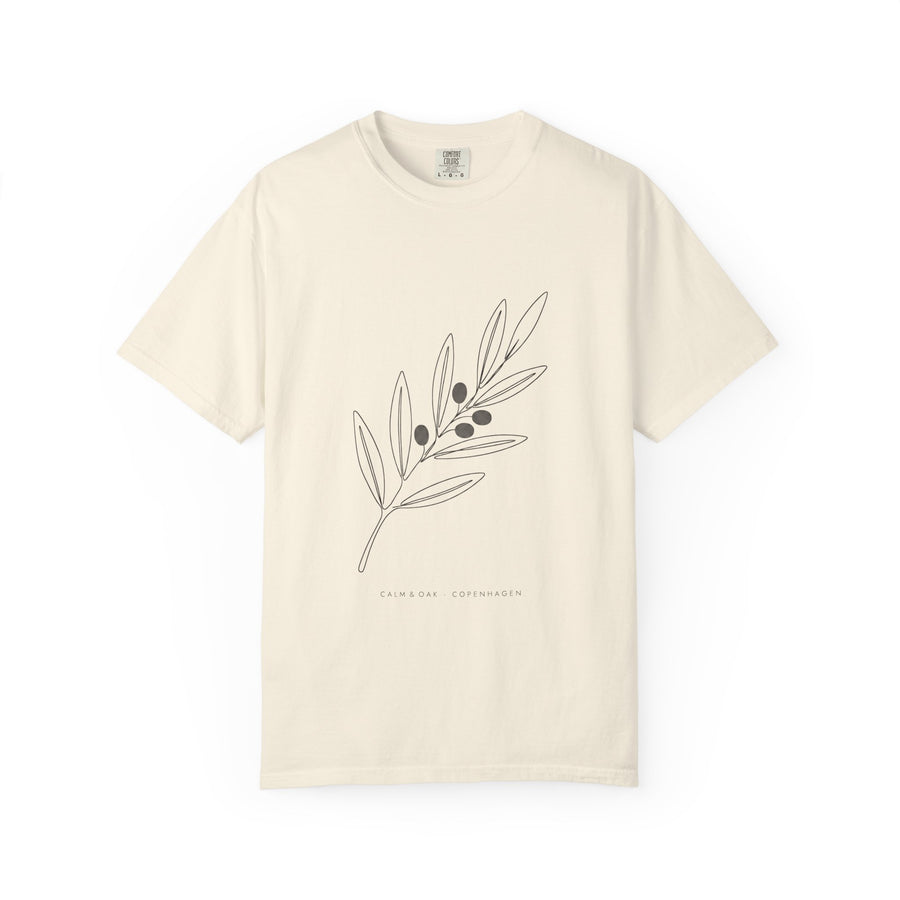
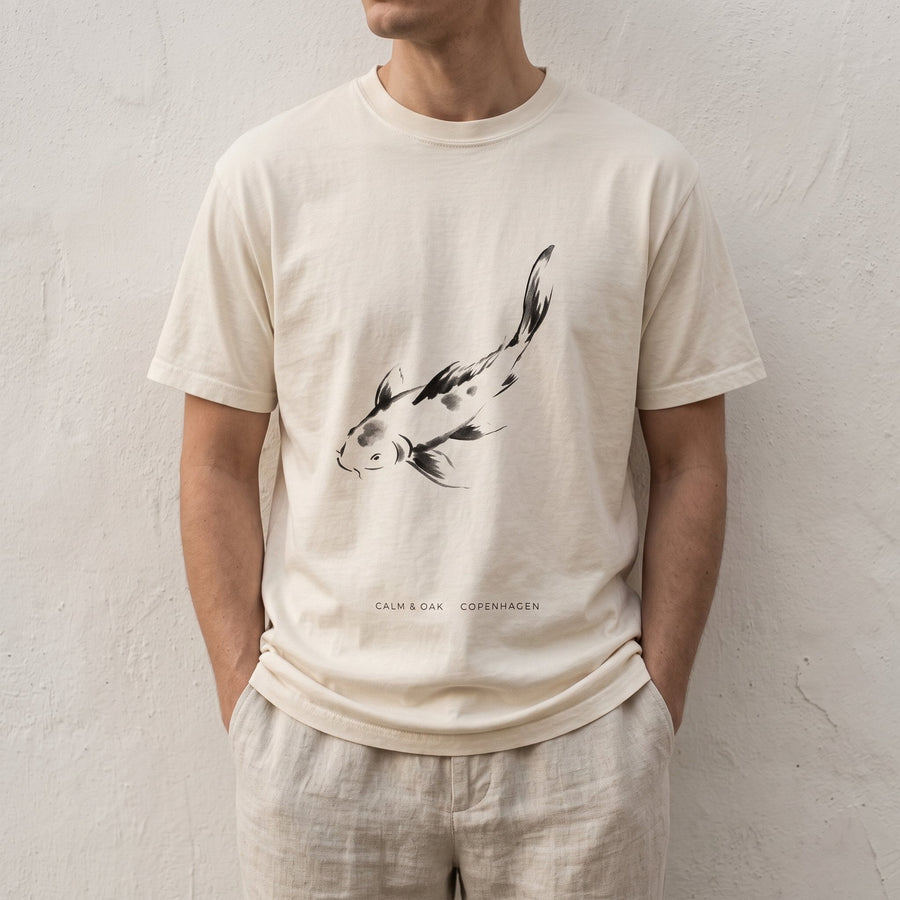
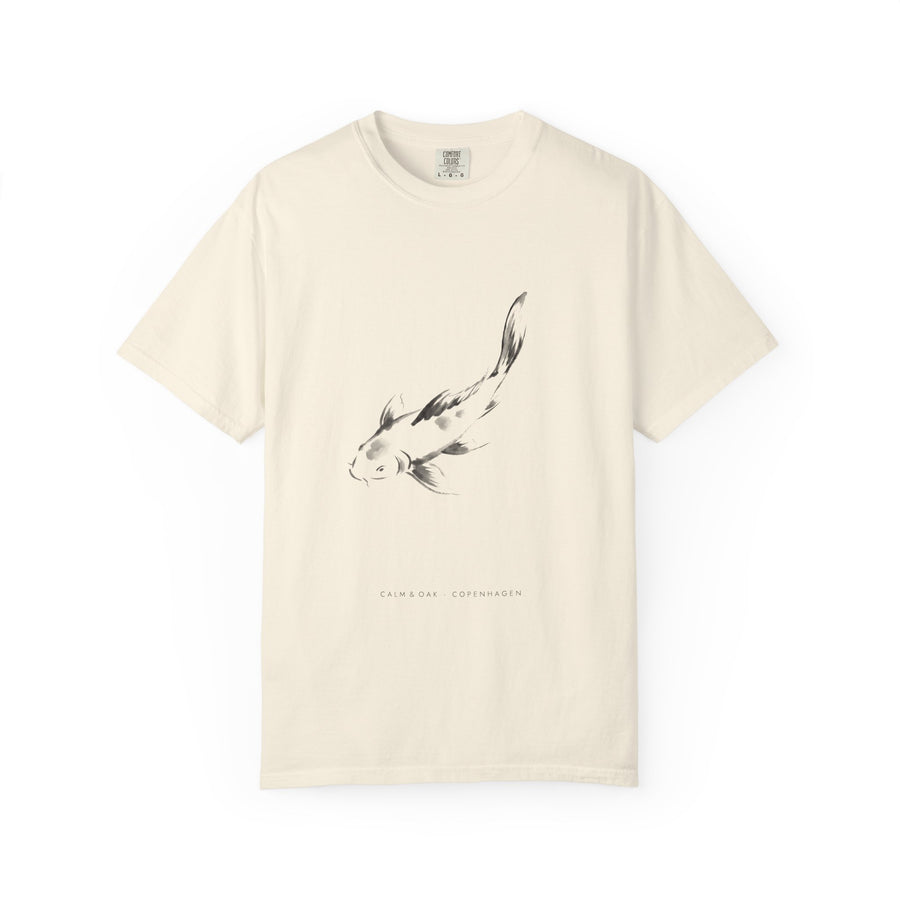
A minimalist graphic tee works when the artwork is small or quiet, the fabric is heavy enough to hang well, and the colour sits easily with the rest of your wardrobe. Wear it as you would a plain tee, with simple trousers, a shirt or an unstructured jacket, and let the print be the one point of interest. This guide covers fit, fabric, where the art sits on the body, and how a single graphic tee earns its place in a quiet wardrobe.
What makes a graphic tee minimal
A graphic tee is minimal when the print adds a thought rather than a shout. Usually that means one motif, drawn by hand or set simply, in one or two colours close to the fabric. There is no slogan, no oversized logo, and plenty of plain cotton around the image.
The test is whether the tee still works as a basic. If you can wear it under an open shirt, with tailored trousers or with a knit thrown over the shoulders, and it looks deliberate rather than casual, it is minimal. If the print dictates the whole outfit, it is not.
Good motifs for a quiet print
- A single brush mark, such as an ensō circle or one stroke of ink. These read as art first and decoration second.
- A small botanical, like a ginkgo leaf, an olive sprig or a single stem, placed off-centre.
- A simple landscape line, such as a mountain ridge or a horizon, in a muted tone.
If you are drawn to the ensō, our sibling guide to the meaning of the ensō explains why an open circle carries so much in so little.
Fit: relaxed, not baggy
Fit decides whether a tee looks considered or careless. For a minimalist graphic tee, aim for a relaxed fit that skims the body: shoulder seams sitting at or just past your natural shoulder, sleeves ending mid-bicep, and a hem that falls around the hip.
- True to size gives a clean, easy shape that tucks into trousers or sits neatly under a jacket.
- One size up gives a softer, oversized drape that suits wide trousers and a more relaxed weekend look. Go no further than one size, or the shoulders drop too far and the print sits too low.
- Avoid tight or very cropped fits. They pull the print out of shape and work against the calm the art is meant to bring.
Fabric: weight, texture and colour
Heavier cotton is the foundation of a good minimal tee. A heavyweight jersey hangs straight, hides the outline of what is underneath, and holds its shape through many washes. Thin fabric clings and twists, and even a beautiful print looks cheap on it.
Look for 100% cotton, ideally ring-spun, which is smoother and softer than standard cotton. Garment-dyed tees, which are dyed after they are sewn, have a slightly washed, lived-in colour and a soft handle from the first wear. They also shrink less, because the fabric has already been through water and heat.
Colours that build a quiet wardrobe
Choose ground colours you would happily wear plain. Ivory, sand, warm grey, muted sage and soft brown all sit easily with denim, navy, black and oatmeal. They also flatter ink-black prints far more than bright white, which can look harsh under daylight. Our journal piece on the quiet wardrobe sets out the same palette for clothes, and our notes on the Japandi colour palette show how closely it mirrors a calm room.
Where the art sits
Placement changes the character of a graphic tee as much as the print itself.
- Centre chest, small. A motif of around 8 to 12 cm, placed a hand's width below the collar, is the most versatile. It shows under an open shirt and reads clearly without dominating.
- Left chest. A very small mark, about the size of a pocket, is the most discreet option and works well under knitwear.
- Centre front, larger. A bigger image of 20 cm or more makes the tee a statement. Keep it to one or two tones and wear it with plain pieces.
- Upper back. A print between the shoulder blades with a plain front is quiet face-on and a pleasant surprise from behind.
Direct-to-garment printing, where the ink is printed into the cotton rather than on top as a thick layer, keeps the fabric soft and lets the print fade gently with the tee rather than cracking.
How to wear a minimalist graphic tee
The rule is simple: one point of interest per outfit, and the print is it. Everything else should be plain, natural in texture and close in tone.
- With an open shirt: an ivory tee under an unbuttoned linen or chambray shirt, with straight trousers and leather shoes. The print shows in a narrow vertical strip.
- With tailoring: a sage or sand tee under an unstructured blazer, with matching or near-matching trousers. Tuck it in for a clean waistline.
- With knitwear: a crew-neck jumper in oatmeal or grey over a tee whose hem shows just below. Good for cooler mornings.
- On its own: with wide trousers or dark denim and a canvas tote. Our sibling piece on the tote bag as an everyday object follows the same idea of one good thing carried well.
Keep jewellery and accessories minimal: a watch, a ring, a plain belt. The tee is already saying something.
Caring for a printed cotton tee
A good tee lasts years if you treat it gently. Wash it cold and inside out, which protects the print from abrasion. Tumble on low or, better, dry it flat or on a hanger. Avoid ironing directly over the print. If it creases, a cool iron on the reverse or a few minutes in a steamy bathroom will relax it. Our guide on linen vs cotton vs wool explains why cotton responds so well to this kind of care.
The one tee that does the work
A minimalist graphic tee earns its place by being both a basic and a small piece of art. Choose a heavyweight, garment-dyed cotton in a colour you would wear plain, keep the motif quiet and well placed, and wear it with simple, natural pieces around it.
One or two good printed tees will see more wear than a drawer full of slogans. They work under a shirt on a weekday, alone on a weekend, and they carry a little of the calm you have built at home out into the day.
Frequently asked questions
Should I size up in a graphic tee?
Only if you want an oversized look. A relaxed-fit tee in your true size already has an easy drape. Sizing up by one gives a softer, more casual shape; going further makes the shoulders and print sit too low.
How do you keep a printed tee from fading?
Wash it inside out on a cold cycle, use a mild detergent and avoid hot tumble drying. Dry it flat or on a hanger where possible. Direct-to-garment prints soften gently over time, which many people find adds to their character.
Can you wear a graphic tee with a blazer?
Yes, if the print is small or quiet and the blazer is unstructured. Keep the tee in a muted colour, tuck it in, and pair it with plain trousers. Avoid bold slogans or large logos, which fight with tailoring.