Wa, ma and shizuka are three Japanese words that together describe a calm home: wa (和) means harmony, ma (間) means the meaningful space or pause between things, and shizuka (静か) means quiet or still. Each is a single idea, but they work best together. Harmony needs space to settle, and space becomes quiet when nothing in it competes.
All three are also popular subjects for brush calligraphy, which is why you will see them on scrolls and prints in Japandi rooms. Here we look at what each word means, how it can shape the way you arrange a room, and how to choose and hang one as art.
Wa (和): harmony
Wa is one of the most important words in Japanese culture. It means harmony, peace and balance, particularly the harmony that comes from things, and people, fitting together without friction. It is so central that the same character is used to mean "Japanese" itself, as in washoku (Japanese food) and washi (Japanese paper).
The idea has deep roots. Japan's earliest written code of conduct, attributed to Prince Shōtoku in the seventh century, opens by stating that harmony is to be valued above all.
Wa in a room
In a home, wa is the feeling that nothing is fighting for attention. Practically, it comes from a few decisions:
- A limited palette. Warm whites, stone, oak and one muted accent, chosen to sit in the same key rather than contrast sharply.
- Materials that age together. Linen, wood, stoneware and paper all soften with time, so the room grows more coherent rather than more tired.
- Furniture at a related height. Low sofas, low tables and benches share a horizon line, which makes a room feel settled.
Ma (間): the space between
Ma is harder to translate. It means interval, gap or pause, in space or in time: the silence between notes in music, the stillness between movements in a dance, the empty floor between two pieces of furniture. The character is often explained as a gate with the sun shining through it, an image of light filling an opening.
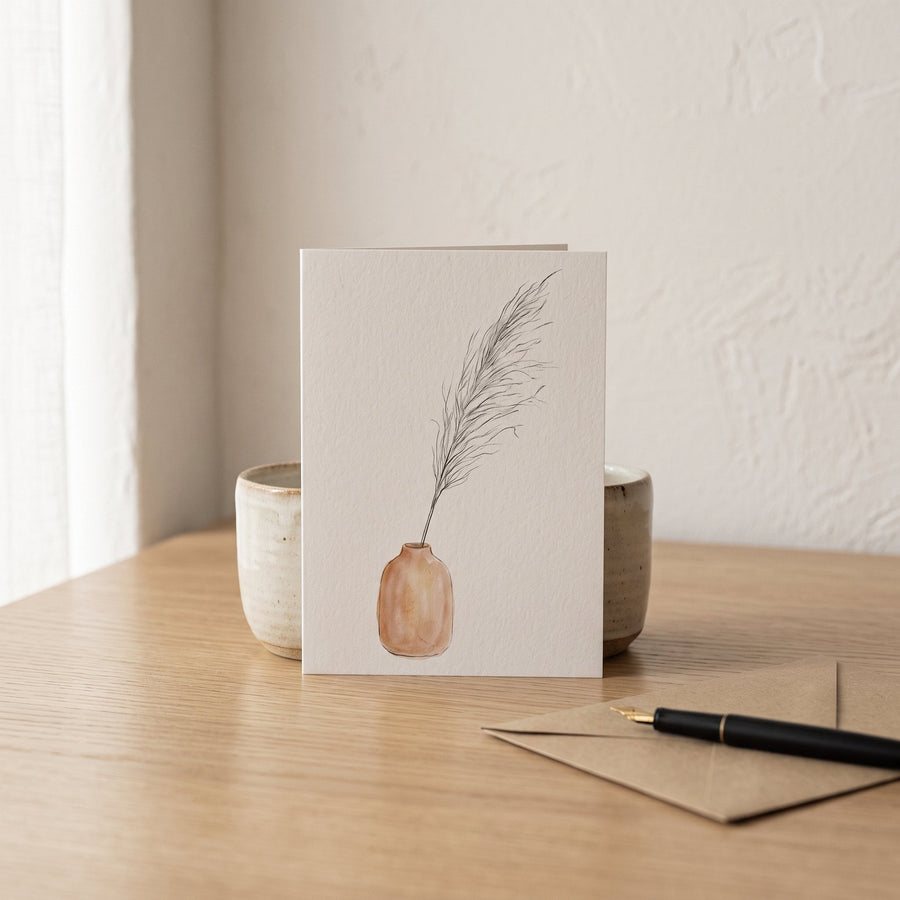
Crucially, ma is not emptiness for its own sake. It is space that gives shape to what surrounds it. A single branch in a vase looks beautiful partly because of the air around it. We explore this idea at length in the art of negative space.
Ma in a room
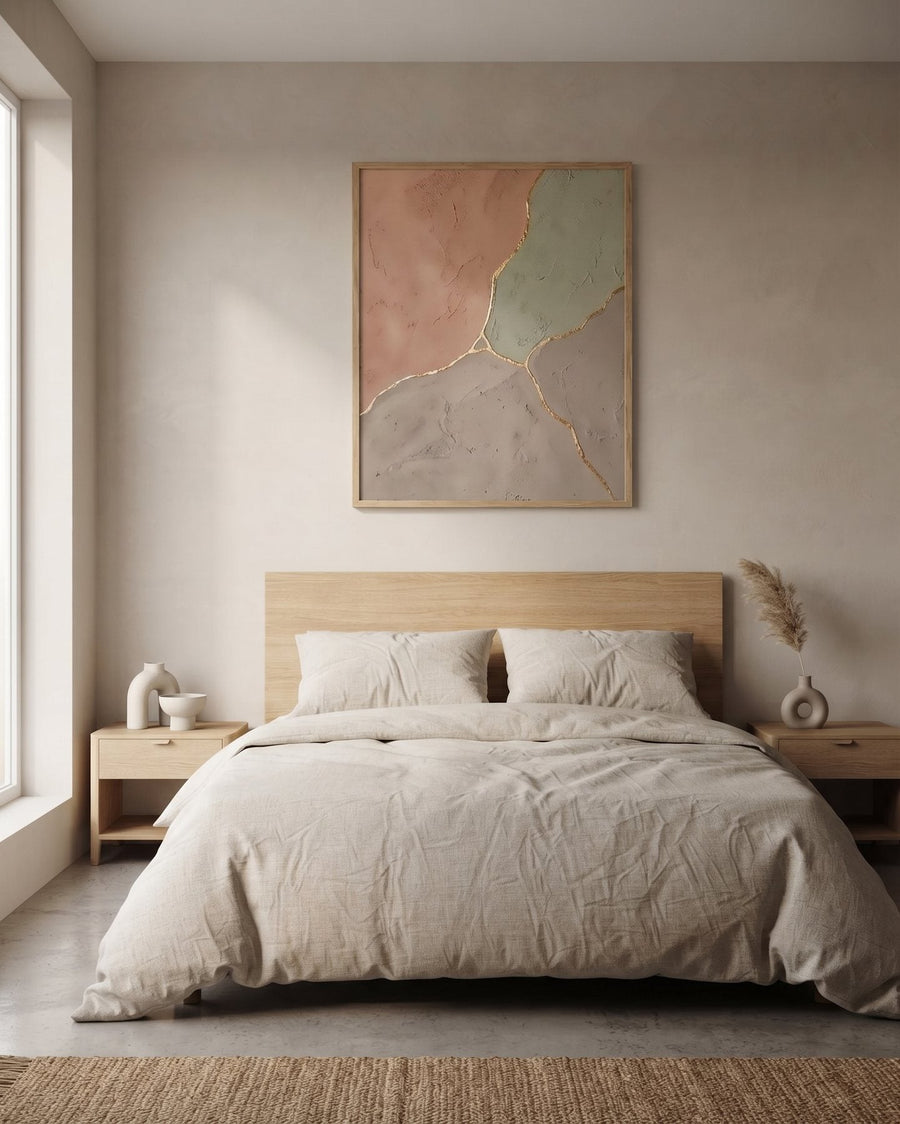
- Leave walls bare on purpose. One piece of art on a wall, rather than five, lets each piece be seen.
- Clear the floor. A visible strip of floor around a rug or between a sofa and coffee table makes a small room feel larger.
- Edit surfaces. A shelf with three objects and space between them reads as considered; the same shelf with twelve reads as storage. Our six-object rule is a useful limit.
Shizuka (静か): quiet and stillness
Shizuka means quiet, calm or still. It describes a sound level, but also a mood: a still lake, a hushed room, a person at ease. It is the everyday word for quiet, which is part of its charm; it describes something ordinary and attainable rather than a lofty ideal.
Shizuka in a room
Visual quiet comes from softening everything that is sharp or loud.
- Soft light. Warm, low lamps in the evening rather than a single bright ceiling light.
- Textiles that absorb sound. Rugs, curtains, cushions and throws literally make a room quieter, as well as looking calmer.
- Hidden clutter. Cables, paperwork and chargers behind doors or in baskets. Quiet is as much about what you cannot see.
How wa, ma and shizuka work together
Each idea supports the others. Harmony (wa) makes it possible to leave space (ma), because when everything belongs, nothing needs to be added to hold the room together. Space in turn creates quiet (shizuka), because the eye has somewhere to rest.
A simple test for any room: does everything here belong together, is there space around the things that matter, and does the room feel quiet when you walk in? If one answer is no, it usually points to a clear fix, whether that is removing an object, warming a light or editing a palette. Our introduction to Japandi walks through the wider style these ideas sit within.
Wa, ma and shizuka as calligraphy art
Japanese calligraphy, shodō, treats writing as an art form. Single characters such as 和, 間 or 静 are classic subjects because their meanings are simple and profound, and because each offers the calligrapher a distinct shape to explore.
Choosing a piece
- Pick the word you need most. A busy family room might benefit from wa; a bedroom or reading corner from shizuka; an entryway or hallway from ma.
- Look at the brushwork, not just the word. A good piece shows the speed and pressure of the brush, the dry edges and pooled ink. It should feel alive, much like the strokes we describe in what is sumi-e.
- Check the meaning with care. Characters can carry more than one sense. If you are buying from an unfamiliar source, confirm what the piece says before hanging it.
Hanging it
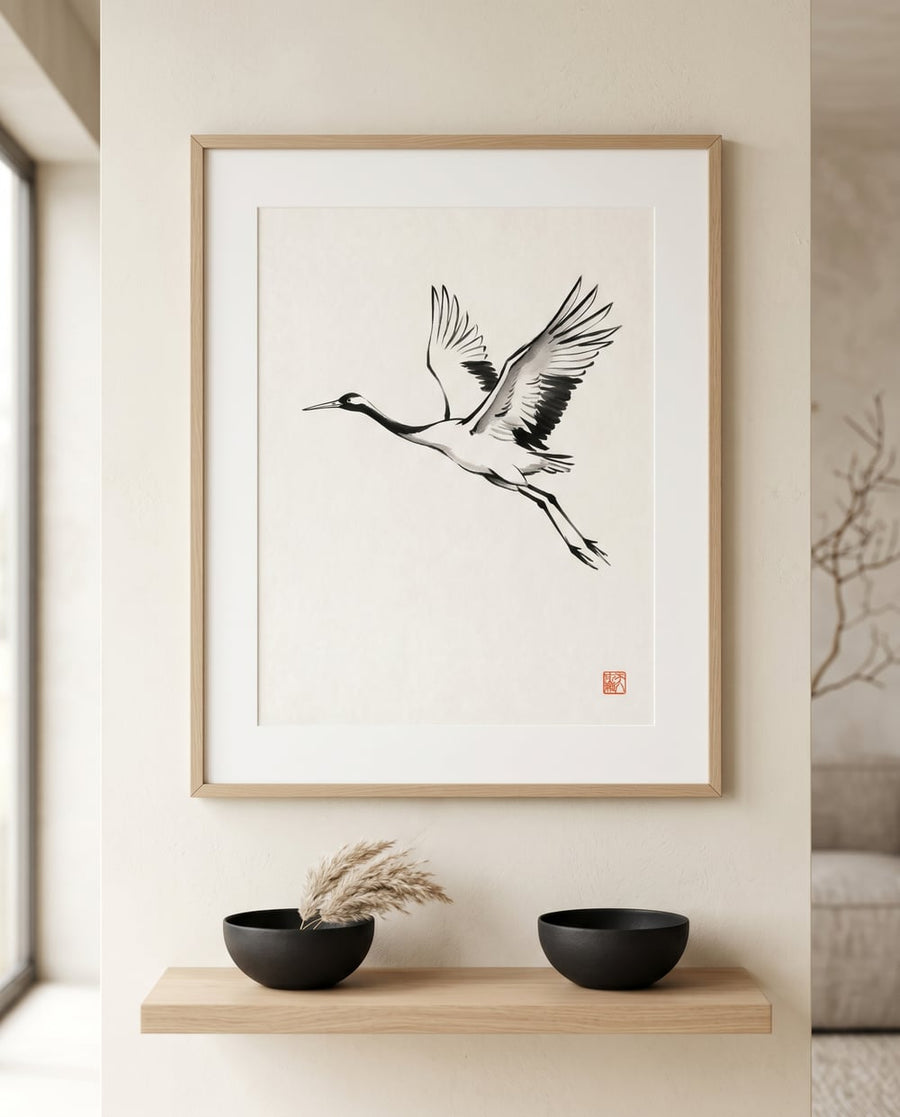
Traditionally, a hanging scroll is displayed in the tokonoma, a raised alcove that is the visual heart of a Japanese room, often with a single flower beneath. You can recreate that feeling on any wall: hang the piece alone, at eye level, with a low bench or console below holding one stem in a vase, as in our single-stem rule.
Calligraphy pairs especially well with an ensō, the Zen circle; see the meaning of the ensō if you are considering both. Hang them on separate walls so each keeps its own space.
Three words to live by
Wa, ma and shizuka are not rules or a style to copy. They are three questions to ask of any room: does it hold together, does it breathe, is it quiet? Answering them honestly usually means removing more than you add.
Whether you hang one of these words on the wall or simply keep them in mind, they are a good guide to a home that feels calm every day, not just when it has been tidied.
Frequently asked questions
What does ma mean in Japanese design?
Ma refers to the meaningful space or interval between things. In design it describes the deliberate use of empty space, so that objects, walls and rooms have room to breathe. It is not emptiness for its own sake but space that gives form to what surrounds it.
Is wa the same as zen?
No. Wa means harmony and is a broad cultural value in Japan, applying to relationships, society and design. Zen is a school of Buddhism. The two often appear together in art and interiors, but they are different ideas.
Where should I hang Japanese calligraphy at home?
Hang it alone on a calm wall at eye level, ideally with a low surface beneath holding a single stem or object. Entryways, reading corners and bedrooms suit it well. Avoid crowded walls and busy kitchens, where the piece loses its stillness.