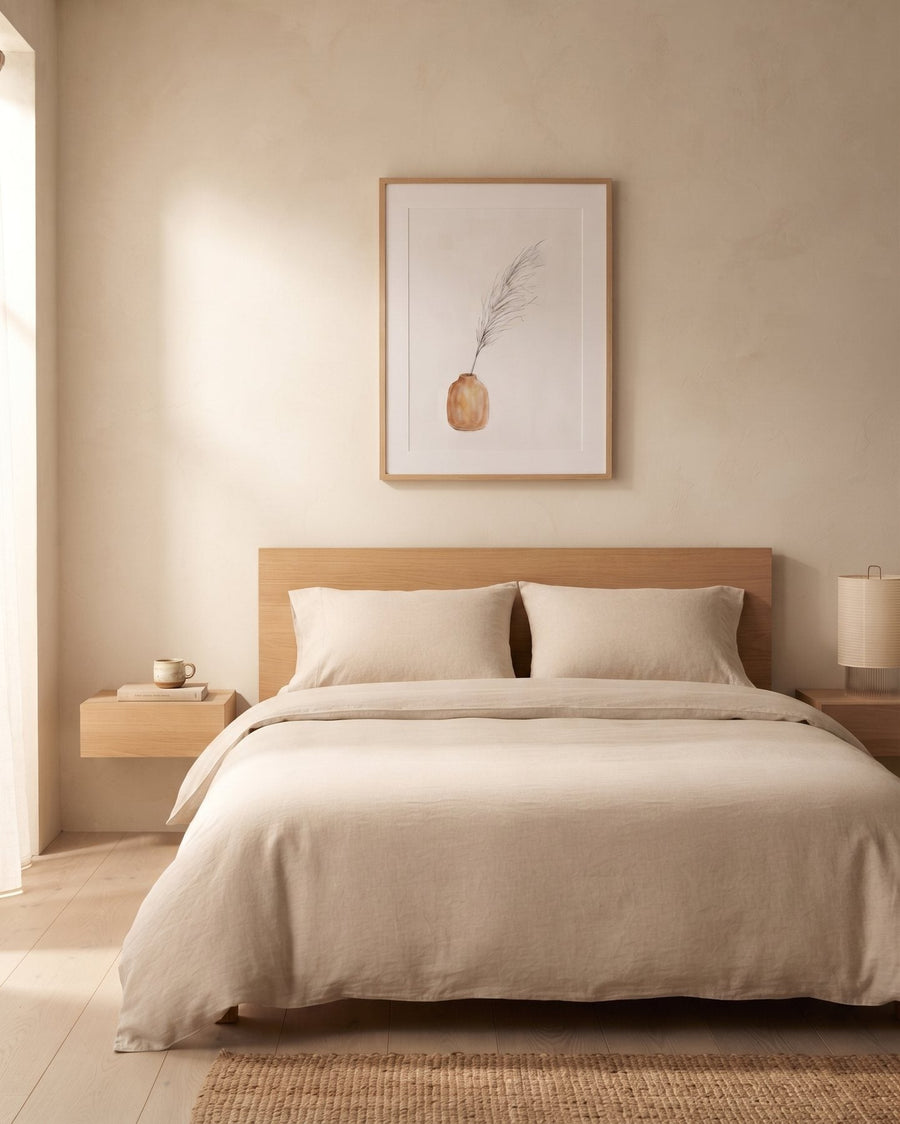
A Japandi spring refresh means changing ten small things and deliberately leaving ten alone. The textiles get lighter, a botanical print goes up, the windows open, and the heavy layers of winter fold away. The furniture, the art you love and the wall colour stay exactly where they are. This guide lists both sides, because knowing what not to touch is half of the job.
Spring is the season when calm rooms get into trouble. The light returns, the urge to change things returns with it, and a home that took years to settle can be unsettled in a weekend. Japandi spring decor is a light touch: enough change to feel the season, not enough to lose the room.
Why a refresh, not a redecoration
A room that works in February works in May. The bones are the same: the low furniture, the wood, the empty space around each object. What changes with the season is the weight of what is on top of those bones, and the light that falls on them.
So the refresh is about surfaces, textiles and air. It should take an afternoon. If you find yourself pricing a new sofa, you have drifted from a refresh into a project, and spring is not a good time for projects because the light is too good to spend indoors.
Ten things to change
- The throw. Fold the wool away and bring out cotton, linen or a light waffle weave. Keep it in an undyed or pale tone and fold it over the arm of the sofa rather than across the seat.
- The cushion covers. Same inserts, lighter covers. Move from velvet and boucle to washed linen or a soft botanical print. Two or three, with one patterned at most.
- The bed. Take the heavy layer off the foot of the bed and let the duvet breathe. A lighter cover in white or oatmeal, one folded throw, and the bedroom already feels a month lighter. Our guide to linen care is worth reading before the winter bedding goes into storage.
- One piece of art. Swap a dark or wintry print for a botanical one. A cherry branch, a single stem, a ginkgo leaf. Just one; the rest of the walls stay as they are.
- The stem. Empty the vase of dried grasses and put in one living branch. Blossom if you can get it, or a stem of something green. The single stem rule is at its best in April.
- The towels. Bathrooms feel spring faster than any other room. A pair of waffle hand towels in a soft print, folded in thirds on the rail, does the job on its own.
- The curtains, in the morning. Pull them fully back and tie nothing. If you have blackout panels for sleep, keep them, but open them the moment you are up. The point of spring is the light.
- The candle. From beeswax or unscented to something green and faint, or from candle to none. Spring evenings are longer and the lamp can rest.
- The table. A lighter runner or none at all. Bare wood, two stoneware pieces, one stem. Nothing else.
- The air. Open every window for twenty minutes every morning. This costs nothing and it is the single most effective change on this list.
Ten things to leave
- The furniture. It is not seasonal. If the sofa was right in January it is right in May.
- The wall colour. A warm white or soft grey wall looks different in spring light without being touched. Paint in autumn, if you must, when the light is honest.
- The main art. The piece above the sofa or the bed stays. One print changes; the rest are permanent.
- The rug. A chenille or wool rug is for the whole year. If it feels heavy, wash it rather than replace it.
- The shelf. Whatever three or four objects sit there earned their place. Dust them and leave them.
- The lighting. Lamps stay where they are. You will use them less, which is the change.
- The mugs and the boards. Kitchen objects are not seasonal. A speckled stoneware mug is as right in April as in December.
- The plants. Do not buy six new ones. Repot the ones you have if they need it and let them grow into the light.
- The storage. Spring cleaning is not spring buying. Empty a drawer rather than adding a basket.
- The empty space. Every gap on a wall or a surface is doing a job. Resist filling it because the light makes it look bare. It is not bare; it is quiet.
Botanical art: which branch, and where
The one piece of art you change is worth choosing carefully. Botanical prints in ink work in spring because they carry the season without colour, which means they sit with everything else on the wall. A cherry branch is the obvious choice, and a plum branch is the quieter one; our note on cherry blossom versus plum blossom in art explains how to tell them apart and which suits which room.
Hang it where the morning light reaches. Above a desk, on the wall opposite a window, or in a hallway that gets sun for an hour. A botanical print in a dark corner is a print in a dark corner; in light, it is spring.
If you have a gallery set, change one frame and leave the others. The set will look different because one piece is different, which is a more interesting result than changing all of them.
The bathroom, briefly
Bathrooms are the easiest room to refresh and the most rewarding. Waffle towels in a pale print, a single stem in a small glass, a bar of plain soap on a stone dish. That is the whole list. Our guide to the Japandi bathroom covers the permanent pieces; for the towels alone, see Japandi bath mats and towels.
Take the winter bath mat up and wash it. If it comes back looking tired, that is the one purchase this room is allowed.
Keeping the calm
The Japandi spring refresh is a discipline as much as a pleasure. Ten small changes, most of them textiles, and ten firm decisions to leave things alone. The room should feel lighter by evening and look, to anyone who does not live there, almost unchanged.
That is the point. A home that needs to be redecorated every season was never finished. One that only needs its throws folded away and its windows opened is a home that was built right, and spring is simply the light coming back to show it.
Worth considering
A few well-made pieces we would happily put next to our own. These are Amazon links; as an Amazon Associate we earn from qualifying purchases, at no cost to you.
- Hug-donut bud vase — For the one living branch or stem that replaces the winter grasses.
- Washed cotton sheet set — A lighter, breathable layer for the bed once the heavy winter bedding goes into storage.
- Marble vanity tray — The stone dish for a bar of plain soap, which is half of the bathroom refresh on its own.
Frequently asked questions
How do you decorate a Japandi home for spring?
Swap heavy textiles for cotton, linen or waffle weave, change one piece of art for a botanical print, put a single living branch in a vase and open the windows every morning. Leave the furniture, wall colour, rug and main art alone. The refresh should take an afternoon and cost very little.
What is Japandi spring decor?
It is the seasonal version of the Japandi style: natural materials, muted colour and empty space, lightened for longer days. In practice that means paler textiles, ink botanical prints, one stem of blossom and less reliance on lamps and candles. Nothing is added that will need storing in autumn.
Should I change my cushions and throws for spring?
Yes, but change the covers and keep the inserts. Move from wool, velvet and boucle to washed linen or a light printed cotton, and fold the winter throw away in favour of a lighter one. Two or three cushions with one patterned cover is enough for most sofas.