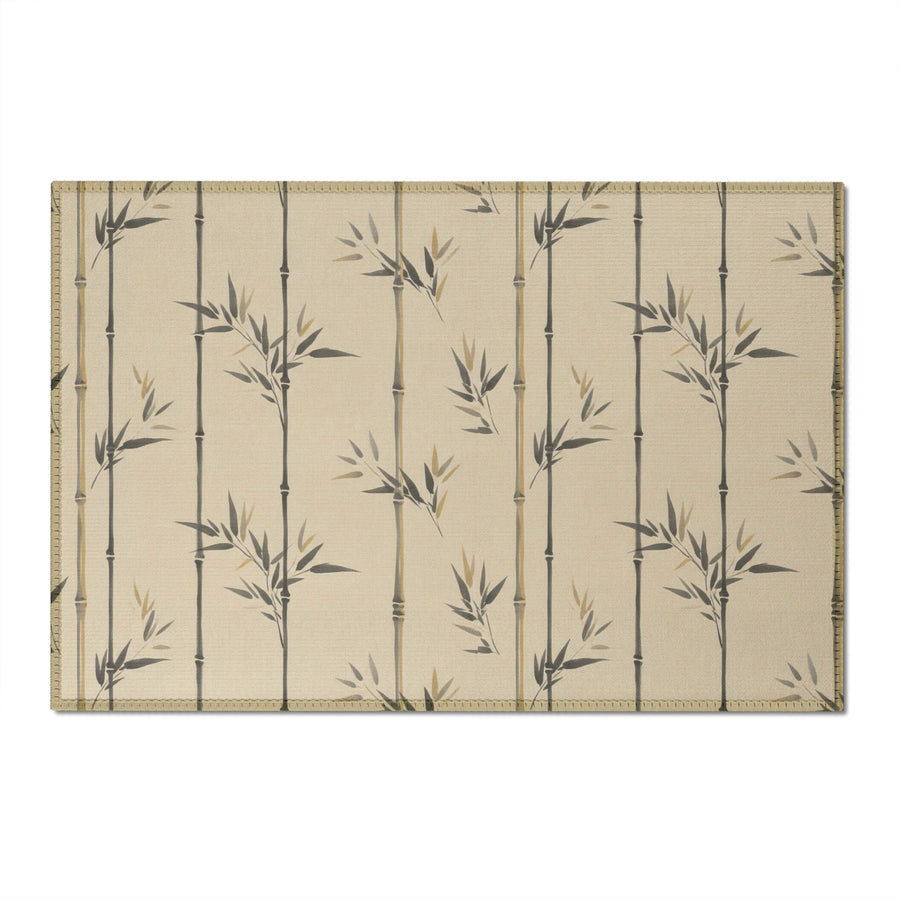
Japandi living room colours work best when the whole room is built in one key: an anchor neutral for the walls and the largest surfaces, two supporting tones for wood and upholstery, and a single muted accent used in small amounts. Decide the four in that order, then buy in the order sofa, rug, cushions, and the room will hold together however slowly you furnish it. This guide walks through each step with the tones that suit each kind of light.
Layout, seating and the coffee-table question are covered in our Japandi living room guide. Here we stay with colour, which is where most living rooms go wrong long before the furniture arrives.
Building a room in one key
A musical key is a set of notes that agree with each other, and a room in one key is a set of tones that share an undertone. Warm with warm, cool with cool. Japandi rooms are almost always warm, because oak, linen, paper and unglazed clay are all warm, and a single cool element, a blue-grey sofa or a brilliant white wall, sounds a wrong note against all of them.
So the first decision is not a colour but an undertone. Hold a piece of your floor, your biggest piece of wood, against a sheet of warm white paper and a sheet of cool white paper. Whichever makes the wood look natural rather than orange is your key. Most oak, ash and walnut floors want the warm sheet; our piece on warm versus cool neutrals explains the test in full.
The anchor neutral
This is the wall colour, and usually the ceiling too. It should be the lightest tone in the room and it should cover more than half of what you can see. In a warm key that means a warm white, a rice-paper white or a pale greige, in a flat finish.
The anchor sets how much everything else can vary. Against a very pale anchor, mid-tone furniture reads as strong; against a greige anchor, the same furniture melts in. If your living room is small or north-facing, stay pale. If it is large and bright, greige will stop it feeling like a gallery.
Resist the feature wall. One colour on all four walls is calmer than three walls of white and one of clay, and it makes the room feel larger.
Two supporting tones
The supports are the colours of the big pieces: floor, sofa, rug, curtains, the wood of the coffee table and shelves. Two is enough. One is usually the wood you already have; the other is the fabric tone that will cover the sofa and rug.
The wood support
Choose one dominant wood and let a second appear only in small pieces, following the two woods rule. Pale oak is the classic Japandi support; walnut or smoked oak gives a moodier room. Whichever you choose, its tone is now fixed, and the fabric support must agree with it.
The fabric support
Oat, stone, mushroom or a pale warm grey, in linen, wool or bouclé. This is the colour of the sofa and the ground of the rug. It should sit between the anchor and the wood in depth: darker than the wall, lighter than the floor. If the sofa is darker than the floor the room becomes bottom-heavy in a way that no cushion will fix.
One accent, in the right dose
The accent is the only true colour in the room and it should be roughly a tenth of what you see. Sage, dusty clay, ochre or indigo are the usual choices, greyed down until they almost pass as neutrals. Our guide to Japandi accent colours goes into choosing between them; the short version is that green suits pale wood and clay suits dark.
Black counts as an accent too, and in a living room it is often the most useful one. A black lamp, black picture frames and a line of sumi ink on the wall give a pale room its edges. Treat black as a third dose rather than a free extra; the room can take one true colour and black, not two colours and black.
The buying order: sofa, rug, cushions
Most people buy cushions first because they are cheap and satisfying, and then spend a year trying to find a sofa that matches them. Reverse it.
- Sofa first. It is the largest object and the hardest to change. Buy it in the fabric support tone, plain, in a fabric that will still look right after five years. Our sofa buying guide covers shape and fill.
- Rug second. The rug ties sofa to floor, so it should contain both the fabric support and a hint of the wood tone. A washable rug with a soft, ink-like pattern in two close tones does this without becoming a focal point. Size it so the front legs of the sofa sit on it; our rug sizing guide has the measurements.
- Cushions and throw last. Now the accent arrives. Two cushions and one throw in the accent family, in different textures, and the room is finished. Anything you add after this should be wood, paper, a plant or ceramics, not colour.
Curtains are the exception that can come at any point, because they should simply match the anchor and disappear.
Three living rooms in one key
To make the method concrete, here are three complete schemes.
Pale and northern. Anchor of warm white; supports of pale oak and oat linen; accent of sage in two cushions and a botanical print. Black in the lamp and frames. This is the lightest possible Japandi living room and it suits small flats.
Warm and low. Anchor of pale greige; supports of walnut and mushroom bouclé; accent of dusty clay in a throw and a glazed bowl. The wood does most of the work and the room feels grounded even with little in it.
Dark and quiet. Anchor of soft charcoal; supports of aged oak and a bone-coloured sofa; accent of ochre in one cushion. The pale sofa becomes the light in the room. This needs warm lamps and works best in a room used mostly in the evening; our guide to dark Japandi has more.
Decide the key, then stop deciding
A living room in one key does not need constant adjustment. Once the undertone is set and the four tones are chosen, every later purchase is simply a question of which of the four it belongs to. That is what makes the room easy to live in and slow to date.
Choose your Japandi living room colours as an anchor, two supports and one accent, buy the sofa before the cushions, and let the rug carry the join between floor and fabric. The calm follows from the order.
Worth considering
A few well-made pieces we would happily put next to our own. These are Amazon links; as an Amazon Associate we earn from qualifying purchases, at no cost to you.
- Linen accent chair with oak legs — Linen upholstery on pale oak covers both supporting tones in one piece.
- Jonathan Y hyacinth basket lamp — A natural-fibre lamp that adds warmth to the anchor neutral without adding a colour.
- Round water-hyacinth basket — Woven fibre in a mid tone, for the blankets and clutter a living room collects.
Frequently asked questions
What colour sofa is best for a Japandi living room?
A plain sofa in oat, stone, mushroom or a warm pale grey, in linen, wool or bouclé. It should be darker than the walls and lighter than the floor. Avoid cool grey and pure white, both of which fight oak and warm neutrals.
How many colours should a Japandi living room have?
Four: one anchor neutral for walls, two supporting tones for wood and upholstery, and one muted accent. Black can be added in small doses for frames and lamps. More than that and the room starts to feel busy no matter how few objects it holds.
Should the rug match the sofa in a Japandi living room?
Not exactly. The rug should contain the sofa's tone and a hint of the floor's, so it joins the two rather than repeating one. A soft two-tone pattern in warm grey or oat on a pale ground does this well.