The best Japandi gifts share three qualities: they are made from an honest material, they do one job well, and they take up no more room than they earn. This guide lists twenty of them, sorted by budget from a handwritten card to a framed print, so you can find something for a quiet person without guessing.
We have avoided anything that needs to match a colour scheme you have not seen, anything that arrives in a box larger than itself, and anything that will be on a shelf gathering dust by spring. What is left is small, useful and calm.
How to choose a Japandi gift
Japandi homes tend to belong to people who have already decided what they do not want. That makes them hard to buy for in one sense and easy in another. You are not trying to surprise them with more. You are trying to give them one thing they will use.
Three questions help. Is it made from wood, stoneware, linen, cotton, paper or wool? Will it be picked up at least once a week? Could it sit on a bare table without needing anything beside it? If the answer to all three is yes, you are on safe ground.
It also helps to think in terms of a ritual rather than an object. Morning coffee, the Sunday bath, writing a note, an evening puzzle. A gift that fits into a ritual the person already has will be kept. If you want more on the reasoning behind this, our companion piece on gifts for minimalists goes deeper into what to avoid.
Under about 25: paper, small ceramics, one stem
Small budgets suit the Japandi approach well, because a good small thing beats a mediocre large one. These are gifts that fit in an envelope or the palm of a hand.
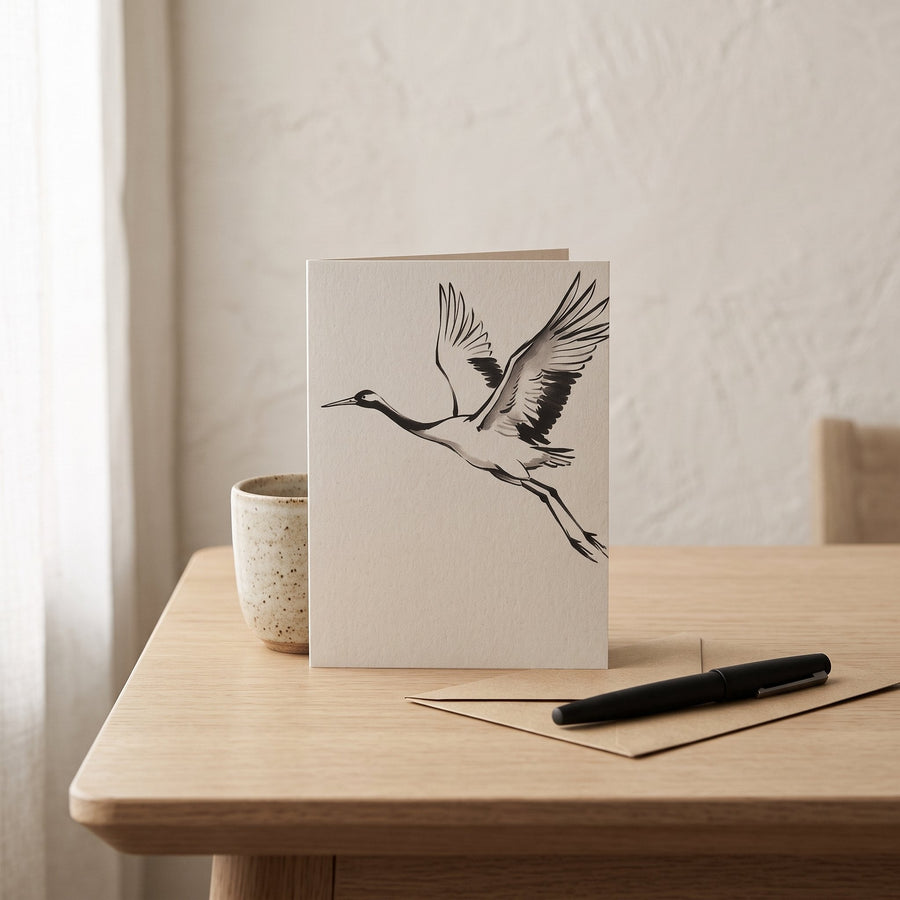
- A card with a real message. A well-printed card on heavy stock, with something honest written inside, is a gift on its own. Choose one with a single ink motif and leave the rest of the surface empty.
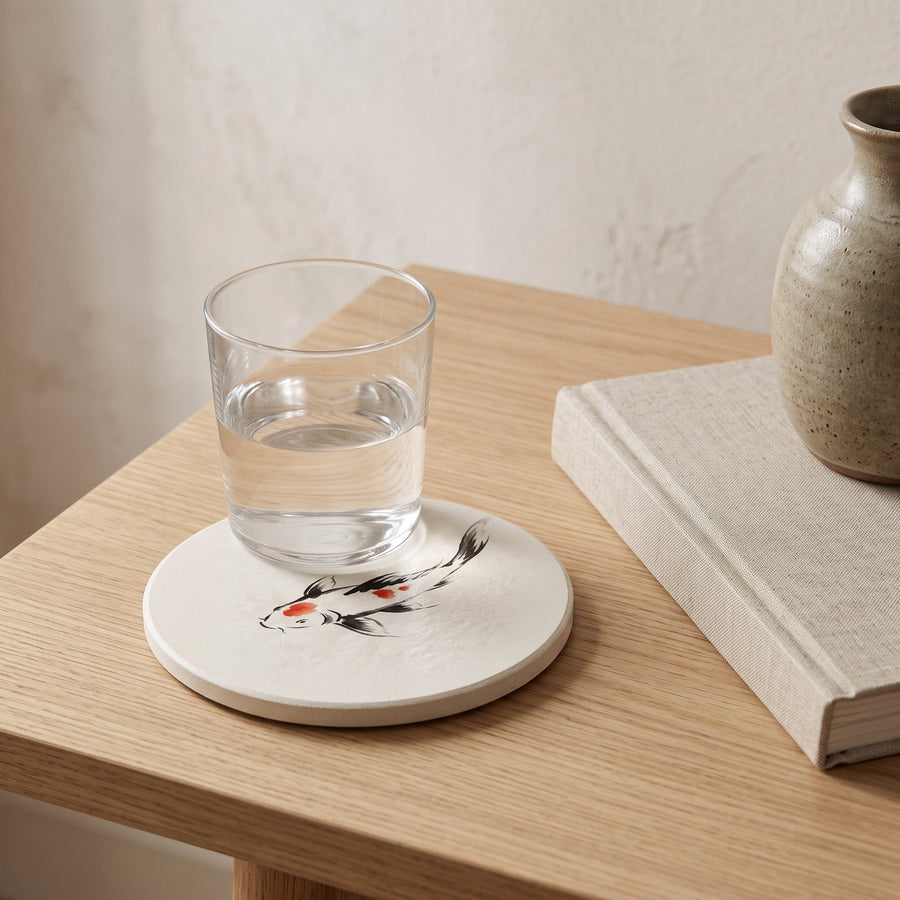
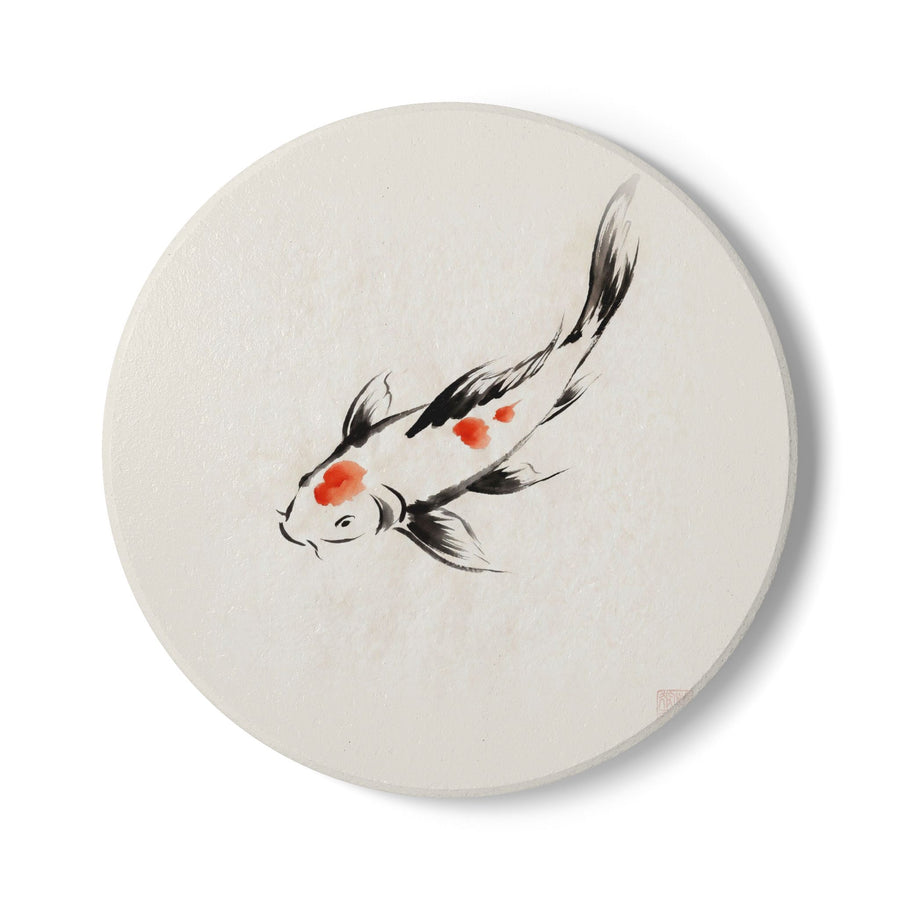
- A stoneware coaster. One coaster, engraved with a single motif, lives beside a favourite chair and gets used every day. It is the smallest object that changes how a table feels.
- A bundle of dried stems. Three stems of dried grass or a single seed head, tied with string. It costs almost nothing and it is exactly what the single stem rule is about.
- A beeswax candle. Unscented, in a plain holder or none. The colour of beeswax sits well against wood and the smell is faintly of honey rather than perfume.
- A set of plain linen napkins. Two or four, in oatmeal or undyed. They soften with washing and they turn an ordinary supper into something a little more deliberate.
From about 25 to 60: the daily-use objects
This is the band where most good gifts live. Each of these is picked up several times a week and none of them needs anything else to work.
- An engraved stoneware mug. Heavy in the hand, holds heat, and a single ink motif on the side is enough decoration. Speckled glazes vary from mug to mug, which is a feature rather than a flaw; our note on speckled glaze stoneware explains why.
- A waffle towel. The honeycomb weave dries fast and looks better folded than a plush towel does. One hand towel in a soft print is a better gift than a matching set of six.
- A linen-look apron. For someone who cooks. Choose a muted pattern or a plain tone, with long ties and a deep pocket. It becomes part of the kitchen rather than something hung on the back of the door.
- A small engraved wooden board. For cheese, bread or a single sliced pear. Wood ages well, and a board is useful from the first day.
- A jigsaw puzzle with a calm image. An evening puzzle is a slow activity, and a print of a landscape or ink drawing on the box is nicer to look at than a cartoon. It is also a gift that ends up shared.
From about 60 to 120: textiles and a first print
At this level you are buying something that will change a room slightly. Textiles and unframed art are the safest choices because they are forgiving: they suit more rooms than furniture does and they can move house.
- An unframed art print. A sumi-e ink drawing or a minimalist landscape on good paper. Leave the framing to the recipient; they know their walls. Our guide to framing art prints is worth sending with it.
- A cushion cover in a quiet pattern. One cover, not a pair. A single patterned cushion among plain ones is how a Japandi sofa is usually dressed.
- A throw in wool or a heavy weave. Folded over the arm of a sofa or the end of a bed. Choose one colour that is already in the room, or a neutral if you are unsure.
- A canvas tote bag. Heavy cotton with one ink motif. It is carried every day, which is more than most gifts can claim.
- A pair of larger engraved boards. One for serving and one for the counter. Two boards in the same wood look like a set without needing to match.
Over 120: things that stay
Larger gifts should be rare and considered. These are objects that will be in the house in ten years, so it is worth knowing the room they are going into.
- A framed print, ready to hang. A single large piece in a plain wood frame. It suits someone who has a bare wall and has been meaning to fill it for a year.
- A gallery set of two or three prints. Chosen to hang together, in the same paper and the same frame. This is a gift for a hallway or the wall above a sofa.
- A washable chenille rug. Practical in a way that surprises people: it goes in the washing machine and comes out fine. For a bedroom or a small living room.
- A pair of blackout curtain panels. For a bedroom in a light city. A soft botanical print in a muted tone reads as art when the curtains are drawn.
- A table set. Runner, napkins, a board and two coasters, all in the same tones. This is the gift for a couple who have just moved, and our housewarming gift guide has more on pairing pieces.
Wrapping the quiet way
How a gift arrives is part of the gift. Kraft paper, undyed tissue, cotton string or a strip of linen, and a sprig of eucalyptus or rosemary under the knot. No printed paper, no plastic ribbon, no glitter.
Write the name on a plain tag or directly on the paper. If the gift is a print, roll it in tissue inside a tube rather than folding it into a box. If it is stoneware, wrap it in a linen napkin, which becomes part of the present.
And give one thing. A Japandi gift is not a hamper. The restraint is the point, and the person you are giving to will notice it.
Choosing well
Japandi gifts are easy once you stop looking for the impressive option and start looking for the one that will be used. A coaster, a mug, a towel, a print: none of these is dramatic on the morning, and all of them are still there a year later.
If you are unsure, choose the smaller thing in the better material. A single good object says more about the care you took than a larger one that will have to be found a home.
Worth considering
A few well-made pieces we would happily put next to our own. These are Amazon links; as an Amazon Associate we earn from qualifying purchases, at no cost to you.
- Hug-donut bud vase — A small ceramic for one stem, well within the under-25 spirit of this guide.
- Dried pampas stems — A bundle of dried stems that costs little and lasts the winter, tied with string.
- Brass taper candle holders, pair — Plain holders to go with a gift of beeswax tapers.
- Cast-iron tetsubin teapot — A gift that fits a ritual the person already has, and lasts for decades.
Frequently asked questions
What is a good Japandi gift for someone who has everything?
Choose something consumable or something they will use daily, rather than something to display. A beeswax candle, a set of linen napkins or a single stoneware mug all fit into a routine without demanding space. A handwritten card on good paper is often the part they keep.
Are Japandi gifts expensive?
They do not need to be. The style rewards natural materials and restraint, and many of the best gifts, such as a coaster, a card or a bundle of dried stems, are small. Spending more usually buys a larger object rather than a better one, so choose the smaller thing in the better material.
How should I wrap a Japandi gift?
Use kraft paper or undyed tissue, tie it with cotton string or a strip of linen, and add a sprig of greenery. Avoid printed paper, plastic ribbon and glitter. A single wrapped object, not a hamper, suits the style best.