Cloth napkins belong in a Japandi kitchen because they do the same quiet work as everything else in the room: they are used every day, they get better with age, and they replace something disposable with something honest. A set of four in washed cotton or a linen-look weave costs about the same as a few months of paper, and it changes how a weekday table feels. This guide covers which fabric to choose, how to fold without fuss, how to wash them so they soften rather than stiffen, and why four is the right number to start with.
Why cloth napkins suit the Japandi table
Japandi borrows two ideas that meet neatly in a napkin. From Japan comes the habit of treating the ordinary meal with care, and from Scandinavia comes the preference for natural fibre that shows its wear rather than hiding it. A folded cloth beside a stoneware bowl says that this meal matters, even if it is Tuesday and it is soup.
There is also the practical case. Paper napkins arrive in bright packaging, sit in a drawer that never quite closes, and end up in the bin. Cloth lives in one stack, on one shelf, and comes out the same way each time. Fewer things, used more often, is the whole style in a sentence.
If you are still building the rest of the table, our guide to the Japandi table setting covers the plate, the bowl and the single stem; this piece is about the cloth that sits beside them.
Cotton, linen or linen-look: which fabric to choose
There is no wrong answer here, only different trade-offs. Think about how often you will wash them and how much you mind ironing.
Washed cotton
Cotton is the easy choice. It absorbs well, tumble-dries without complaint, and a mid-weight cotton napkin comes out of the dryer soft enough to fold without an iron. Look for a slightly heavier weave, around the weight of a good tea towel; thin cotton goes limp and translucent after a year.
Pure linen
Linen is the textile most people picture when they think of a Japandi table. It has a dry, cool hand, creases readily, and those creases are part of its charm. It dries quickly and resists odour, but it needs a little more care in the wash, which is why we wrote a separate guide to caring for linen. Expect it to feel stiff for the first few washes and then relax.
Linen-look cotton
A linen-look weave gives the slubbed texture of linen with the forgiving nature of cotton. It is a sensible middle path for a family table, where napkins are washed twice a week. We compare the two more closely in linen-look vs real linen; the short version is that linen-look wins on convenience and pure linen wins on how it ages.
Colours that work with stoneware and wood
The table already has a palette: the grain of the board, the speckle of the glaze, the grey-white of the plate. Napkins should sit inside that palette rather than fight it. The safest shades are undyed oat, warm grey, soft clay, and a muted olive or indigo for contrast.
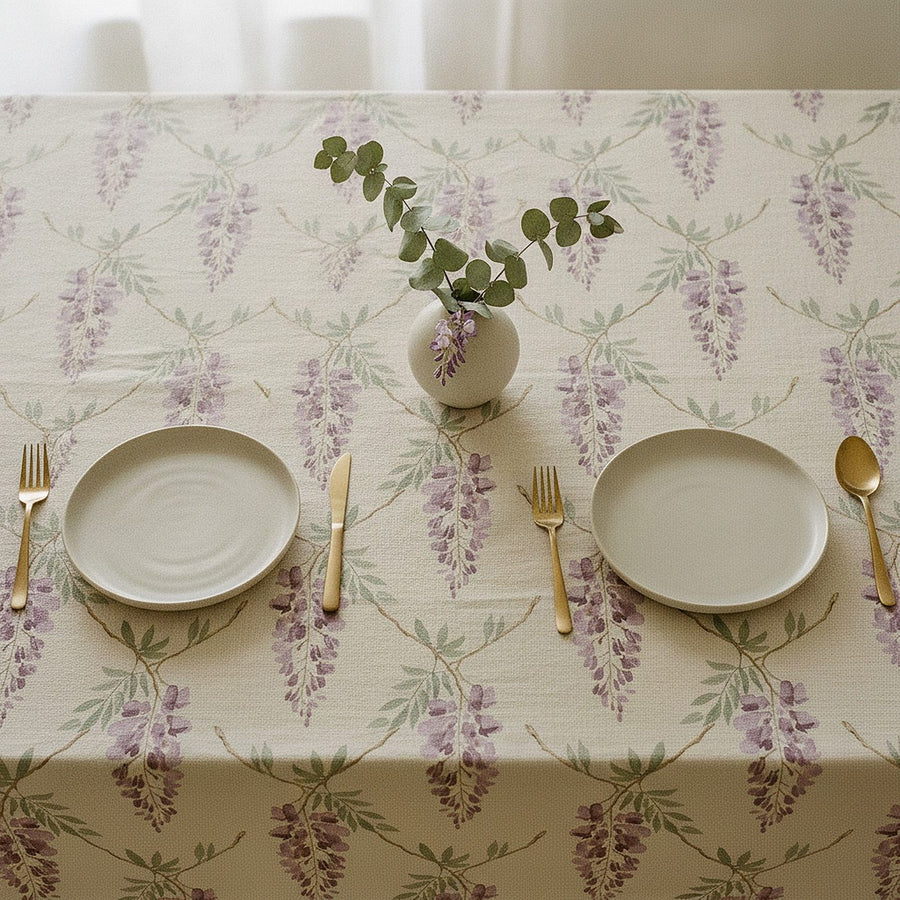
A printed napkin can work, but keep the print small and the ground light. A faint botanical or a fine stripe reads as texture from across the room; a large pattern reads as noise. If you already have a printed runner or tablecloth, keep the napkins plain and let the two share a colour instead. Our runner-versus-tablecloth guide explains how to balance the two.
Three folds that take ten seconds
Elaborate napkin folding belongs in hotels. At home, the fold should be quick, repeatable and calm. These three cover almost every meal.
- The flat rectangle. Fold in half, then in half again, and lay it beside the plate with the folded edge facing the plate. This is the everyday fold, and it stacks neatly in the drawer.
- The loose roll. Fold in half, roll from the short edge, and set it on the plate or in the bowl. The roll suits linen because it lets the creases show without looking untidy.
- The pocket. Fold in quarters, then fold the top layer down to make a pocket for the cutlery. Use it for guests, or for a Sunday when you have the extra minute.
Whichever fold you use, keep it consistent across the table. Four identical folds look intentional; four different ones look like a hurry.
Washing cloth napkins so they soften, not stiffen
Most complaints about cloth napkins come down to washing. Cotton and linen both prefer a warm wash, around 40 degrees, with a gentle detergent and no fabric softener. Softener coats the fibre and reduces absorbency, which is the opposite of what you want from a napkin.
- Treat stains the same day. Oil, wine and turmeric all set with time. A dab of washing-up liquid on oil and cold water on wine, before they go in the basket, saves the napkin.
- Dry cotton in the dryer, linen on the line. Cotton comes out of a medium tumble ready to fold. Linen is happier line-dried and pressed while still slightly damp, if you press it at all.
- Skip the iron on weekdays. Fold straight from the dryer while warm, and the creases mostly settle. Save proper pressing for the pocket fold and for guests.
- Rotate the set. Use them in the order they come off the stack so every napkin ages at the same rate and the set stays matched.
Why a set of four is the right place to start
Four is the number that fits most tables and most washing rhythms. Two on the table, two in the drawer, and you always have a clean pair while the other is in the machine. A couple can use four for a full week; a family of four uses them daily and washes them with the tea towels.
Buying eight at once is tempting, but a set that arrives all together also wears out all together. Buy four now, live with them for a season, and add four more in the same fabric once you know the weight and colour suit you. The second set will be a little brighter for a few months, and then they will meet in the middle. This is the slow way to build a table, and it is the way that looks least like a catalogue.
Store them flat in a stack near the table, not in a far drawer. If they are within arm's reach, they get used; if they are two rooms away, the paper comes back.
A small change that changes the meal
Cloth napkins are one of the cheapest Japandi decisions you can make, and one of the most visible. They soften a table that is mostly hard surfaces, they give the hands something warm to hold, and they make a bowl of rice on a weeknight feel like it was worth sitting down for.
Choose the fabric for your washing habits, keep the colour inside the palette the table already has, and start with four. A year from now they will be softer, a little faded, and entirely yours. That is the point of cloth napkins in a Japandi kitchen: they are meant to be lived with, not saved.
Worth considering
A few well-made pieces we would happily put next to our own. These are Amazon links; as an Amazon Associate we earn from qualifying purchases, at no cost to you.
- AmorArc reactive-glaze stoneware dinnerware, 18-piece set — Speckled plates and bowls that give plain cloth napkins the stoneware backdrop this guide describes.
- Cream stoneware pitcher, reactive glaze — A simple jug for water or a single branch, in the same oat-and-clay palette as undyed napkins.
- Brass taper candle holders, pair — A quiet pair for the weekday table, warm against linen and wood without adding another colour.
Frequently asked questions
Are cloth napkins more hygienic than paper?
Washed at 40 degrees or above with a normal detergent, cloth napkins are perfectly hygienic for everyday use. The key is to give each person their own napkin at each meal and to wash the set regularly rather than leaving used ones to sit. A simple habit is to wash them with the tea towels twice a week.
What size should Japandi cloth napkins be?
A 45 cm square is the most useful everyday size: large enough to cover a lap, small enough to fold neatly beside a 27 cm plate. Cocktail napkins around 25 cm suit drinks and cake but are too small for a meal. If in doubt, go slightly larger, since a generous napkin folds down and a small one cannot grow.
Do linen napkins need ironing every time?
No. Linen creases are part of its texture, and a napkin that has been folded straight from the line looks entirely at home on a Japandi table. Iron only when you want a crisp pocket fold for guests, and do it while the cloth is still slightly damp, which takes a fraction of the effort of pressing it dry.