For most Japandi tables, a table runner is the better choice: it protects the busiest strip of the surface while leaving the wood on show, and the wood is half the point of the style. A tablecloth earns its place when the table is worn, laminate or borrowed, when you are seating a crowd, or when you want the whole surface to read as one soft, quiet plane. The tablecloth vs table runner question is really a question about how much of your table you want to see.
What each one does on a Japandi table
A runner is a narrow strip of cloth laid down the length of the table. It frames the centre, gives shared dishes and a single stem a defined home, and leaves the edges of the table bare where hands and plates sit. On a solid oak or ash table, that contrast between cloth and grain is what makes the setting feel considered.
A tablecloth covers the whole surface and usually drops over the edges. It softens the table, hides marks and mismatched leaves, and makes a plain or temporary table look intentional. In Japandi terms it trades the honesty of the wood for the calm of a single, uninterrupted texture.
Neither is more correct. The right choice depends on the table you own and the way you eat at it, which is also how we approach the wider room in our guide to the Japandi dining room.
When a table runner works best
Choose a runner when the table itself is good-looking and you want to keep it that way. It suits most solid-wood tables and most households that eat at the same table every day.
- Long rectangular or oval tables. The runner follows the length and draws the eye along it, which makes a long table feel orderly rather than vast.
- Everyday use. A runner can stay on the table between meals and comes off for a wash without clearing everything else.
- Tables with beautiful grain. Oiled oak, walnut and ash deserve to be seen. A runner protects the centre, where hot dishes and vases land, while the rest of the surface breathes.
- Printed pattern. A pattern on a narrow strip reads as an accent. The same pattern across a full tablecloth can dominate a room.
Runners struggle on round and small square tables, where a straight strip cuts awkwardly across a shape that has no length to follow. On those, a small cloth or a pair of placemats is usually calmer.
When a tablecloth is the better choice
A tablecloth is not the less Japandi option. A plain, washed cloth has the same honesty as bare wood, just in a softer register. Reach for one in these situations:
- The surface needs hiding. Laminate, a scratched rental table or two tables pushed together all look better under a single cloth.
- Round tables. A round cloth suits the shape and softens the room, particularly in a small dining nook.
- Larger gatherings. A full cloth protects every place setting from spills and gives a long, borrowed or extended table one consistent surface.
- Outdoor meals. Garden tables are rarely the most beautiful thing outside, and a cloth instantly makes them a place to linger.
If you choose a tablecloth, keep it plain or very quietly textured and let the stoneware and the single stem provide interest.
Sizing a runner and a tablecloth
Proportion matters more than fabric. A runner that is too narrow looks like a ribbon; a tablecloth that barely clears the edges looks like it shrank in the wash.
Table runner sizing
- Width: aim for roughly a third of the table's width. On a typical 90-centimetre table, a runner around 30 to 35 centimetres wide sits comfortably between the place settings.
- Length, overhanging: add 15 to 25 centimetres at each end so the runner drops over the edge. This looks relaxed and suits a casual table.
- Length, contained: alternatively, stop the runner 10 to 15 centimetres short of each end so it sits entirely on the surface. This is the tidier, more Japanese-leaning choice and works well on tables with a thick or shaped edge.
Tablecloth sizing
- Measure the top, length and width, or the diameter for a round table.
- Choose your drop. A drop of 15 to 25 centimetres on each side is the everyday standard and keeps the cloth clear of laps. A longer drop looks more formal but gets in the way of chairs.
- Add the drop twice to each dimension. A 180 by 90 centimetre table with a 20-centimetre drop needs a cloth of roughly 220 by 130 centimetres.
Printed runners on oak: making pattern work
A printed runner on an oak table is one of the easiest ways to add character to a Japandi dining room, provided the print is chosen with the wood in mind.
Match the undertone
Oak has a warm, yellow-to-honey undertone. Prints with warm grounds, such as oatmeal, sand or soft clay, sit with it naturally. Cool white grounds can look slightly blue against oak; if you love a cool print, choose one with plenty of ink or indigo so the contrast looks deliberate.
Keep the scale gentle
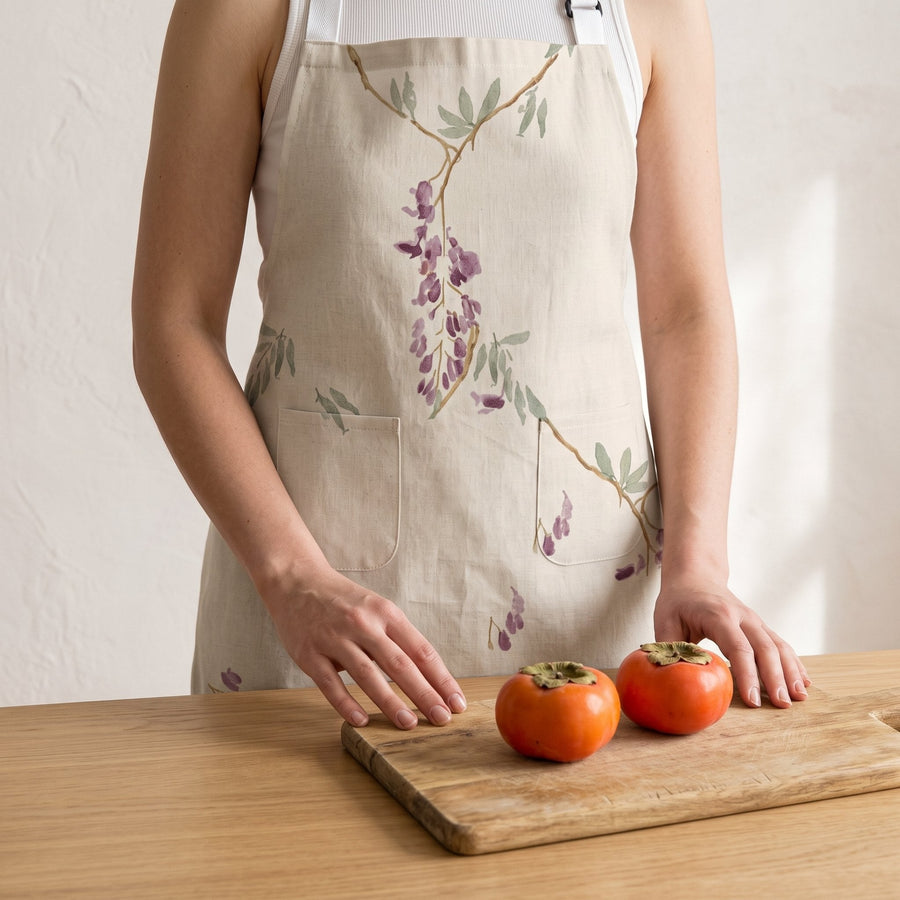
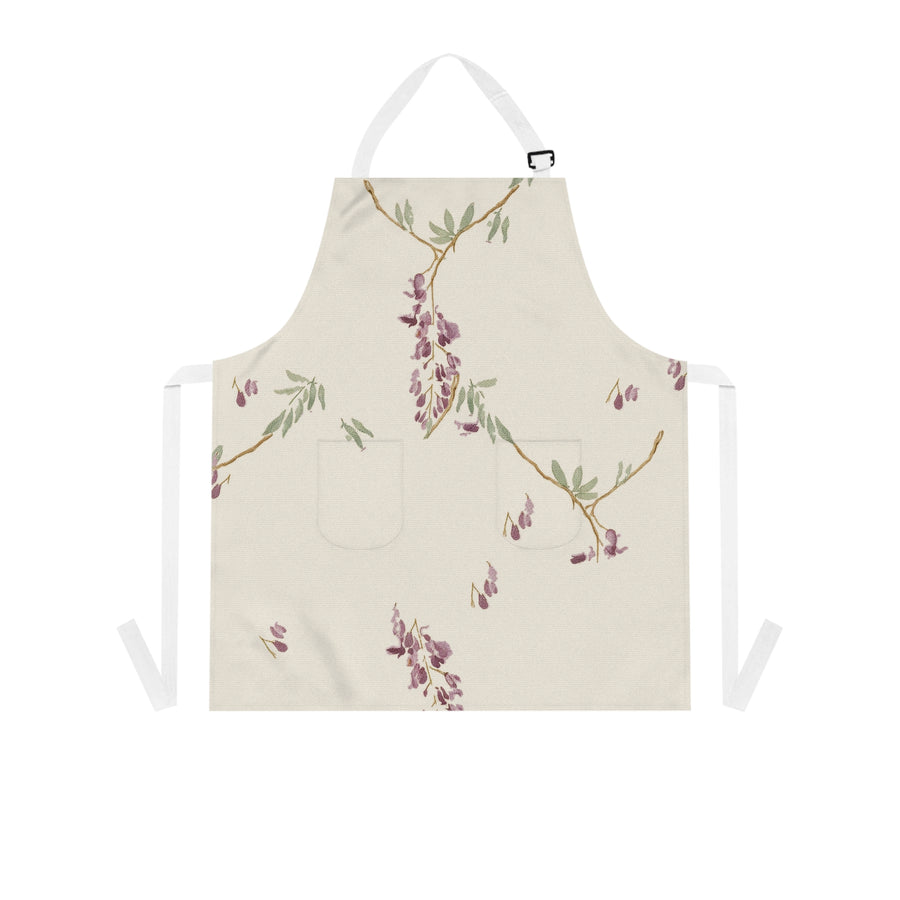
Small and mid-scale botanical or ink patterns read well at dining distance. Very large motifs get chopped up by plates and bowls, and the runner stops making sense once the table is laid.
Let one pattern lead
If the runner is printed, keep the napkins plain in a colour taken from the print. If you want patterned napkins, choose a plain runner. Two patterns side by side on a table is where calm becomes busy. The same restraint sits behind our two-woods rule for furniture, and it carries over neatly to textiles.
For the full order of laying a table on top of the runner, from plates to the centre stem, see the Japandi table setting.
Tablecloth vs table runner: choosing for your table
When you weigh up a tablecloth vs table runner, start with the table. If it is solid wood you love, use a runner and let the grain show. If it is a surface you would rather not look at, or a round table that a strip of cloth would cut in two, a well-sized tablecloth will do more for the room.
Many households end up owning both: a runner for every day and a plain cloth for the evenings when the table is extended and full. That is not indecision. It is the Japandi habit of having a few good things, each with a clear job.
Worth considering
A few well-made pieces we would happily put next to our own. These are Amazon links; as an Amazon Associate we earn from qualifying purchases, at no cost to you.
- AmorArc reactive-glaze stoneware dinnerware, 18-piece set — Textured stoneware that gives a plain cloth or a bare runner something to work against.
- Cream ribbed stoneware bud vase set — For the single stem that gives the runner its defined centre.
Frequently asked questions
Can you put a table runner on top of a tablecloth?
You can, and it is a traditional way to add a band of colour or protect a good cloth. In a Japandi room it works best when both are plain or tonal, for example a stone runner over an oatmeal cloth. A printed runner on a printed cloth is almost always too much.
How long should a table runner be compared with the table?
Either add 15 to 25 centimetres at each end for a soft overhang, or make it 20 to 30 centimetres shorter than the table so it sits wholly on top. Avoid a runner that ends just at the edge, which tends to look like a measuring mistake.
Does a table runner work on a round table?
Usually not well. A straight runner bisects a round table and leaves the edges awkward. A round tablecloth, a small square cloth set on the diagonal, or individual placemats all suit the shape better.