How many cushions on a sofa? For a standard three-seater, the Japandi answer is three or five, never a full row; for a two-seater, two or three; for an armchair, one. Odd numbers read as considered, even numbers read as symmetrical, and a sofa you cannot sit on without moving a pile of cushions is a sofa that has stopped being furniture.
That is the short version. The longer version is about sizes, weight and colour, and it is worth ten minutes because cushions are the cheapest thing you will ever change in a living room and the thing people most often get wrong.
Why odd numbers work on a sofa
An odd count gives the eye somewhere to rest. Three cushions on a three-seater might sit as two at one end and one at the other, or as a pair flanking a single lumbar in the middle. Either way, the arrangement has a beginning and an end rather than a repeating pattern, and that small asymmetry is the whole difference between a room that feels lived in and a showroom.
Even numbers are not wrong, but they need discipline. Two matching cushions, one at each end, is a clean Scandinavian move that works when the sofa itself is plain and the rug or art carries the interest. Four starts to feel like a hotel. Six is a bed.
The Japandi habit is restraint first. If you are unsure, take one away and sit down. If the sofa still looks finished and you can lean back without rearranging anything, you have found the number.
How many cushions on a sofa by size
Sofa length sets the ceiling. These are the counts we use in our own Copenhagen studio and the ones that survive contact with real life, which means someone will lie down on that sofa on a Sunday afternoon.
- Armchair: one cushion, usually 45 cm or a small lumbar. Two looks fussy on anything narrower than a loveseat.
- Two-seater (140–170 cm): two or three. One larger square at each end, or a pair plus a lumbar if the seat is deep enough to spare the space.
- Three-seater (180–220 cm): three or five. Five only works when two of them are small, otherwise the middle seat disappears.
- Corner or modular sofa: treat each straight run as its own sofa and count separately, then remove one from the corner where the runs meet.
Whatever the number, keep the middle seat clear. That is the seat people actually use, and a cushion parked there is a cushion that lives on the floor.
The three sizes that matter: 16, 18 and 20 inches
Cushion covers are still sold in inches almost everywhere, so it is worth knowing the three common squares. A 16 inch cover (roughly 40 cm) is small and suits armchairs and shallow seats. An 18 inch (45 cm) is the workhorse, the size most people picture when they picture a cushion. A 20 inch (50 cm) is generous and looks right on deep, low sofas and on beds.
Mixing two sizes is what gives a sofa depth. The classic Japandi stack is one 20 inch square at the back and one 18 inch in front of it, at each end, with a lumbar or nothing in between. Three sizes on one sofa usually reads as clutter.
Where the lumbar earns its place
A lumbar cushion, typically 30 by 50 cm, is the one rectangle in the arrangement and it does two jobs. It supports the lower back on a deep seat, and it breaks the row of squares so the sofa does not look like a shelf of tiles. One lumbar is enough. Two lumbars on one sofa is a bed again.
If your sofa is shallow, skip the lumbar entirely. It will push you forward off the seat and end up on the floor by the second evening.
Insert size changes everything
A cover only looks right when the insert inside it is slightly too big. The plumpness you see in photographs is not a fuller cover, it is a fuller insert, and this is the detail most guides skip. We wrote a separate piece on why you size your cushion insert up by two inches, and it is the single most useful thing to know before you buy any cover.
The two-tone rule for colour
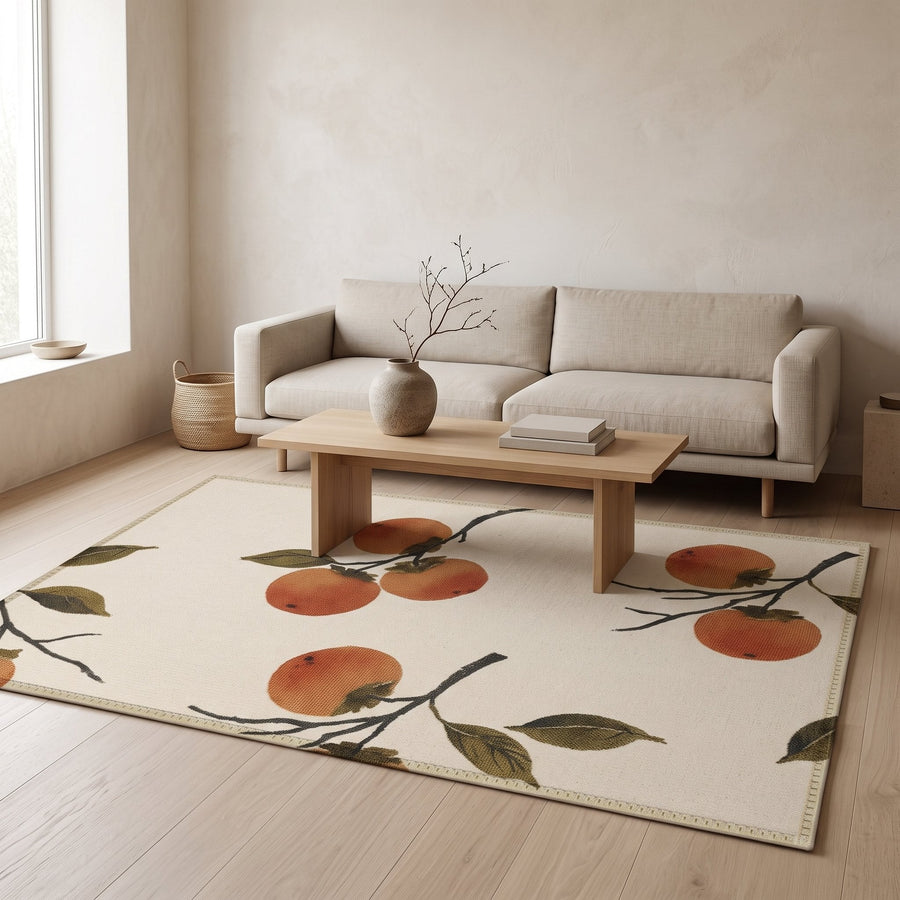
Japandi rooms are built on a narrow palette, so cushions do not get to introduce a fourth or fifth colour. The rule we use is simple: two tones on the sofa, both already present somewhere else in the room. One is a near-neutral close to the sofa fabric, the other is the room's accent, taken from the rug, a print on the wall or the wood of the coffee table.
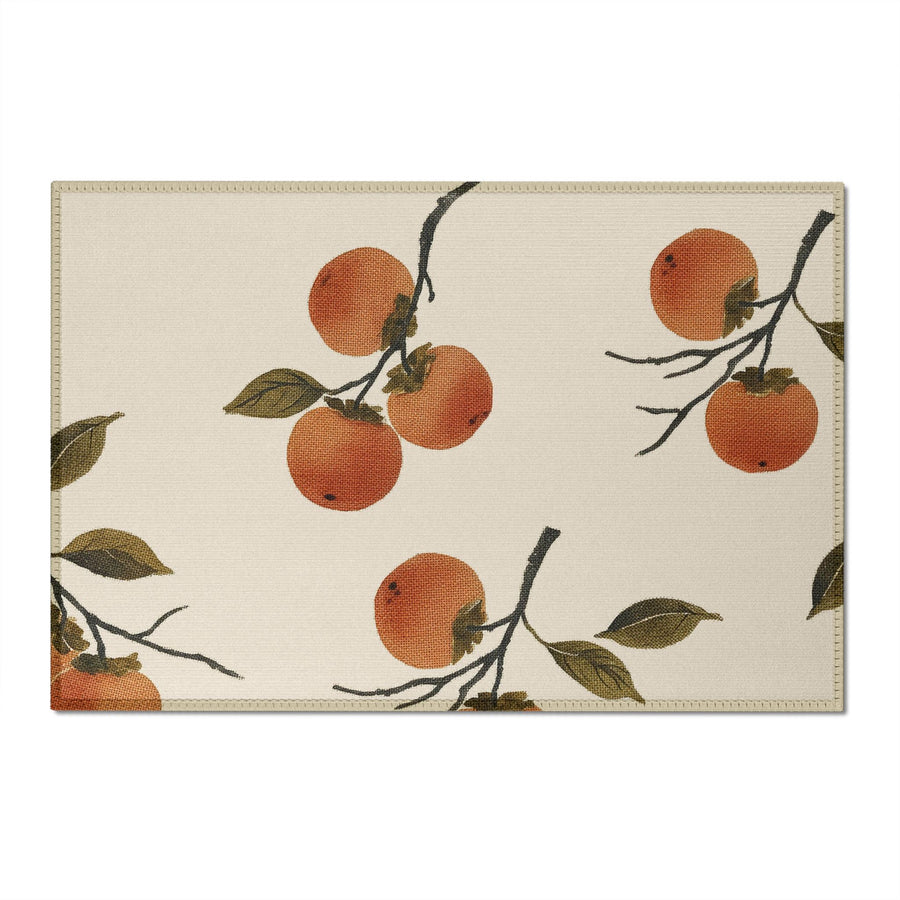
That accent might be a muted persimmon, a soft indigo or the warm grey of a sumi-e wash. It should not be a colour that appears nowhere else. If you need a refresher on which neutrals sit well together, our guide to the Japandi colour palette covers the warm and cool families in detail.
Texture does the rest. Within your two tones you can vary the surface freely: a linen-look weave next to a bouclé, a flat cotton beside a quilted panel. Two colours and three textures always looks more expensive than five colours and one texture.
Pattern, and how much of it
One patterned cushion per sofa is plenty, and it should be the smaller of the two sizes so it sits in front. A botanical or ink motif on an otherwise plain arrangement gives the room a single point of interest. Two patterns need to share a colour and differ in scale, which is a harder trick and usually not worth it.
Arranging them so they stay arranged
Cushions are used, not just looked at, so an arrangement that needs restoring every evening is the wrong arrangement. Place the larger square at the back corner, squarely against the arm and back of the sofa, so it stays put. The smaller cushion sits in front of it, angled very slightly or not at all. The lumbar, if there is one, goes in the middle of the back or against one arm.
Do not karate-chop the tops. The dent is a photograph habit, and on a real sofa it collapses the moment someone sits down. A well-filled insert holds its shape without help.
Finally, think about what else is on the sofa. A single throw folded over one arm balances a cluster of cushions at the other end and stops the whole thing looking lopsided. There is a short guide to styling a throw on a sofa, bed or chair that pairs with this one, and our older piece on layering textiles explains how cushions, throws and rugs share the work.
Fewer, better
So, how many cushions on a sofa? Three on a three-seater, two or three on a two-seater, one on a chair, and one fewer than you first reached for whenever you are in doubt. Two sizes, two colours, one pattern at most, and the middle seat always free.
The number matters less than the restraint behind it. A Japandi sofa is a place to sit, and the cushions are there to make sitting better and the room calmer. If they are doing anything else, they are probably doing too much. If you are choosing the sofa itself, our sofa buying guide and the Japandi living room guide will get the bigger decisions right first.
Frequently asked questions
How many cushions should go on a 3-seater sofa?
Three is the safest number, arranged as two at one end and one at the other, or a pair with a lumbar between. Five works if two of them are small, but keep the middle seat clear so the sofa is still comfortable to use.
Should sofa cushions be the same size?
Not all of them. Two sizes on one sofa, usually 20 inch behind 18 inch, gives depth and stops the arrangement looking like a row of tiles. Three different sizes on one sofa tends to read as clutter rather than variety.
What colour cushions go with a grey sofa?
Choose one near-neutral a shade lighter or warmer than the grey, and one accent already present in the room, such as a muted rust, soft indigo or warm oatmeal from your rug or wall art. Keep to those two tones and vary texture rather than adding more colours.