Wabi-sabi shelf styling comes down to five objects and one rule: leave at least half of the shelf empty. Choose one imperfect vessel, one natural object, one piece of wood or stone, one thing to read or look at, and one small surprise, then arrange them in odd-numbered groups with generous space between. The emptiness does as much work as the things you keep.
Why less works on a wabi-sabi shelf
Wabi-sabi is the Japanese appreciation of things that are simple, imperfect and marked by time. On a shelf, that means fewer objects with more presence. A single lopsided bowl with room around it draws the eye and invites a closer look. The same bowl surrounded by twenty other things becomes background.
The Japanese idea of ma, the meaningful pause or interval, is the key. Space between objects is not wasted; it is what lets each piece be seen. Our essay on the art of negative space explores this in more depth, but on a shelf the practical lesson is simple. If it feels nearly finished, take one thing away.
There is also a quieter benefit. A sparse shelf is easier to dust, easier to change with the seasons and far less tiring to look at at the end of a long day.
The five objects
You do not need to buy anything new to style a wabi-sabi shelf. Most homes already hold the pieces; it is a matter of choosing and editing. Think of these five roles and fill each with something you already love.
- One imperfect vessel. A hand-thrown bowl, a speckled vase or a cup with a drip of glaze. This is the anchor, so choose the piece with the most character. If you are buying, our guide to wabi-sabi pottery prices explains what you are paying for.
- One natural object. A smooth stone, a dried seed head, a piece of driftwood or a single branch. It should look as if it was found, not bought.
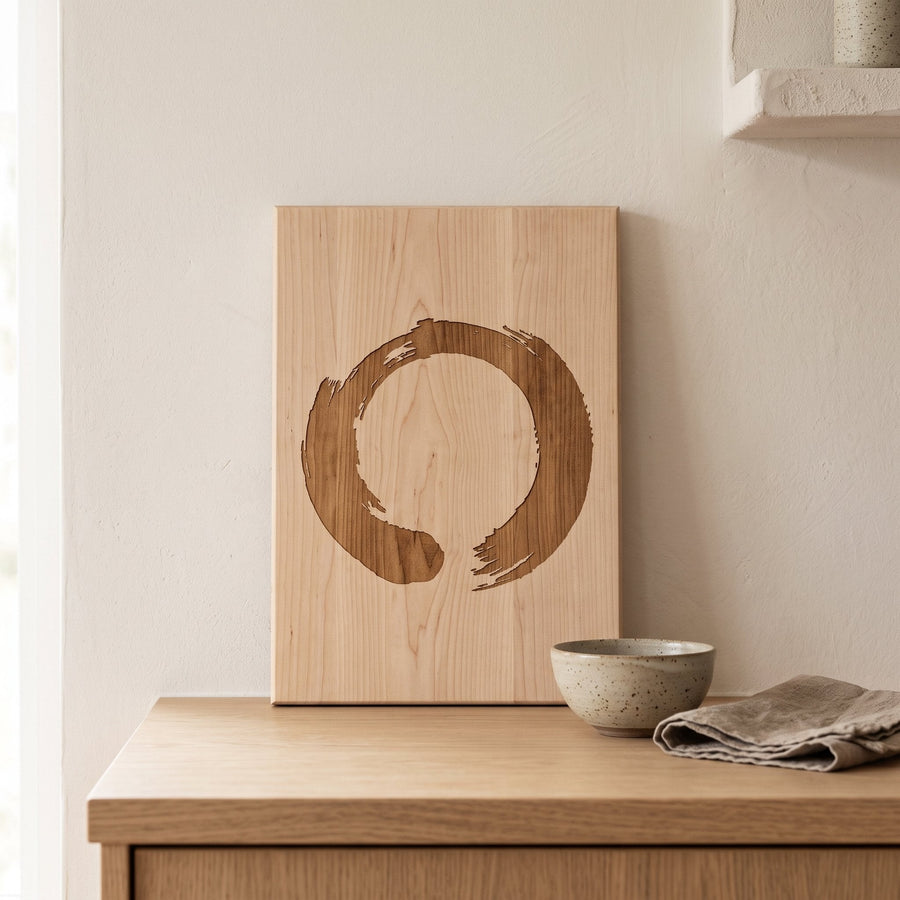
- One piece of wood or stone with weight. A wooden board leaned at the back, a small stone slab or a turned wooden bowl. This gives the arrangement a base and a warm material against the ceramic.
- One thing to read or look at. A small framed print, a postcard propped against the wall or two stacked books with plain spines. It adds a vertical and a quiet point of focus.
- One small surprise. An old key, a tiny bud vase with one stem, a hand-written card. Something personal that makes the shelf yours rather than a catalogue page.
Five is a ceiling, not a target. A short shelf may only need three. The six-object rule we use for whole surfaces works on the same principle: set a limit, then edit to it.
The one rule: leave half the shelf empty
This is the rule that makes wabi-sabi shelf styling work. Measure the shelf by eye and make sure at least half of its length stays clear. On a long shelf, that might mean one group at one end and a single object at the other, with open wood in between.
It feels uncomfortable at first. Most of us are used to filling a shelf edge to edge. Give it a week. The space will start to feel restful, and the objects you kept will look more deliberate and more valuable.
If you have a run of shelves, apply the rule to the whole set rather than each shelf. One shelf can hold a fuller group if the shelf above it holds a single bowl.
How to arrange: odd numbers, triangles and asymmetry
Once you have your objects, the arrangement is where the shelf comes alive. A few principles keep it looking natural rather than staged.
Group in odd numbers
Groups of three or one feel more natural than pairs. A pair reads as matched and formal; three objects of different heights read as a small landscape. Keep groups tight, with objects nearly touching or overlapping slightly, and leave the space around the group open.
Build a loose triangle
Place the tallest object at the back and to one side, a medium piece in front of it, and the smallest at the other edge of the group. Your eye travels across the shape rather than stopping on a straight line. Leaning a wooden board or a framed print behind the group is the easiest way to get height.
Avoid symmetry
Do not centre the group, and do not mirror one end of the shelf with the other. Push the main arrangement off-centre, about a third of the way along. Asymmetry is one of the clearest visual signals of wabi-sabi and of the related Japanese principle of fukinsei, or irregularity.
Mix textures, not colours
Rough clay against smooth wood, a matte stone against a glossy glaze, paper against ceramic. Keep the colours within a narrow band of earth, ash and cream so that texture becomes the interest.
Common wabi-sabi shelf styling mistakes
Most shelves that feel cluttered rather than calm are making one of a handful of errors. They are easy to correct.
- Too many small things. A row of tiny objects reads as clutter. Swap three small pieces for one larger one with more presence.
- Everything the same height. Without variation the eye has nowhere to rest. Add one tall element at the back of the main group.
- Perfect matching sets. Three identical vases look like a shop display. Use pieces that relate in colour or material but differ in shape.
- Bright, shiny accents. Metallics and saturated colours pull focus. If you love them, keep one, and let it be the surprise.
- Books lined up like a library. Stack a few horizontally, spines facing out, and use them as a plinth for a small object.
Keeping a wabi-sabi shelf calm over time
Shelves attract things. Keys, receipts and the odd charger land there within a week. The way to keep a wabi-sabi shelf calm is to give those things another home, such as a tray by the door or a lidded box, so the shelf stays reserved for what you have chosen.
Change the shelf with the seasons rather than adding to it. In spring, a single branch of blossom; in autumn, a few dried leaves or a gourd; in winter, a candle in a stoneware holder. Swap one object out when one comes in. Our guide to the single-stem rule shows how a lone flower can change the mood of a whole room.
Finally, let the objects age. A wooden board darkens with handling, a stone collects a patina, a cup develops faint crazing in the glaze. That gradual change is the point of wabi-sabi and the reason a well-edited shelf feels more personal every year. Cups and bowls with speckled glazes are especially good at this, as our speckled glaze mugs guide explains.
A shelf that breathes
Wabi-sabi shelf styling is less about decorating and more about editing. Five objects at most, odd-numbered groups, an off-centre arrangement and, above all, half the shelf left open.
Start this weekend by clearing one shelf entirely, then add back only what earns its place. You will likely put back fewer things than you took off, and the shelf will look better for it.
Worth considering
A few well-made pieces we would happily put next to our own. These are Amazon links; as an Amazon Associate we earn from qualifying purchases, at no cost to you.
- Whitewashed ceramic vases, set of three — Chalky, slightly uneven vessels; put one on the shelf and keep the other two back for the change of season.
- Hug-donut bud vase — A small, low vessel for the single stem or seed head that becomes the shelf’s quiet surprise.
- Light-wood floating shelves, set of three (16″) — Plain, bracketless shelves short enough that leaving half of each one empty looks deliberate.
Frequently asked questions
How many items should be on a shelf for a minimalist look?
For a wabi-sabi or minimalist shelf, three to five items is usually enough on a standard shelf of around 80 to 100 cm. More important than the number is the space: aim to leave at least half the shelf clear so each object can be seen on its own.
What objects are typically used in wabi-sabi decor?
Handmade ceramics, weathered wood, natural stone, dried branches and seed heads, old books and simple linen. The common thread is that each piece shows its material honestly and can age gracefully. Our wabi-sabi decor guide covers more ideas.
Can I style open kitchen shelves in a wabi-sabi way?
Yes. Use the same rule of half empty, but let the objects be the ones you actually use: a stack of stoneware bowls, a few cups and a wooden board. Everyday pieces that show wear look right in a wabi-sabi kitchen.