A Japandi shower curtain is a plain or quietly patterned fabric curtain in a muted natural colour, hung on simple hooks from a bar set as high as the room allows, with a separate liner doing the waterproof work behind it. Choose it that way and the shower curtain stops being the thing you apologise for in the bathroom and becomes the largest, softest textile in the room.
Most bathrooms are hard: tile, glass, chrome, porcelain. A curtain is the one place a bathroom can have fabric, drape and colour, and it is worth treating as carefully as a curtain anywhere else in the house.
Fabric, not plastic
The single biggest change is to separate the curtain from the liner. A plastic or PEVA shower curtain is a liner pretending to be a curtain, and it will always look like one: it clings, it clouds, it creases in stiff folds and it never hangs well. A fabric curtain on the outside, with a light liner on the inside, hangs like a curtain because it is one.
For the fabric, a cotton or polyester-cotton weave with some weight is best. Pure cotton looks and feels right, especially a waffle or a slubbed linen-look weave, but it holds moisture longer and needs a well-ventilated room. Polyester or a blend dries faster and resists mildew, and a good linen-look polyester is hard to tell from cotton once it is hung. Either can be washed in the machine, which matters, because a shower curtain should be washed monthly.
Weight is what gives the drape. A thin curtain flutters and sticks to the liner; a heavier one hangs in soft, straight folds. If a curtain feels light in the hand, it will look light on the rail.
Print scale and colour
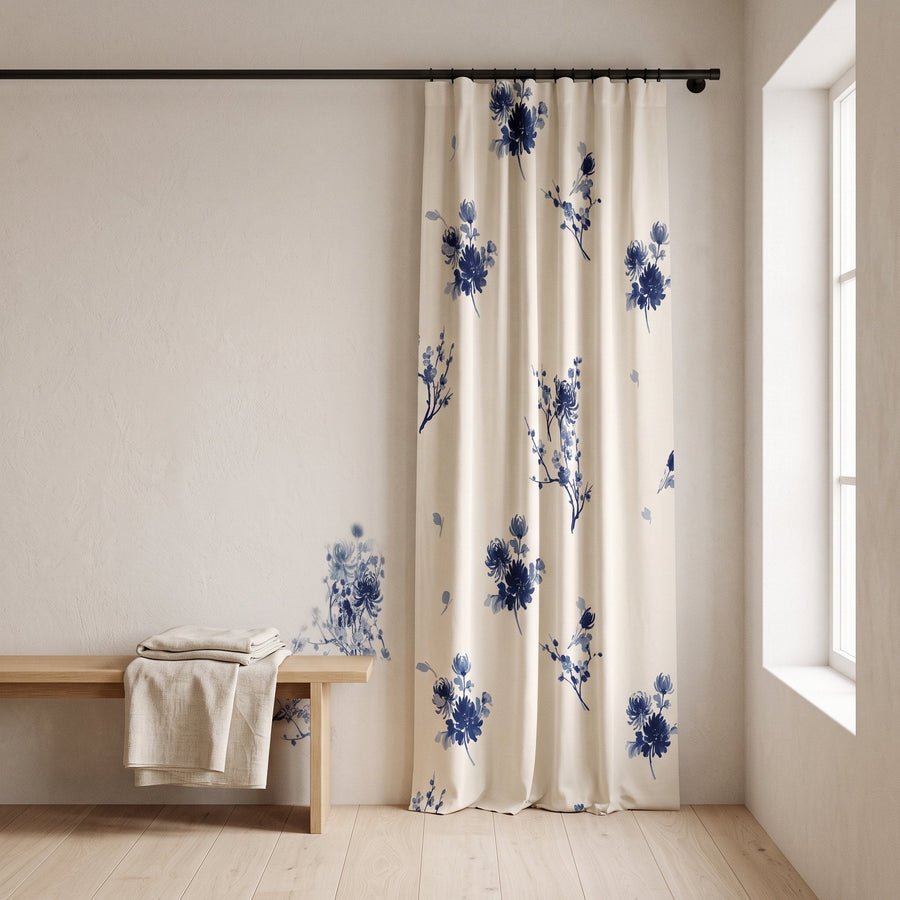
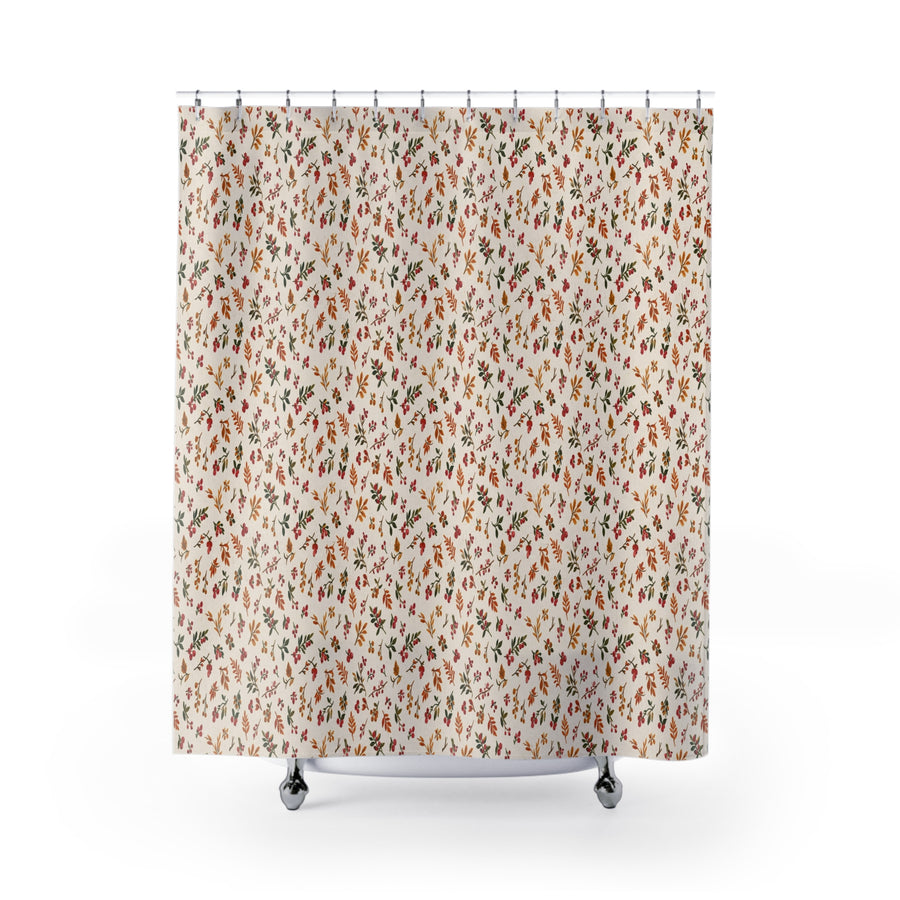
The Japandi palette is narrow and the bathroom is small, so the curtain should be one of two things: a plain in a natural tone, or a large-scale, low-contrast print. Small busy patterns turn into noise in a room this size, and high-contrast prints fight the tile.
Plain
Warm white, oatmeal, stone, sage, a soft clay or a deep muted indigo. Any of these on a white or pale tile reads as calm. If the tile is already coloured, go a shade lighter or darker than the tile in the same family rather than introducing a second colour. Our Japandi bathroom colours guide sets out the families that work with common tiles.
Large-scale print
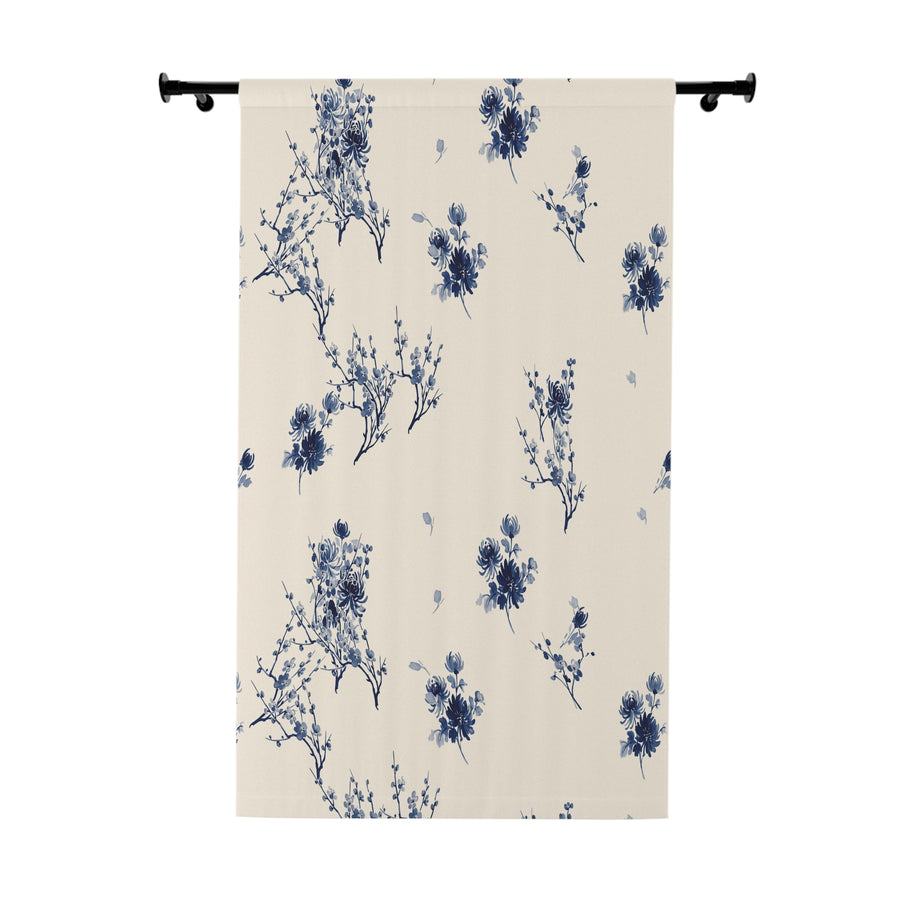
A single branch, a broad ink wash, a moon cycle or a scattered botanical drawn at the scale of the whole curtain. The motif should be readable from the doorway and mostly one colour on a plain ground. Think of it as a hanging print rather than a pattern, and it will sit in the room the way a piece of wall art does. Indigo on white, charcoal on oatmeal and sage on cream are all reliable.
What to avoid: geometric grids, tiny repeats, anything with more than two colours, and photographic prints. The bathroom already has enough hard lines and shine, and the curtain's job is to soften them. The wider logic is in our Japandi colour palette guide.
The liner, hooks and bar
The hardware is where most shower curtains fail, and it is the cheapest part to fix.
- Liner: a light fabric liner in polyester, or a heavier PEVA one, hung on the same hooks behind the curtain. Fabric liners dry faster and can be washed with the curtain; keep it white or clear so it never shows through.
- Hooks: plain metal rings or simple C-hooks in the same finish as the taps, usually brushed nickel, matte black or brass. Skip the decorative ones. Twelve is the standard count and it should match the curtain's eyelets.
- Bar: a straight tension bar or a fixed bar in the same metal, mounted as high as the ceiling allows, ideally 15 to 20 cm above the top of the shower screen or bath. Height is what makes the curtain read as a curtain rather than a screen.
- Length: the curtain should finish 3 to 5 cm above the floor outside a walk-in shower, or hang just inside the bath rim with the liner tucked in. A curtain that puddles on a wet floor is a curtain that goes mouldy.
Standard shower curtains are 180 cm square, which is fine for a bath but often too short for a high bar. Extra-long curtains at 200 or 210 cm exist and are usually the right choice if you have raised the bar, which you should.
Making the curtain part of the room
A shower curtain is the largest textile in the bathroom, so the other soft things should answer it. Towels and a bath mat in one of the curtain's colours, or in a natural neutral, tie the room together; towels in an unrelated colour make the curtain look like a mistake. Our guide to Japandi bath mats and towels works through the pairing.
Keep the rest of the room quiet. One plant, one wooden object, one stoneware cup for toothbrushes, and the curtain becomes the room's single point of colour or pattern rather than one of several. The Japandi bathroom guide covers the whole room, and there is a budget version in the 250 dollar bathroom.
Keeping it clean and dry
Pull the curtain fully open after every shower so it dries flat rather than in folds. Leave the window or fan on for twenty minutes. Wash the curtain and liner together monthly on a cool cycle with a small amount of detergent and, if there is any mildew starting, a cup of white vinegar; hang them straight back on the bar to dry.
A fabric liner should last a year or two and then be replaced; the curtain itself, washed regularly, will last many years. If the bottom edge starts to speckle, wash sooner and check that it is not touching the floor.
The softest thing in the room
A Japandi shower curtain is a fabric curtain in a quiet colour, hung high on simple hooks with a separate liner behind it. That is the whole recipe, and none of it is expensive. The difference between a bathroom that feels finished and one that feels temporary is often just this: a curtain chosen with the same care as the towels, hung like a curtain rather than draped like a tarpaulin.
Get the fabric, the scale and the height right and the rest of the bathroom can stay as spare as you like. The curtain will do the softening on its own.
Worth considering
A few well-made pieces we would happily put next to our own. These are Amazon links; as an Amazon Associate we earn from qualifying purchases, at no cost to you.
- Three-tier freestanding bamboo bathroom shelf — Open bamboo shelving for folded towels, a warm wooden note beside a fabric curtain and pale tile.
- Marble vanity tray — Gathers the soap and the toothbrush cup into one object, so the curtain stays the room’s single point of pattern.
- Reed diffuser with a small ceramic dish — One quiet scent and one small ceramic, which is about as much as a calm bathroom needs beside the curtain.
Frequently asked questions
What colour shower curtain for a Japandi bathroom?
Warm white, oatmeal, stone, sage, soft clay or a muted indigo, chosen to sit within a shade or two of the tile or the towels. If you want a print, keep it large in scale and mostly one colour on a plain ground.
Do you need a liner with a fabric shower curtain?
Yes. A fabric curtain is decorative and will soak through; a light fabric or PEVA liner on the same hooks behind it keeps the water in the shower. Wash both together monthly and replace the liner every year or two.
How high should a shower curtain rod be?
As high as the room allows, typically 15 to 20 cm above the top of the bath or shower screen, so the curtain hangs long and reads as a curtain rather than a short screen. Use an extra-long 200 or 210 cm curtain if the bar is raised.