Japandi bedding is built from three things: a natural fibre you can feel, a colour that sits a half-step away from your wall, and layers you can peel back one at a time. Get those right and the bed looks calm whether it is made or not. Everything else, the number of cushions, the throw, the print on the pillowcase, is a detail you can adjust later.
This guide walks through fibres and weights, the three-layer bed we use in our own studio flat, and how to pair bedding colour with the wall behind it. It is written for someone buying one good set, not a wardrobe of them.
Start with the fibre, not the colour
The mistake most people make with Japandi bedding is choosing the shade first. Colour is easy to change; the way a sheet feels at three in the morning is not. Decide on fibre, then weight, then colour, in that order.
Linen is the fibre most people picture when they think of a Japandi bedroom, and for good reason. It breathes, it softens with every wash, and its slight rumple is part of the look rather than something to iron out. We wrote a longer piece on choosing linen bedding if you want the detail on weave and weight.
Cotton percale is the quieter alternative. It is crisp, cool and matte, closer to a good hotel sheet than a farmhouse one. If you find linen too textured against bare skin, percale gives you the same restraint with a smoother hand.
Wool and cotton blends belong on top of the bed rather than against you. A wool throw across the foot of a linen duvet is the classic Japandi pairing: two honest materials, two different textures, no pattern needed.
Weight, in plain terms
- Linen around 160 to 190 gsm is the everyday range. Light enough for summer, substantial enough that it drapes rather than floats.
- Percale at 200 to 300 thread count is where it feels crisp without going stiff. Higher numbers are not better here; they are just heavier and warmer.
- Duvet fill should follow your climate. A medium-weight duvet with a linen cover works for most of the year in Copenhagen; a summer and winter pair suits homes with bigger swings.
The three-layer Japandi bed
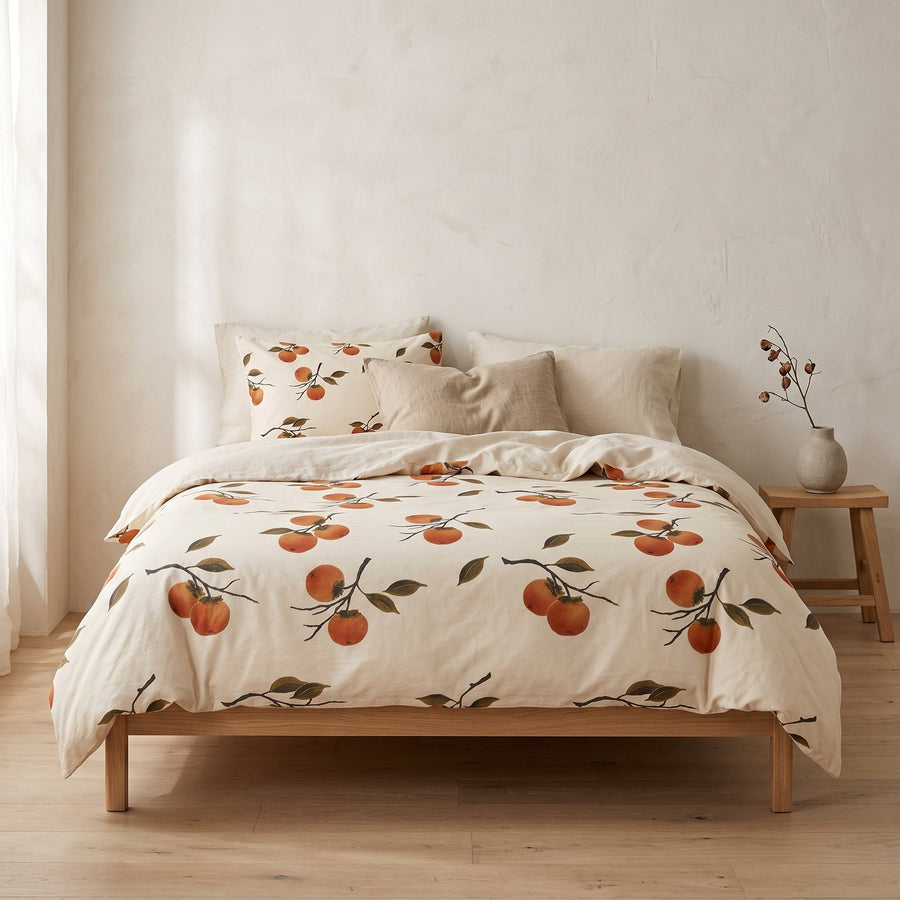
A Japandi bed is not a stack of pillows and a decorative runner. It is three layers, each doing one job, and the look comes from how they meet rather than from anything added on top.
- The fitted sheet and pillowcases. This is the layer you touch most, so it gets the best fibre you can afford. Keep it plain. A printed pillowcase can work, but it should be the only print in the room, and we cover when that is worth it in our guide to choosing a Japandi duvet cover.
- The duvet in its cover. Fold the top edge back by a hand's width so a strip of sheet shows. That fold is the whole styling move. It reads as intentional without looking arranged.
- The throw. One, across the foot or dropped along one side. Wool, cotton or a chenille that has some weight to it. This is where a second colour comes in, and where you can change the bed with the season for the cost of one piece.
Two pillows per sleeper, one cushion at most, and no decorative bolsters. If you want the bed to feel fuller, add a second throw folded at the foot rather than more pillows. Our piece on layering textiles goes into how the weights should step up from sheet to throw.
Colour: a half-step from the wall
The quiet trick in Japandi bedding colour is to keep the sheets within a tone or two of the wall. Bright white bedding against a warm off-white wall looks like a hotel that has not thought about it. Oatmeal linen against the same wall looks like a room that has.
Think of it in pairs. The wall sets the base, the bedding sits just off it, and the throw brings in the one deeper note.
- Warm white wall with oatmeal or unbleached linen, and a throw in clay, rust or moss.
- Pale grey wall with soft white percale, and a throw in charcoal or a muted indigo.
- Greige or mushroom wall with stone or flax sheets, and a throw in deep olive or a dusty plum.
- Dark wall with the same dark bedding for a cocooned, hotel-at-night feel, lifted by one pale pillowcase. We looked at this in our guide to dark Japandi rooms.
If you are still deciding on the wall itself, our sibling article on Japandi bedroom colours works through the palette from the paint tin outwards.
Where a pattern belongs
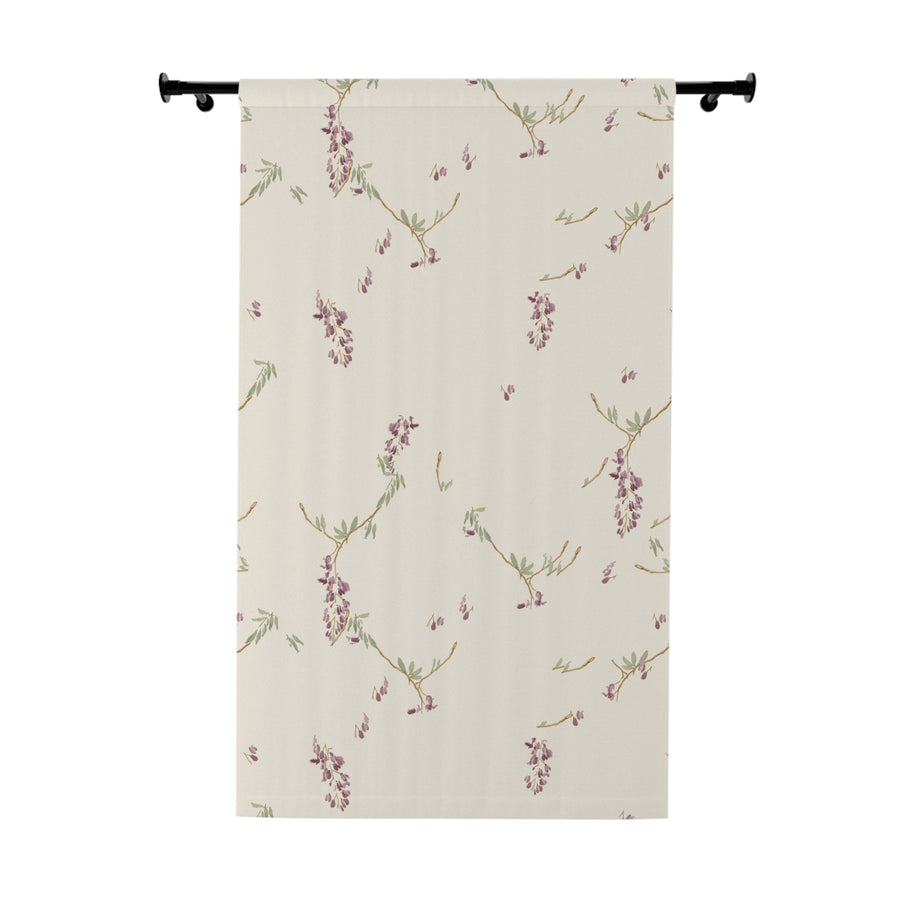
Pattern in a Japandi bedroom lives in one place, and it is usually not the duvet. A printed curtain, a rug, or a single artwork above the bed carries the motif; the bedding stays plain so it does not compete.
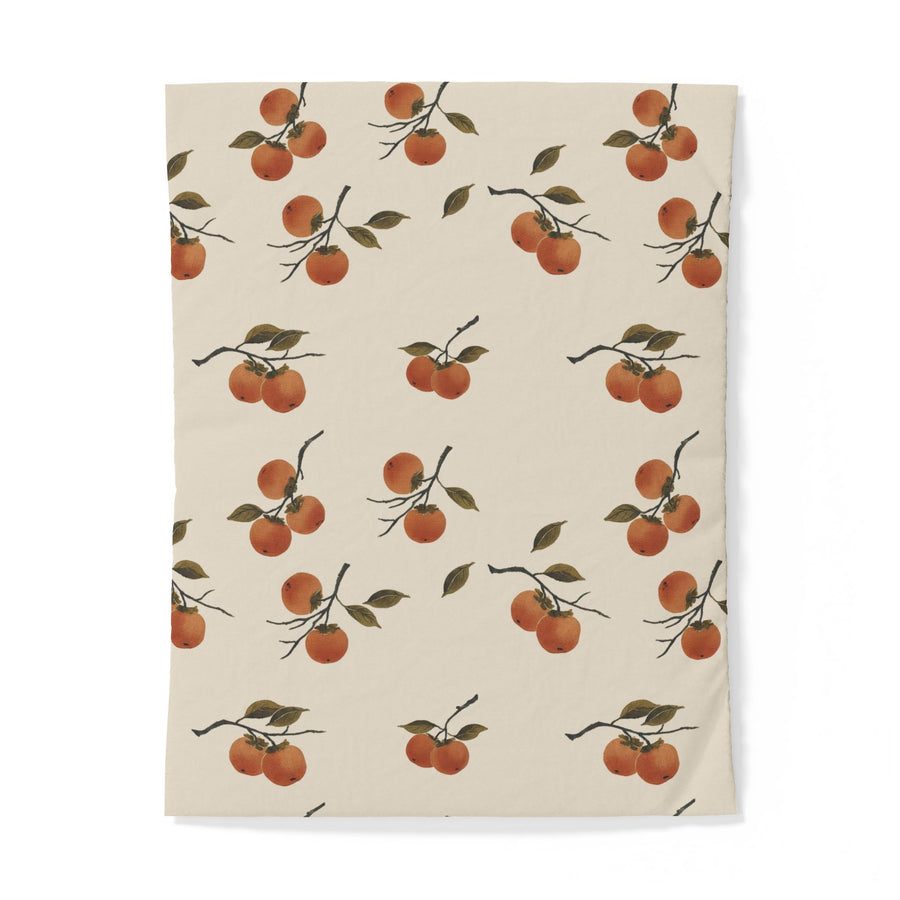
The exception is a small, loosely drawn print on a single pillowcase or a folded throw. A brushed branch, a scattering of leaves, a soft botanical in one colour on natural ground. The scale matters: small enough that from the doorway it reads as texture rather than pattern.
What to avoid is a large print on the duvet cover and a second on the curtain. Two patterns in a bedroom is a bedroom that never quite settles, however good each one is on its own.
Care that keeps the calm
Natural fibres reward a light hand. Wash linen and percale at 40 degrees with a gentle detergent, skip the fabric softener, and pull them from the machine promptly so they dry with the soft crumple rather than a hard crease.
Linen does not need ironing; if you want it smoother, fold it while still faintly damp and let the weight of the fold do the work. Percale looks its best pressed, but a quick smooth by hand as you make the bed is enough for most days. We cover the finer points in our linen care guide.
Rotate two sets rather than owning five. One on the bed, one in the cupboard, both in the same tonal family so that a mid-week swap does not change the room.
A bed you can make in a minute
The best test of Japandi bedding is how the bed looks when you have thirty seconds and no interest in styling it. Pull the duvet up, fold the top edge back, drop the throw across the foot. If that looks finished, the choices were right.
Fibre first, then weight, then a colour that sits close to the wall. One throw for depth, one print at most, and the confidence to leave the rest alone. That is the whole of it.
Worth considering
A few well-made pieces we would happily put next to our own. These are Amazon links; as an Amazon Associate we earn from qualifying purchases, at no cost to you.
- French-linen sheet set — The fibre most people picture for a Japandi bed: cool in summer, and softer with every wash.
- Washed cotton sheet set — Pre-washed cotton for anyone who wants the relaxed look without linen’s texture against the skin.
- Mellanni cotton percale fitted sheet — A crisp, cool percale base layer, easy to replace on its own when it wears.
Frequently asked questions
What colour bedding is best for a Japandi bedroom?
Choose a shade within a tone or two of the wall: oatmeal or flax on a warm white wall, soft white on pale grey, stone on greige. Bring the deeper colour in with a single throw rather than the sheets themselves. This keeps the bed reading as part of the room rather than an object in it.
Is linen or cotton better for Japandi bedding?
Linen is the classic choice because its texture and natural rumple suit the style, and it breathes well year-round. Cotton percale is the better option if you prefer a smoother, crisper feel. Both work; the deciding factor is how the fabric feels to you, not how it photographs.
How many pillows should be on a Japandi bed?
Two per sleeper, plus at most one cushion. If the bed looks bare, add a second folded throw at the foot rather than more pillows. Japandi styling relies on restraint and a few honest materials, so a crowded bed works against the room.